
World Surf League in India: History, Return & Future
The Resurgence and Institutional Evolution of Indian Surfing: Past Heritage, Present Milestones, and Future Horizons
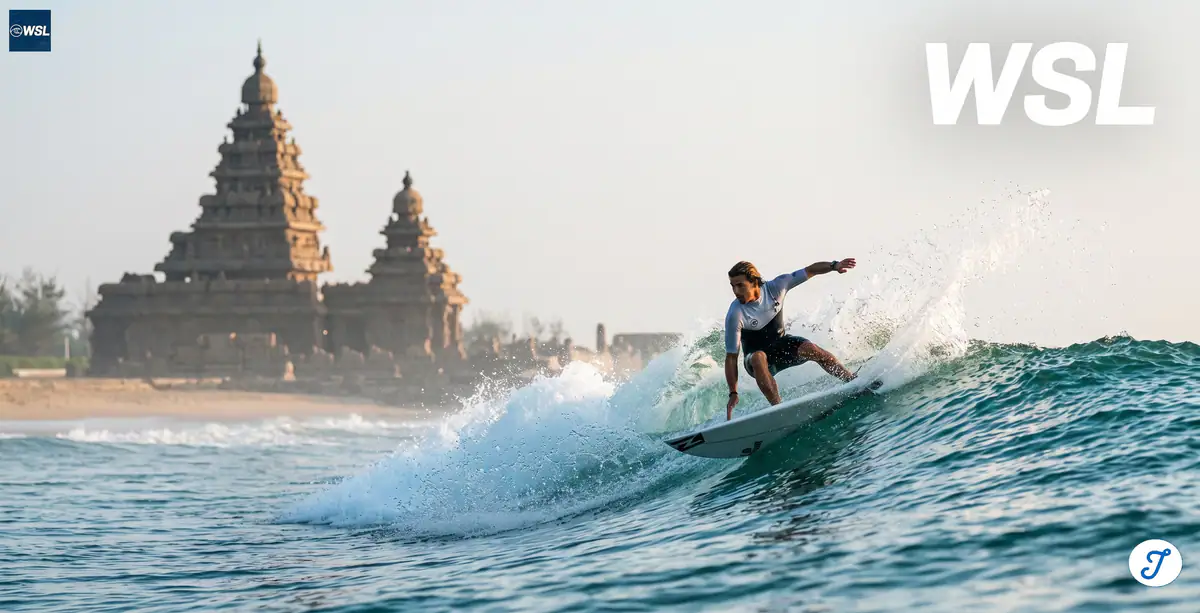
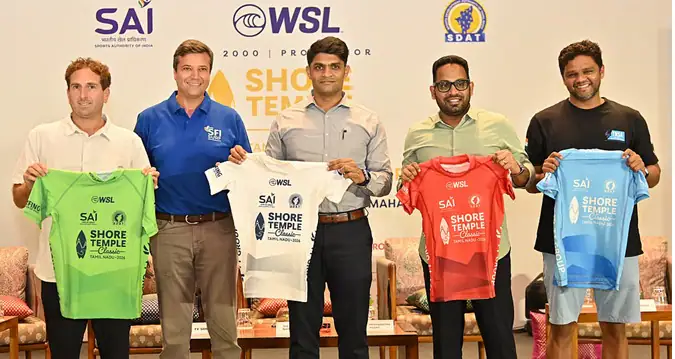
The landscape of competitive surfing in India has reached a pivotal juncture marked by simultaneous athletic, administrative, and strategic developments. On August 4, 2026, the World Surf League (WSL) officially announced its return to the sub-continent with the Shore Temple Classic QS 2000 and the nation’s inaugural WSL Pro Junior competition, scheduled from August 12 to August 16, 2026, at Mahabalipuram Beach, Tamil Nadu. This milestone marks the return of the WSL circuit to Indian waters following a three-year gap after the country hosted its landmark inaugural WSL event (a Qualifying Series (QS) 3000) in August 2023.
Concurrently, India’s administrative governance in international water sports reached a historic peak. On August 7, 2026, Arun Vasu, President of the Surfing Federation of India (SFI), was elected President of the Asian Surfing Federation (ASF) in a voting process supervised by the International Surfing Association (ISA). Succeeding Japan’s Atsushi Sakai, who held the presidency since 2011, Vasu became the first Indian administrator to lead the continental governing body.
These synchronized events - alongside geographic expansion into untouched wave environments like the Andaman & Nicobar Islands and state-level policy integration in Tamil Nadu - demonstrate that Indian surfing is transitioning from a niche coastal subculture into a structured, government-backed competitive athletic ecosystem.
Historical Genesis and Institutionalisation: The Past of Indian Surfing
Grassroots Foundations and Early Pioneers
For generations, coastal communities along India's 7,500-kilometer coastline engaged in informal waveriding using wooden planks and discarded boat timber. However, modern stand-up surfing was introduced in the 1970s by Jack Hebner, an American surfer, yoga practitioner, and scholar known locally as the "Surfing Swami". Hebner explored surf breaks across Kovalam, Rameshwaram, Kanyakumari, and Mamallapuram (Mahabalipuram).
In 2004, Hebner, alongside Rick Perry, established India’s first formal surfing school and sanctuary, the Mantra Surf Club, along the Shambhavi River in Mulki, Karnataka. Mantra Surf Club served as the primary incubator for India's first generation of home-grown surfers, instructors, and coastal entrepreneurs. The movement rapidly spread across both eastern and western seaboards through dedicated local hubs:
The Shaka Surf Club (2007): Founded in Kodi Bengre, Udupi, Karnataka, by Ishita Malaviya and Tushar Pathiyan after training under Hebner, fostering localized community engagement and youth participation.
Covelong Point Surf School (2012): Established in Kovalam, Tamil Nadu, by Murthy Megavan—a local fisherman who encountered Hebner in the early 2000s—transforming a traditional fishing village into an East Coast surfing capital.
Regional Outposts: Emergence of Kallialay Surf School in Puducherry, Soul & Surf in Varkala, Kerala, and Surfing Yogis in Puri, Odisha, establishing structured coastal nodes.
Formation of the Surfing Federation of India
Recognizing the necessity of a national body to standardize safety protocols, athlete classifications, and international representation, pioneers from Mantra Surf Club established the Surfing Federation of India (originally initiated as the Surfing India Association). In 2011, the SFI achieved formal recognition from both the International Surfing Association (ISA) and the Asian Surfing Federation (ASF).
The early administrative trajectory was defined by key milestones:
2011: SFI initiated India’s first formal surf camp at Mulki, Karnataka, organized in collaboration with Bay of Life Surf School, alongside supporting Orissa's inaugural surf festival.
2013: SFI hosted its first international Surf and SUP Competition at Kovalam Beach, Trivandrum (May 3–5, 2013), featuring former South African cricketer and avid surfer Jonty Rhodes as chief guest.
2021: Corporate leader and lifelong windsurfer/surfer Arun Vasu assumed the presidency of SFI, instituting professional management practices, structured selection trials, state-level association affiliations, and public-private partnership frameworks.
Key Historical Milestones
1970s (Informal Introduction of Modern Surfing): Jack Hebner surfs Rameshwaram, Mahabalipuram, and Kanyakumari.
2004 (Establishment of Mantra Surf Club): Founded in Mulki, Karnataka; established as India's first official surf school.
2007 (Foundation of Shaka Surf Club): Established in Kodi Bengre, Karnataka, promoting grassroots access.
2011 (SFI Formation & ISA/ASF Recognition): SFI recognized as India's National Governing Body for surfing.
2012 (Covelong Point Surf School Founded): Murthy Megavan establishes Kovalam, Tamil Nadu as a major surfing hub.
2013 (Inaugural International Surf & SUP Event): Staged at Kovalam Beach, Trivandrum, attracting international exposure.
2021 (Election of Arun Vasu as SFI President): Initiated structural shift toward corporate sponsorship, elite coaching, and WSL hosting.
2023 (Inaugural WSL Event in India): Mahabalipuram hosts the Tamil Nadu International Surf Open QS 3000.
Contemporary Landscape: The WSL Shore Temple Classic 2026 and Competitive Ecosystem
Technical Analysis of the WSL Shore Temple Classic 2026
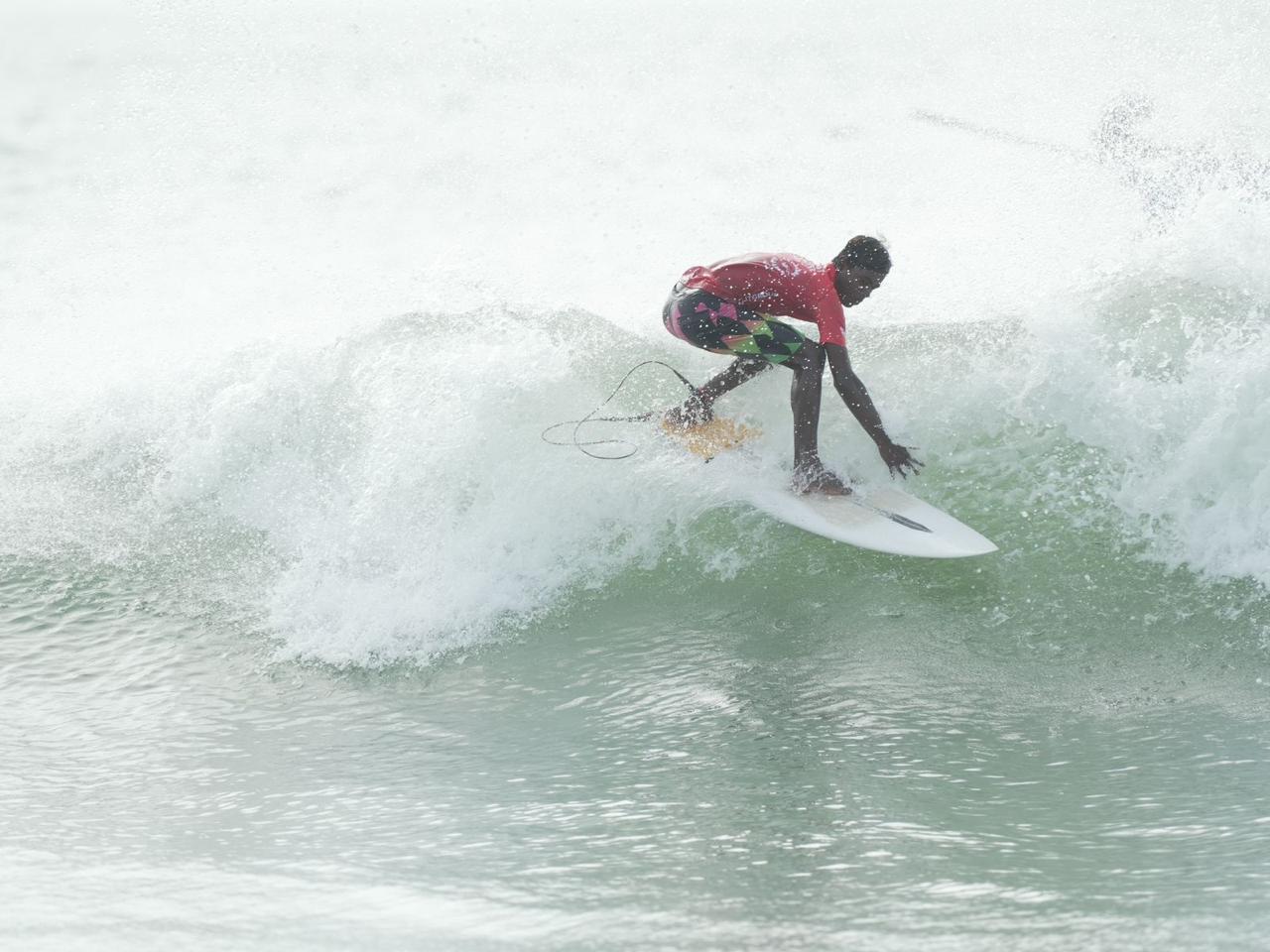
The return of the World Surf League to Mahabalipuram Beach from August 12 to August 16, 2026, represents a significant operational expansion for competitive surfing in South Asia. Staged at the Sea Breeze Resort venue adjacent to the 8th-century Pallava Shore Temple, the event provides a natural amphitheater setting.
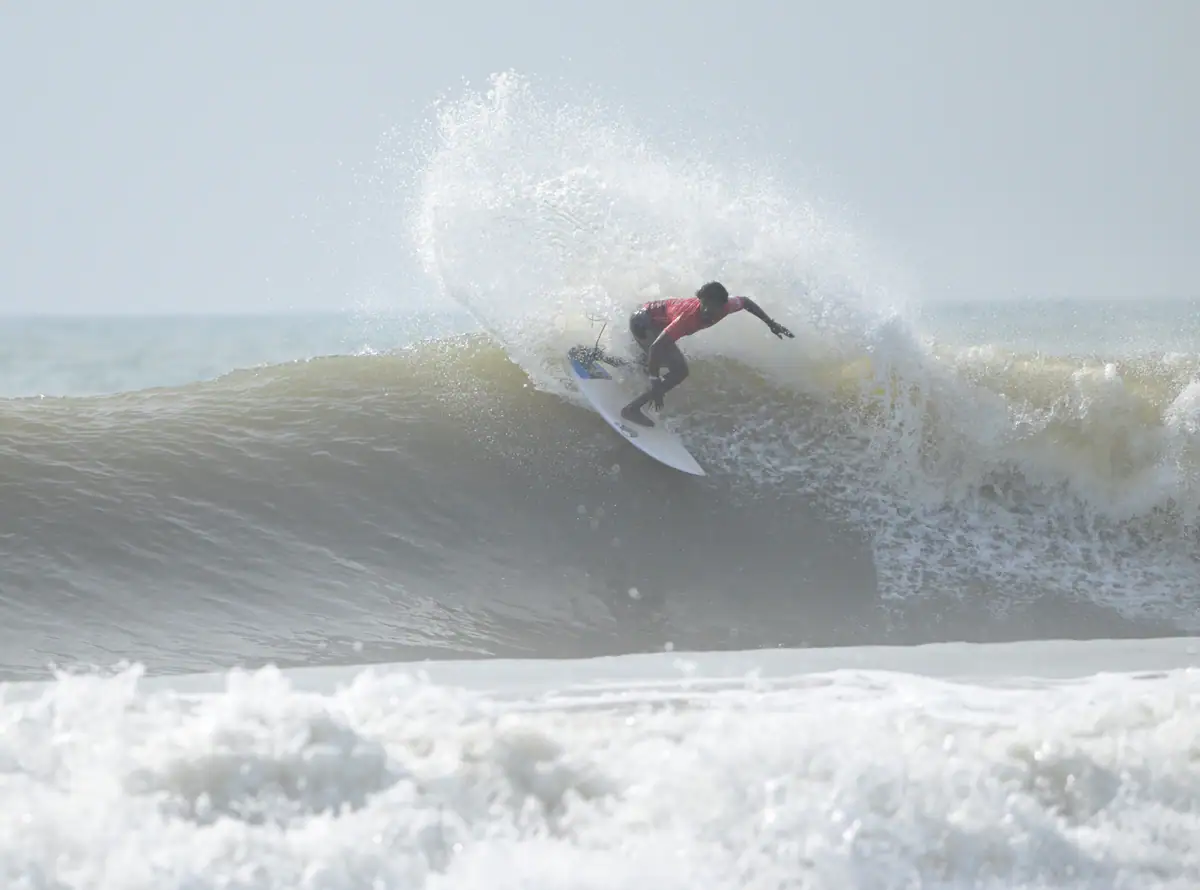
The wave at Mahabalipuram is a high-performance, long right-hand sandbar point break. It features open-face sections suited for rail surfing and progressive aerial maneuvers, with occasional barrel sections when ocean swells align.
The competition combines a Qualifying Series (QS) 2000 event with India's first-ever WSL Pro Junior (JQS) division. This dual format allows domestic surfers under the age of 21 to compete across both junior and open divisions, accumulating Asia Region ranking points necessary to progress toward the WSL Challenger Series and ultimately the Championship Tour.
Structural Specifications of the QS 2000 and Pro Junior Divisions
QS 2000 Division:
Sanctioning Body: World Surf League (WSL) APAC Tour
Regional Ranking Impact: Asia Region QS Ranking Points
Draw Caps: Men: 64 Surfers | Women: 32 Surfers
Wildcards Allocated: 4 Men's Open | 4 Women's Open
Wildcard Selection Basis: National Rankings post-Covelong Classic
Direct Registration Fee: $30 USD (Single Event Registration)
International Field: Approximately 100 participants from 12 countries
Pro Junior (JQS) Division:
Sanctioning Body: World Surf League (WSL) APAC Tour
Regional Ranking Impact: Asia Region Junior Ranking Points
Draw Caps: Men: 32 Surfers | Women: 24 Surfers
Wildcards Allocated: 4 Men's Junior (U21) | 4 Women's Junior (U21)
Wildcard Selection Basis: National Rankings post-Covelong Classic
Direct Registration Fee: $30 USD (Single Event Registration)
International Field: Regional Asia-Pacific junior contingent
Operational Governance and Public Policy Integration
The Shore Temple Classic is organized by the Surfing Federation of India (SFI) and the Tamil Nadu Surfing Association (TNSA), supported by the Sports Authority of India (SAI) and the Sports Development Authority of Tamil Nadu (SDAT). On February 21, 2026, Tamil Nadu formally integrated competitive surfing into its official elite athlete funding pathway.
This institutional policy shift provides financial stipends, sport science access, and travel grants for top-ranked Indian surfers, reducing reliance on individual fundraising. Member Secretary of SDAT, Thiru. J. Meghanatha Reddy, emphasized that state funding positions Mahabalipuram as a global surfing destination while generating sustainable coastal eco-tourism.
The Domestic Competitive Vanguard
The introduction of international sanctioning bodies has coincided with a notable rise in domestic competitive performance:
Kishore Kumar: The teenage surfing sensation reached the semi-finals of the U-18 Boys category at the Asian Surfing Championships 2024 in Thulusdhoo, Maldives. He subsequently earned a Silver medal at the APSS Taiwan in October 2025 and won the Men's Open title at national selection events in June 2026.
Kamali Moorthy: Prominent female athlete who achieved double title victories in national selection contests in June 2026 and won the Women’s division at the inaugural Little Andaman Pro in April 2026.
Sivaraj Babu: Winner of the Men's division at the Little Andaman Pro 2026 and a 4th-place finisher at the APSS Taiwan in 2025.
Ramesh Budihal: Secured a Bronze medal finish at the Asian Surfing Championships in August 2025.
Sanjay Selvamani: Claimed the first-ever WSL heat victory by an Indian athlete on August 16, 2023, during the Tamil Nadu International Surf Open QS 3000.
Strategic Expansion and Island Frontiers: The Andaman Development
A major strategic initiative for Indian surfing is the exploration of untapped wave breaks across the island archipelagos. While the mainland east and west coasts experience seasonal monsoon swells, the Andaman & Nicobar Archipelago features deep-water ocean swells, tropical reef setups, and consistent wave quality comparable to established Indo-Pacific locations.
The Inaugural Little Andaman Pro 2026
From April 9 to April 12, 2026, SFI launched the inaugural Little Andaman Pro 2026, marking the official opening of the 2026 national competitive calendar. Tamil Nadu athletes dominated the shortboard surfing event, with Sivaraj Babu and Kamali Moorthy taking top honors, while Dinesh Selvamani and Vijayalakshmi Irulappan secured Gold in the Stand-Up Paddle (SUP) sprint categories.
Little Andaman's powerful, consistent swells position the island chain as a key destination for future international contests. Integrating the Andaman Islands into the national circuit expands India's surfing footprint beyond mainland beach breaks to include heavy-water reef points.
2026 Surfing Competition Schedule
Apr 9 – 12, 2026: Little Andaman Pro 2026: National Tour Opener / Frontier Event held at Little Andaman, A&N Islands.
May 28 – 31, 2026: Indian Open of Surfing: Premier National Championship Leg held along the mainland coast.
Jul 30 – Aug 1, 2026: Point Break Challenge 2026: Specialty Point Break Event held at a regional break.
Aug 6 – 8, 2026: Covelong Classic 2026: National Series & WSL Wildcard Qualifier held at Kovalam, Tamil Nadu.
Aug 12 – 16, 2026: WSL Shore Temple Classic: WSL QS 2000 & Pro Junior (JQS) held at Mahabalipuram, Tamil Nadu.
Geopolitical Leadership and Future Horizons: The Next Decade
Continental Leadership via the ASF Presidency
Arun Vasu's election as President of the Asian Surfing Federation on August 7, 2026, represents a significant shift in regional sports diplomacy. For over a decade (2011–2026), the ASF was led by Atsushi Sakai of Japan, during which Japan served as the dominant center for Asian surfing development and Olympic integration.
Vasu’s presidential platform focuses on several key initiatives:
Broader Continental Representation: Ensuring equal competitive access, judge training, and administrative resources for emerging surfing nations across South and Southeast Asia.
Elevating Stand-Up Paddle (SUP): Establishing structured continental championship circuits for SUP sprint and distance racing alongside traditional shortboarding.
Multi-Sport Games Preparation: Overseeing surfing's competitive inclusion at the upcoming 2026 Asian Games in Aichi-Nagoya, Japan, where Indian surfers secured initial nation quota spots at the 2024 Asian Surfing Championships.
SFI Strategic Roadmap: The Four-Event Target
A primary goal articulated by SFI leadership during the Shore Temple Classic announcement is expanding WSL-sanctioned events in India. SFI aims to grow the domestic calendar to host four additional WSL Qualifying Series events across different coastal states.
By establishing a multi-stop WSL Indian swing, domestic surfers can accumulate regional QS ranking points on home break conditions without incurring the heavy financial burden of constant international travel. This system provides a clear pathway for Indian athletes to advance to the Challenger Series and compete for spots on the Championship Tour.
Synthesis and Strategic Conclusions
The progression of Indian surfing—from Jack Hebner's early efforts in Mulki to Arun Vasu's election as ASF President and the hosting of the WSL Shore Temple Classic 2026—demonstrates structural growth across athletic, administrative, and policy domains.
To sustain this growth momentum, sports administrators and state bodies must address four key priorities:
Coastal Environmental Preservation: Protecting sandbar mechanics and point break dynamics from unmanaged coastal construction, sea walls, and harbor dredging, while implementing rigid waste management standards at high-density hubs like Mahabalipuram and Kovalam.
Grassroots Youth and Officiating Pathways: Utilizing the WSL Pro Junior framework to establish development camps for athletes under 16, while conducting ISA-certified officiating clinics to build a self-sustaining pool of domestic technical judges.
High-Performance Infrastructure: Constructing high-performance aquatic training facilities combining sport science, video analysis, and strength training in primary nodes across Tamil Nadu and Karnataka.
Sustainable Island Eco-Tourism: Establishing eco-conscious surf tourism protocols for the Andaman & Nicobar Archipelago to safeguard fragile marine ecosystems while building localized economic models.
Comments (0)
to post comments, replies, and votes.
Loading comments…


 - Srikanth D.jpg)