From Rocky Balboa to the Asian Games: Varun Sanyal Carries India’s MMA Hopes Into Uncharted Territory
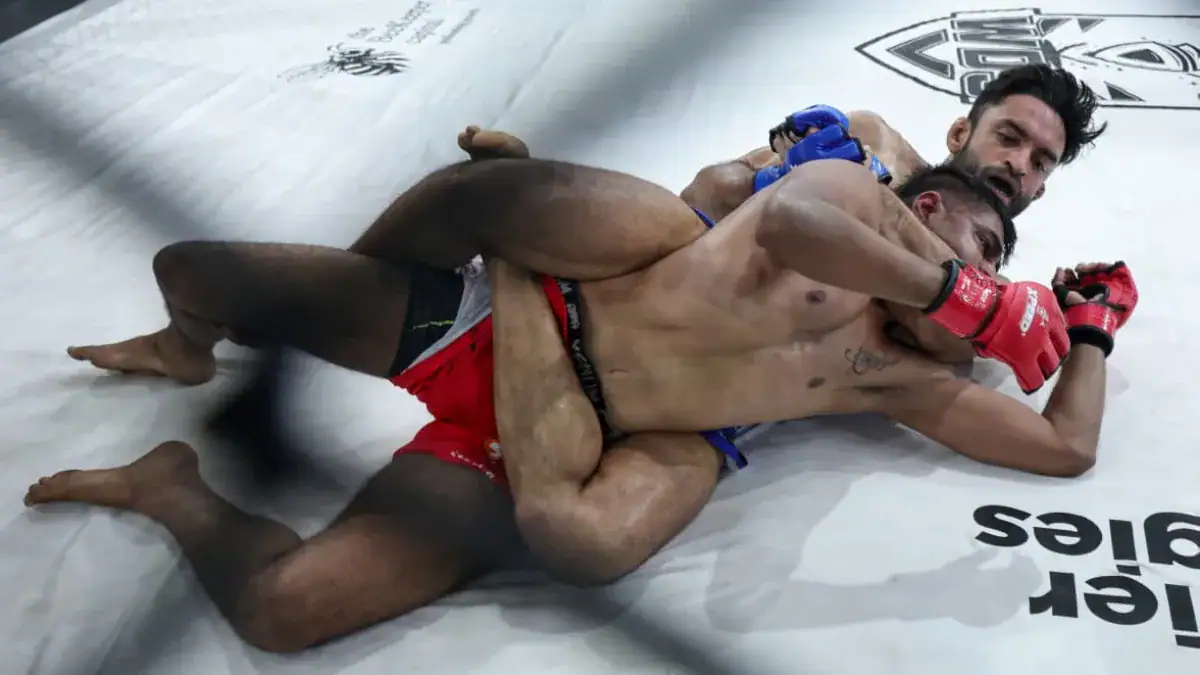
For Varun Sanyal, the road to the Asian Games did not begin inside an MMA cage. It began with wrestling on television, the fictional determination of Rocky Balboa, and a childhood spent trying almost every sport he could find.
Now, the 21-year-old will find himself at the centre of a historic moment for Indian combat sports when Mixed Martial Arts makes its Asian Games debut at Aichi-Nagoya 2026. Sanyal will compete in the men’s traditional 77kg category, carrying India’s hopes in a sport that is rapidly gaining popularity across Asia. He will be joined by Suchika Tariyal Hooda, who will compete in the women’s 60kg division after previously representing India in kurash at the Hangzhou Asian Games.
For Sanyal, however, the significance goes beyond simply competing for a medal. He is stepping onto a stage that could help determine how seriously MMA is viewed in India.
Sanyal grew up in Singapore, where his sporting education was anything but specialised. Cricket, football, athletics, squash and powerlifting all featured at different stages before wrestling, jiu-jitsu and Muay Thai eventually led him towards MMA. His first exposure to combat sports came through WWE and TNA. The interest became more serious after watching Indian wrestling icons Sushil Kumar and Yogeshwar Dutt achieve Olympic success at London 2012.
“Seeing our Olympians succeed really drew me towards martial arts and eventually towards MMA,” Sanyal said. The attraction was not merely about fighting. For him, MMA represented something much broader: the ability to remain composed when everything around you becomes chaotic. He describes the sport as a life skill, pointing to the importance of self-defence, staying calm under pressure and making decisions when faced with physical danger.
That philosophy perhaps explains why his journey has involved so many different disciplines. Rather than building himself around a single sporting identity from childhood, Sanyal accumulated experiences that eventually came together inside MMA.
A Father’s Influence Behind the Fighter
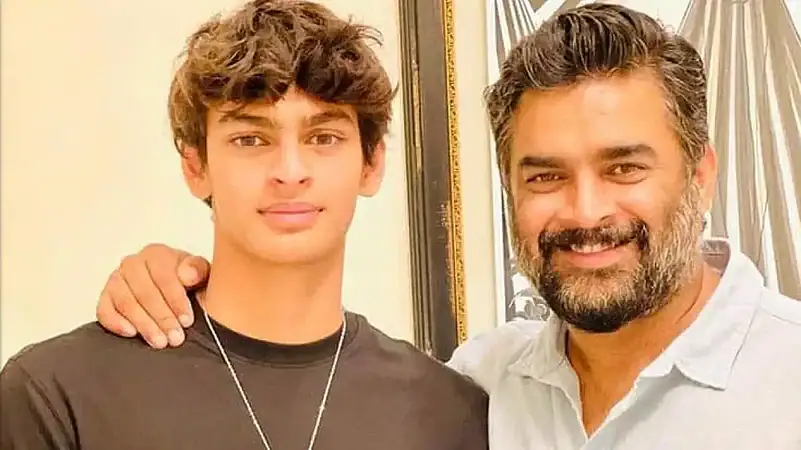
Sport was also a family affair. Sanyal recalls his father taking him to football fields, playing squash with him, going for runs and exercising together. Even taekwondo entered his life at a young age, although he admits he was not particularly interested in it then. His father, economist and author Sanjeev Sanyal, was supportive as his son moved through different sporting interests, from cricket and the gym to powerlifting and eventually MMA.
MMA took some time for his father to fully embrace, but Sanyal says that support has remained constant. Today, his father discusses the sport with him and tries to understand the demands of his profession. That support has been important because Sanyal's sporting path has unfolded alongside an academic one. He is a first-class business management honours graduate from Queen Mary University of London and has now turned professional in MMA.
His route to Aichi-Nagoya has been far from conventional. Sanyal won the MMA SFI Nationals in 2025, earning qualification for the Asian AMMA Championships in China in January 2026. He returned from the event with a bronze medal and, crucially, an official ranking within the Asian system. But the Asian Games qualification picture remained unclear. Rather than wait indefinitely for confirmation, Sanyal shifted his attention towards his professional career. Then came the news he had been waiting for but only two weeks before the Asian Games. That left little time for the kind of preparation normally associated with a major multi-sport event.
“Preparing mentally and physically for something of this magnitude in such a short period has been quite a challenge,” he said.
Yet there is an element of fitting irony in that situation. MMA itself has taught him to make decisions under pressure. Now he has to apply those lessons to the biggest opportunity of his career.
Sanyal believes the Asian Games could become a turning point for MMA in India. The sport is still developing its infrastructure and athlete-support ecosystem, and fighters continue to depend on sponsorship and federation-backed efforts to sustain their careers. Sanyal is supported by Raphe mPhibr, but he believes greater institutional backing will be necessary if India is to build a deep pool of MMA talent.
He also credits national federation president Nikhil Kunder and others involved in running the sport for personally supporting events, training and athletes. For Sanyal, the ambition is much bigger than simply having two Indian fighters at one Asian Games. India currently has two athletes ranked among the top six in Asia, and he sees that as evidence of what could be possible.
He wants India eventually to have fighters across every MMA weight category, much as it does in established combat sports such as wrestling and boxing. That makes Aichi-Nagoya an important first chapter. Sanyal will arrive with a bronze medal from the Asian Championships, professional experience and an unusually diverse sporting background. But perhaps most importantly, he arrives knowing that he is not simply competing in the first MMA event at an Asian Games.
He is helping introduce the sport to a much larger Indian audience. And for a fighter whose journey began with watching heroes on a television screen, there could hardly be a bigger stage on which to begin writing his own chapter.
Comments (0)
to post comments, replies, and votes.
Loading comments…