India’s Swimming Medal History at the Asian Games: From Sachin Nag’s Gold to the 2026 Medal Hunt
India’s swimming story at the Asian Games is a curious one. It began with a golden burst at the inaugural edition in 1951, produced another silver 35 years later, returned to the podium twice in the 21st century and has since gone more than a decade without a medal.
As India prepares for the Asian Games 2026 in Aichi-Nagoya, the swimming contingent enters the competition carrying both a proud historical legacy and the weight of a long medal drought. India has won nine Asian Games swimming medals in total: one gold, two silver and six bronze. A remarkable two-thirds of that entire collection came at the very first Asian Games in New Delhi in 1951.
The question for the current generation is whether 2026 can add another chapter to that medal history.
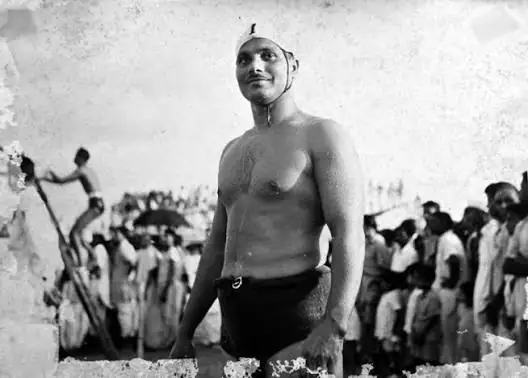
India did not have to wait long for its first Asian Games swimming champion. On March 8, 1951, Sachin Nag won the men’s 100m freestyle in 1:04.70 at the inaugural Asian Games in New Delhi. His victory was historic beyond swimming: Nag became the first Indian to win a gold medal at the Asian Games, making his name permanently part of the country's sporting history.
Nag’s gold was accompanied by a remarkably productive campaign for Indian swimming. Kanti Shah won silver in the men’s 100m backstroke, while Bimal Chandra took bronze in the 400m freestyle and Jehangir Naegamwalla won bronze in the 200m breaststroke. India also collected bronze medals in both the 4x100m freestyle relay and the 100m medley relay.
The latter was contested under the three-stroke format used at the time, with Kanti Shah, Jehangir Naegamwalla and Sachin Nag forming India's medal-winning combination. It was an extraordinary opening statement from Indian swimming.
But what followed was very different.
A 35-Year Wait for the Next Medal
After the success of 1951, Indian swimming endured a prolonged drought. The wait finally ended at the 1986 Asian Games in Seoul, when Khazan Singh Tokas produced one of the defining performances in India's Asian Games swimming history. Tokas won silver in the men’s 200m butterfly with a time of 2:02.38, ending a 35-year wait for another Indian swimming medal at the continental Games.
Yet the breakthrough did not immediately trigger a sustained run of podium finishes. India had to wait another 24 years for its next swimming medal.
At the 2010 Asian Games in Guangzhou, Virdhawal Khade ended that second long drought. Khade won bronze in the men’s 50m butterfly, clocking 24.31 seconds. It was India's first Asian Games medal in a 50m swimming sprint and represented another important moment in the country's modern swimming development. Four years later, India produced another podium finish. At the 2014 Asian Games in Incheon, Sandeep Sejwal won bronze in the men’s 50m breaststroke in 28.26 seconds. It remains India's most recent Asian Games swimming medal.
That means India will enter Aichi-Nagoya 2026 having gone through 12 years without an Asian Games swimming medal. The editions in Jakarta-Palembang in 2018 and Hangzhou in 2023 saw Indian swimmers reach finals and establish national marks, but none could finish among the top three.
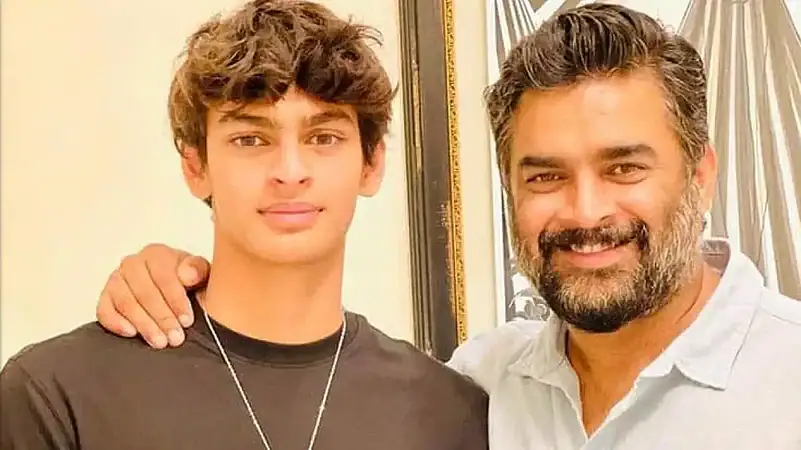
The current Indian contingent is a reflection of a programme that has made progress in national-level performance, even if translating those improvements into Asian Games medals remains difficult. The 2026 swimming competition will be held from September 20 to 25 at the Tokyo Aquatics Centre, the facility originally built for the Tokyo 2020 Olympic and Paralympic Games. The venue features a 10-lane Olympic competition pool and a 10,000-seat grandstand. India’s team includes experienced names such as Sajan Prakash and Srihari Nataraj, alongside national record holders and younger swimmers including Aryan Nehra, Rohit Benedicton, Aneesh Gowda and Vedaant Madhavan.
Prakash holds the Indian national record in 200m butterfly at 1:56.38, placing him within striking distance of the Asian podium, although the continental standard remains formidable.
The significance of 2026, therefore, is not simply about adding another medal to a nine-medal historical ledger. It is about ending a cycle.
India’s swimming history at the Asian Games has been characterised by spectacular individual breakthroughs separated by long periods of silence. Sachin Nag opened the account in 1951. Khazan Singh revived it in 1986. Virdhawal Khade returned India to the podium in 2010. Sandeep Sejwal followed in 2014. Since then, the medals have stopped.
The current generation has a chance to change that. India may not enter Aichi-Nagoya as one of Asia’s swimming superpowers, but the gap is not uniform across every event. In particular, the sprint backstroke events and Sajan Prakash’s 200m butterfly offer potential opportunities if Indian swimmers can produce their best performances when it matters most.
For a sport whose Asian Games story began with a historic gold medal, even a single bronze in Tokyo could carry considerable significance.
But if 2026 produces another Indian swimming champion, it would do something even more remarkable: 75 years after Sachin Nag, it would reopen a golden chapter that has remained closed for more than seven decades.
Comments (0)
to post comments, replies, and votes.
Loading comments…