Gukesh Defends London System Choice After 20-Move Draw Against Sindarov
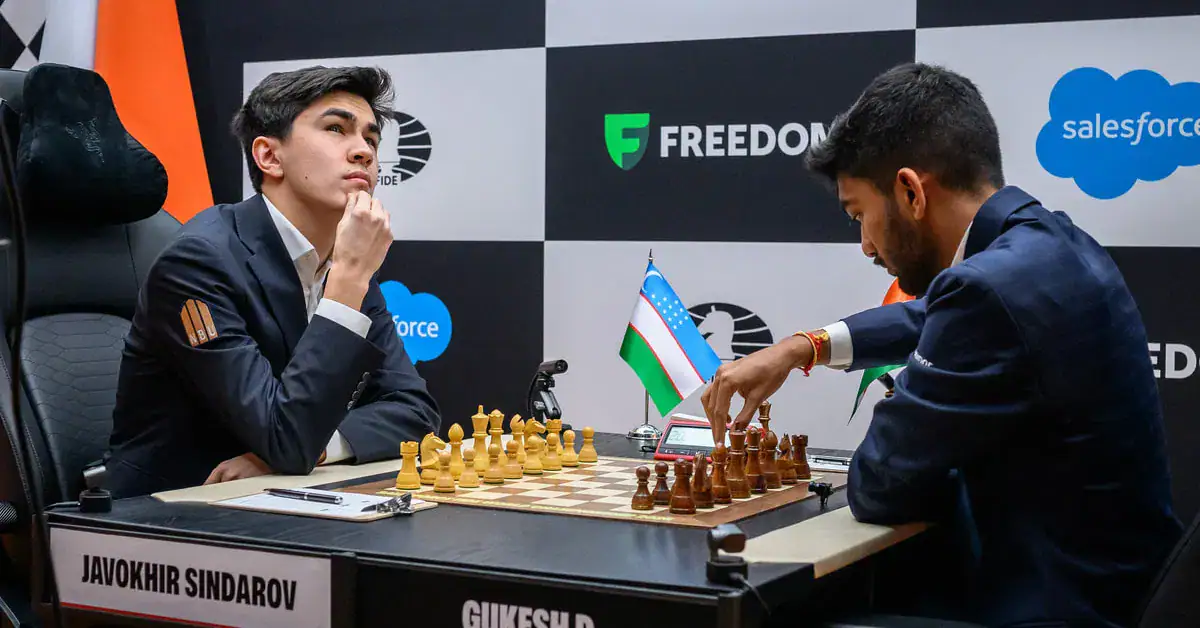
D. Gukesh defended his London System choice after a 20-move draw against Javokhir Sindarov in Game Two of their 14-game FIDE World Chess Championship match.
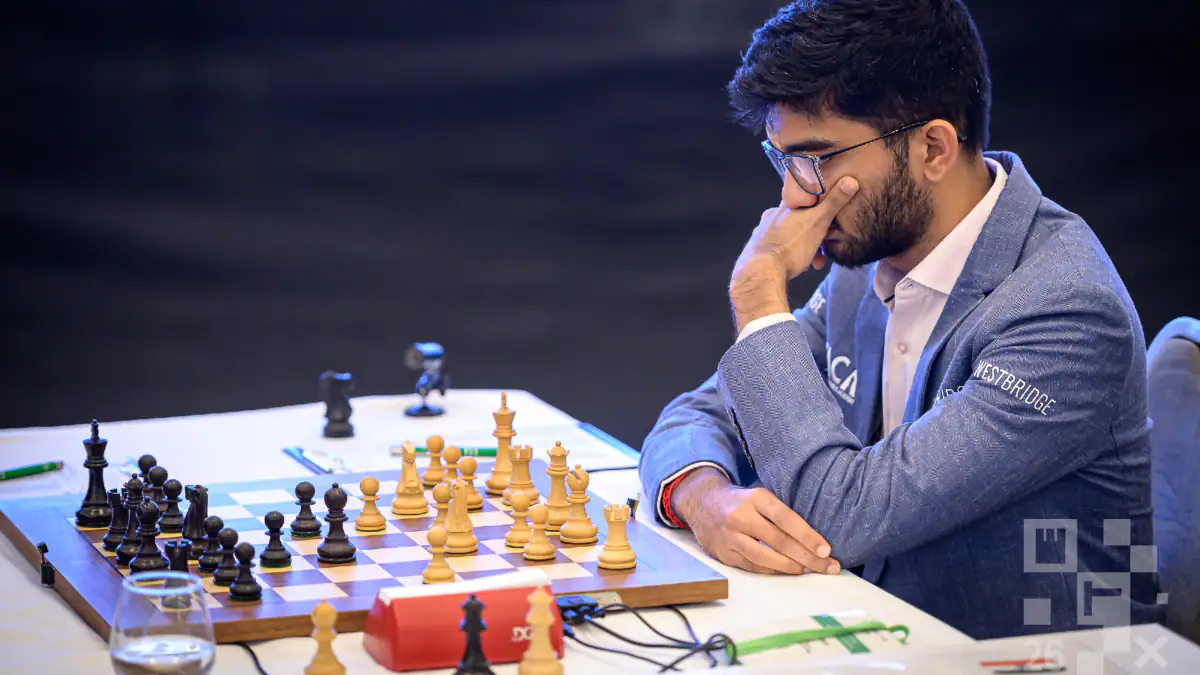
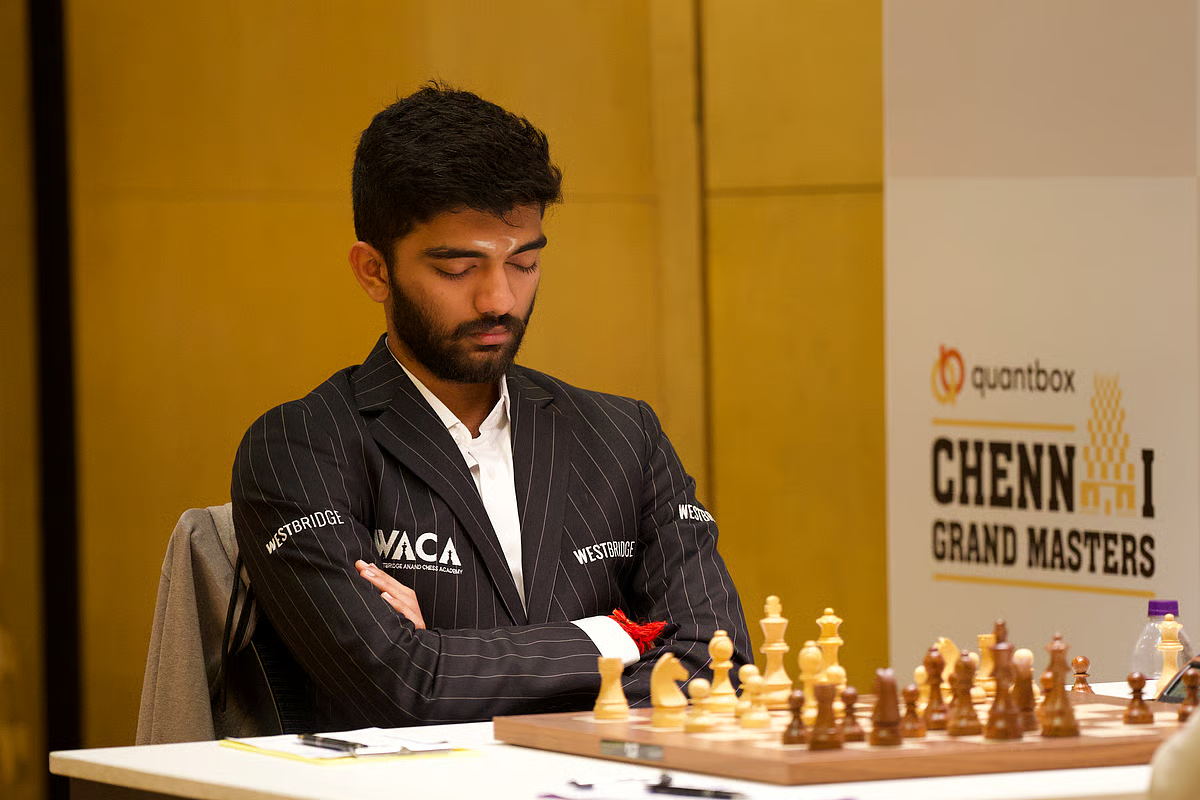
World champion D. Gukesh stood by his decision to employ the London System against Uzbek challenger Javokhir Sindarov in the second game of their FIDE World Chess Championship match, describing the opening as a “cool” way to begin the contest despite the encounter ending in a quick 20-move draw on Wednesday.
After an absorbing and hard-fought first game, expectations were high for another extended battle between the two players. Instead, the second encounter offered little sustained tension, with neither side managing to establish an advantage. Gukesh, playing with the white pieces, eventually agreed to a draw by repetition after just 20 moves.
The result left the match finely balanced, with both players having shared the points from the opening two games.
The biggest talking point from the second game was Gukesh’s decision to open with the London System. The choice surprised Sindarov, although the challenger said he was familiar with the variation.
Gukesh, however, was comfortable with his decision and dismissed the idea that one opening necessarily offers a greater advantage than another in modern chess.
“Nowadays everything from both colours is playable, there is so much to explore because of the engines, I don’t think one opening is better than the other, I thought it would be a cool way to start,” Gukesh said after the game.
His comments reflect the breadth of opening preparation at the highest level, where engine-assisted analysis has expanded the number of viable options available to elite players. Rather than treating the London System as an inherently passive or aggressive choice, Gukesh presented it as one of several playable approaches.
The decision has also created some intrigue around his future opening choices. Chess followers will be watching to see whether he returns to the London System later in the match or switches to a different setup as the contest develops.
Neither Player Found a Way Through
The second game was markedly different from the opening encounter. Gukesh was unable to extract an advantage from his opening preparation, while Sindarov showed sufficient familiarity and accuracy to prevent the world champion from creating meaningful pressure.
Asked why the game failed to produce a decisive contest, Gukesh pointed to the preparation of both players.
“Both are well prepared,” he said. Sindarov offered a similar assessment, explaining that both players had solid positions and that it was difficult to make progress in the early middle game.
The decision to agree to a draw after 20 moves was therefore not simply a matter of the players choosing to avoid complications. Gukesh explained that he could not identify a convincing way to put his opponent under serious pressure without taking on additional risks.
“I could not see a way to pose some serious problems for my opponent, and if I have to take some measures, I also have to take a certain amount of risk. You hope for your opponent to go wrong at some point but it is equally likely that you will get in to trouble. It’s about making some clever decisions,” he said.
At this level, attempting to force a result from an equal position can expose a player to counterplay. Gukesh’s explanation suggested that he was unwilling to compromise his position simply to prolong the game.
Gukesh was asked whether he would have preferred to secure a result in his favour after the tension of the first game. His response was straightforward: he would have liked both games to go his way.
However, he was also conscious of the scale of the challenge ahead. With the match scheduled for 14 games, only two encounters had been completed.
“It’s not easy, you try to create chances, sometimes you get, sometimes you don’t, we both spent months preparing, generally I feel fine, it’s a 14-games match and only two are over yet, overall games are fine and I feel energetic,” he said.
The comments indicated that the world champion was not overly concerned by the early draw. Both players have invested months in preparation, and the opening games are only the beginning of a much longer strategic contest.
Gukesh also spoke positively about the arrangements and support around him during the championship. He praised his friends Shikhar and Charmie, who are accompanying him, along with his Polish second, Grzegorz Gajewski. He said he was very happy with the arrangements for the match.
When asked about the full composition of his team, Gukesh chose not to disclose the details, saying he would reveal them later.
The third game is scheduled for Thursday, with Sindarov set to have the opportunity to introduce a different opening approach. That could provide Gukesh with another chance to demonstrate the depth of his preparation in a new variation.
The first two games have offered contrasting experiences: an intense opening battle followed by a short, controlled draw. Neither player has managed to take an early lead, and the match remains open.
For Gukesh, the second game was an opportunity to test the London System in a world championship setting. Although it did not produce an advantage, he made it clear that he had no reservations about the choice.
With 12 games still to be played, the significance of Wednesday’s 20-move draw may lie less in the result and more in the opening ideas introduced. The next encounter will offer the first indication of whether either player is ready to move away from the cautious balance of the second game and take greater risks in pursuit of a lead.
Comments (0)
to post comments, replies, and votes.
Loading comments…