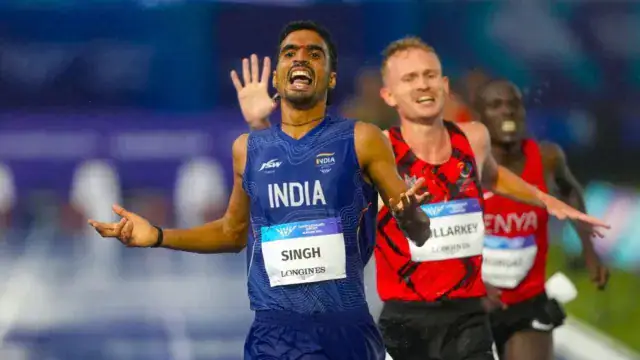
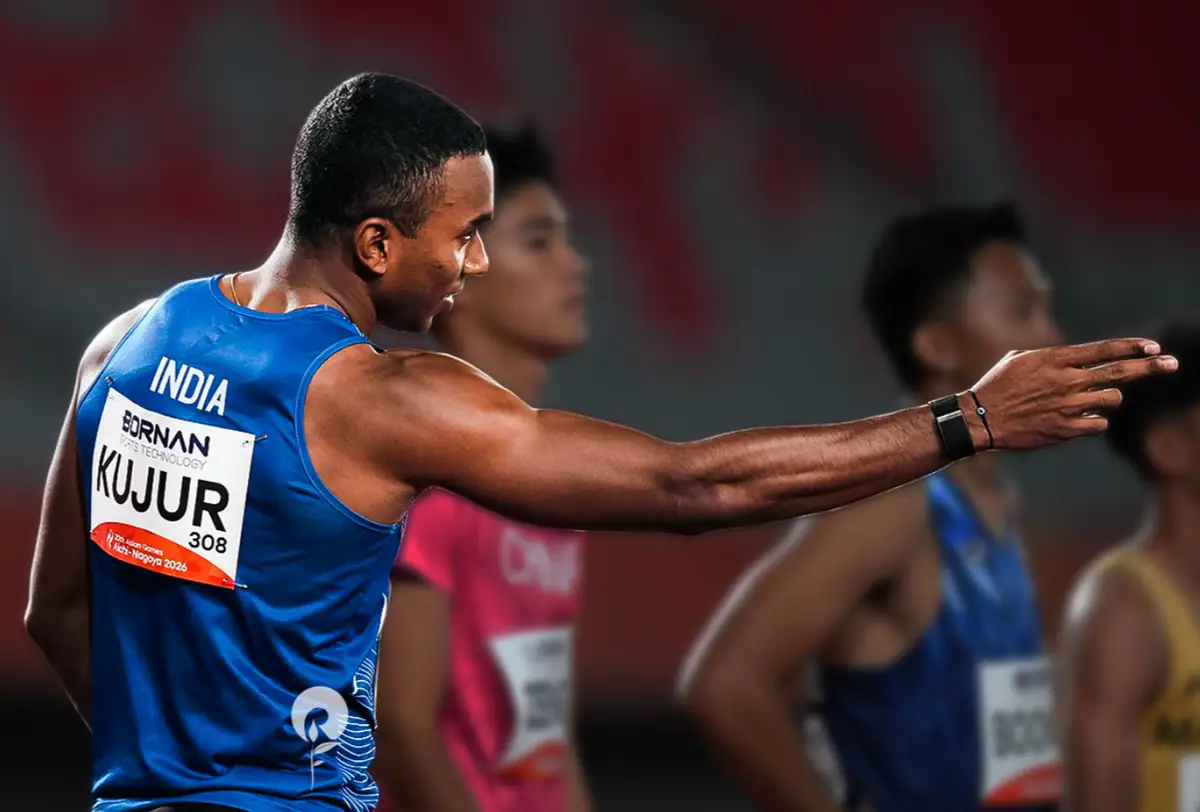
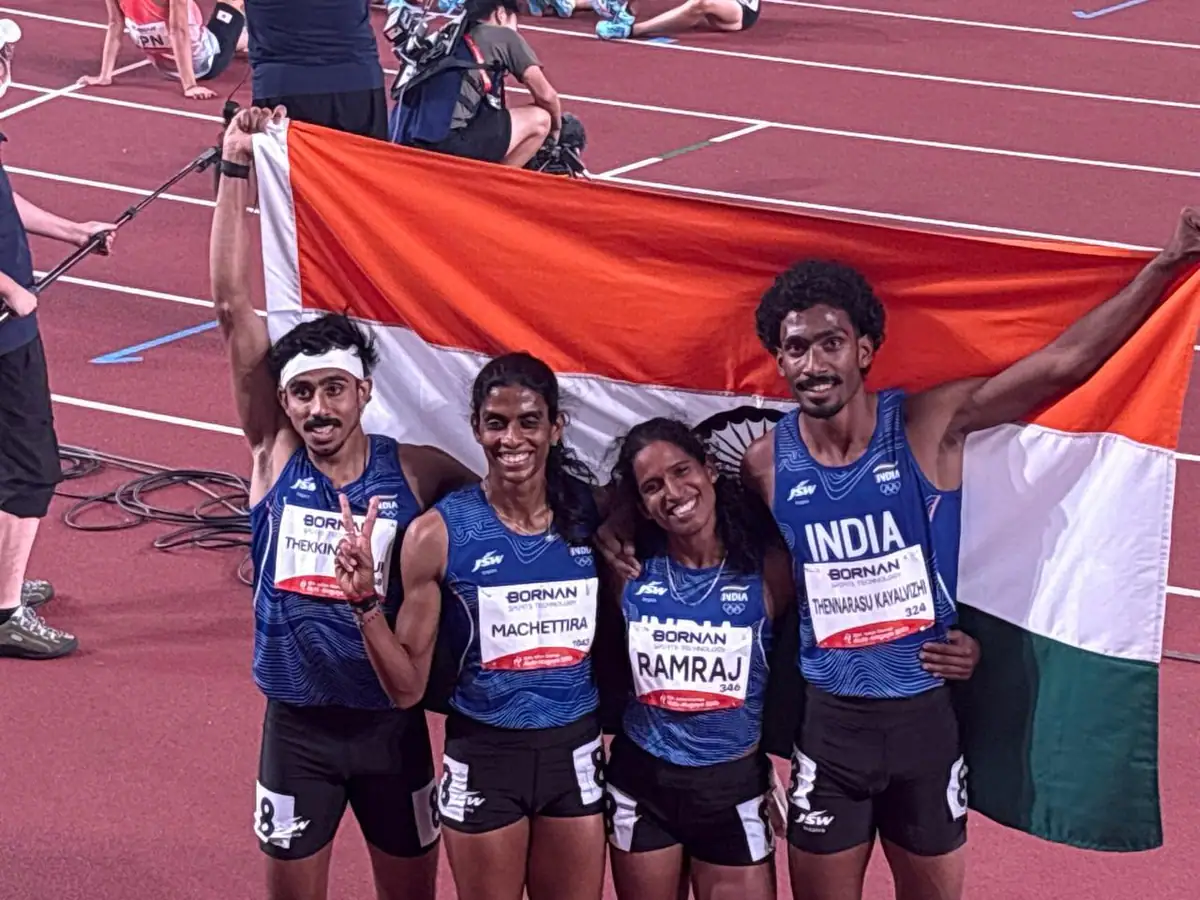
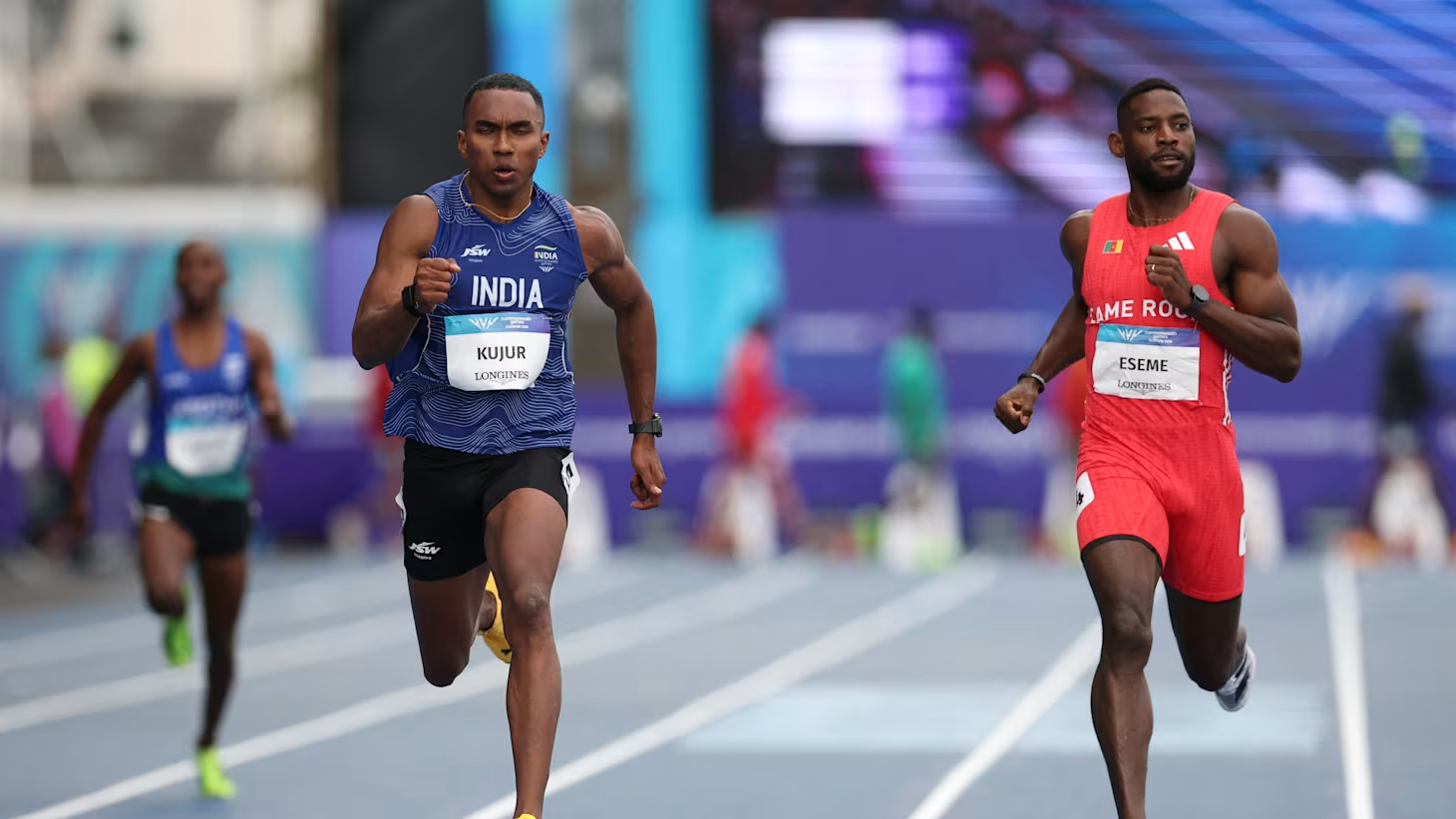
India and Japan set for high-speed showdown as Asian record pace looms at World Relays 2026

The men’s 4x400m relay at the World Relays 2026 in Gaborone could produce one of the fastest races ever seen in Asian athletics, as India and Japan line up together in a loaded Heat 3 on Day 1 of competition.
With qualification for the World Athletics Championships Beijing 2027 on the line, along with a place in the World Relays final, the stakes are already enormous. But beyond qualification, there is another fascinating subplot building around this race the possibility of the Asian record coming under pressure. India’s men’s 4x400m team enters the championships with growing confidence and increasing depth, while Japan arrives as the current Asian record holder. Add Qatar into the mix, another traditional Asian relay powerhouse, and Heat 3 suddenly becomes far more than just a qualification race.
The heat is stacked with quality from top to bottom.
Great Britain & Northern Ireland enter with the fastest personal best in the field at 2:55.83, followed by Belgium at 2:57.75 and Japan at 2:58.33. India comes in with a season best and personal best of 2:59.05, making them the fourth-fastest team on paper in the heat.
The complete lane lineup for Heat 3 reads:
Mexico — 3:02.87
Switzerland — 3:02.46
Qatar — 3:00.15
Spain — 3:00.54
India — 2:59.05
Belgium — 2:57.75
Great Britain & NI — 2:55.83
Japan — 2:58.33
Only the first two teams from each heat automatically qualify for the World Championships and the World Relays final, while the next two fastest times across all heats also advance. That format means every fraction of a second matters. For India, the race represents another major test of how far the country’s quarter-mile programme has evolved since the historic Asian Games gold medal in Hangzhou.
The biggest strength of this Indian squad is depth.
India heads into Gaborone with five athletes already under the 46-second barrier this season a level of depth the country rarely possessed in previous generations. Rajesh Ramesh leads the squad with a season best of 45.26s, followed by Vishal TK at 45.44s, Dharamveer at 45.93s, Manu TS at 45.96s and Amoj Jacob at 45.99s.
Behind them, Theerthesh Shetty, Jay Kumar and Nihal Joel provide further options, giving India flexibility in relay combinations depending on strategy and recovery management. That depth becomes crucial in relay racing, especially at global events where baton exchanges, composure and tactical positioning often decide qualification.
India’s lane assignment in lane five may also work in their favour. Positioned between Spain and Belgium, the Indian quartet will have strong teams to chase early in the race while also keeping an eye on Japan in the outside lane.
And Japan is impossible to ignore in this conversation.
The Japanese men’s relay programme has built a reputation for technical precision, consistency and tactical intelligence over the years. Their current Asian record of 2:58.33 stands as the benchmark for Asian relay running, and with both India and Japan now consistently dipping below the three-minute mark, the rivalry between the two nations is becoming one of the most compelling narratives in continental athletics.
India’s current national record of 2:59.05 already suggests the gap is narrowing rapidly.
What makes this heat particularly interesting is the pace expected from the European powerhouses. Great Britain and Belgium are likely to push the race hard from the opening leg, potentially dragging the entire field into faster territory. Japan traditionally thrives in fast, rhythm-based relay races, while India’s recent performances suggest they are increasingly comfortable operating at those speeds. Qatar also cannot be overlooked. Though their recent relay consistency has fluctuated, they remain a dangerous team with significant relay pedigree and experience on the world stage.
The challenge for India will not simply be speed, but execution.
At this level, relay races are rarely won purely on individual times. Baton exchanges, lane discipline, positioning during the break line and the ability to handle pressure become equally important. India’s relay pool has improved dramatically in individual quality, but major championships continue to demand precision under stress. Still, there is genuine optimism around this Indian squad.
Unlike previous years where India often depended on one or two standout runners, this team enters with balance across all four legs. Rajesh Ramesh has emerged as a dependable lead-off option, Amoj Jacob brings experience in pressure situations, while Vishal TK and Manu TS have shown impressive consistency throughout the domestic season. The timing of the race also adds intrigue.
Scheduled for 20:19 IST, the event comes under cooler evening conditions in Gaborone ideal circumstances for fast relay running. If the race unfolds aggressively from the start, the possibility of multiple teams dipping under three minutes becomes very real. For India, qualification remains the primary objective. Securing a direct berth for the World Championships would represent another important milestone for the programme.
But if the race develops perfectly, there could be something even bigger at stake.
An Asian record once considered untouchable may suddenly find itself under serious threat.
Comments (0)
to post comments, replies, and votes.
Loading comments…