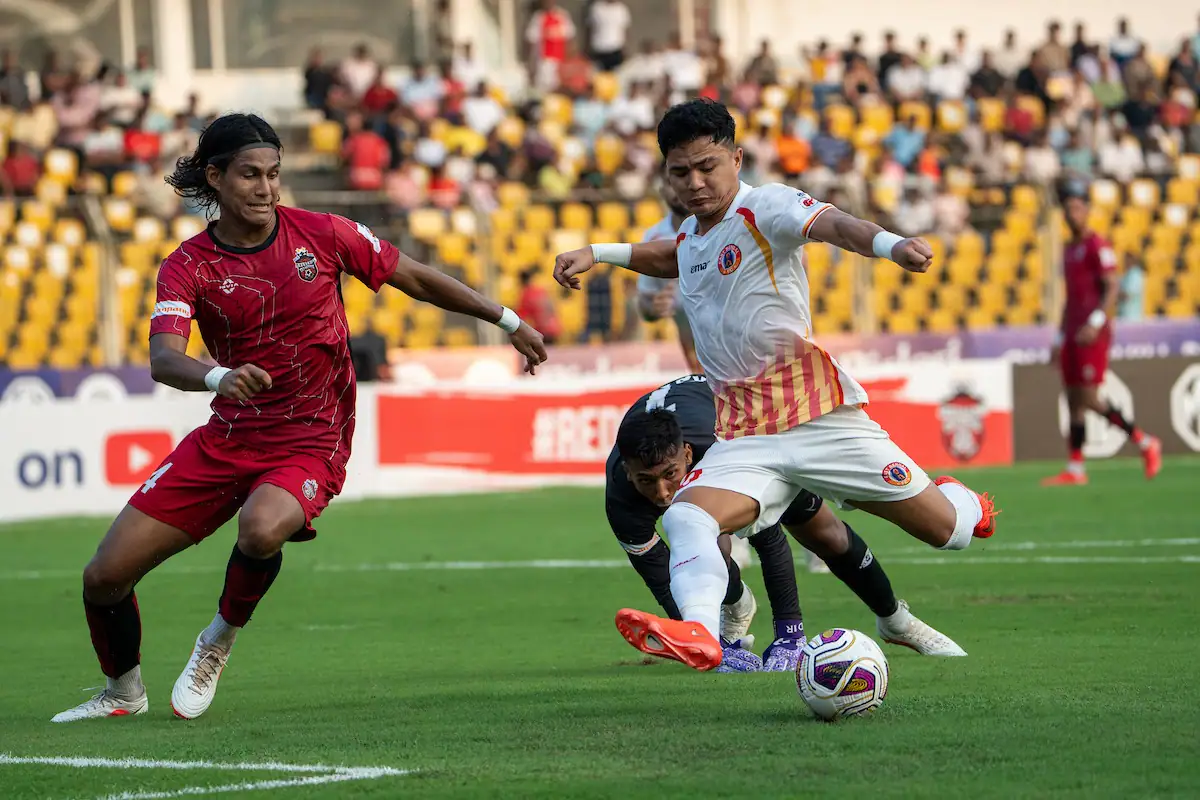
India Leave Unity Cup Without a Goal as Concerns Over National Team Continue to Grow

India finished bottom of the Unity Cup after defeats to Jamaica and Zimbabwe, scoring no goals in two matches and raising fresh concerns about the direction of the national team.
India's Unity Cup campaign ended in disappointment as the Blue Tigers finished bottom of the four-team tournament in London, leaving supporters with more questions than answers ahead of crucial international competitions.
The numbers tell a worrying story. Two matches played. Two defeats. Zero goals scored. Three goals conceded.
India lost 1-0 to Zimbabwe in the third-place playoff after falling to Jamaica in the opening match, ending the tournament without registering a single goal. While defeats are part of football, it is the nature of the performances that has sparked concern among Indian football supporters. For a nation that continues to speak about qualifying for the FIFA World Cup one day, the gap between ambition and reality appears as wide as ever.
The loss against Zimbabwe was particularly frustrating because it came against a team ranked relatively close to India in the FIFA rankings. India entered the match ranked 136th in the world, while Zimbabwe stood at 130th. The game was decided by a single goal after Farukh Choudhary conceded a penalty, which Zimbabwe converted successfully. Despite having opportunities to compete, India once again struggled in the attacking third and failed to find the back of the net.
The defeat highlighted a recurring issue for Indian football over recent years a lack of creativity and cutting edge in front of goal.
While defensive mistakes can happen, failing to score across two matches remains a bigger concern.
At the same time, many supporters believe the performances should not automatically lead to conclusions that India cannot compete with teams such as Zimbabwe or Bangladesh. A growing section of fans feels the current national team is not necessarily the strongest available Indian squad.
Questions have emerged regarding player selections, squad balance and tactical decisions. Several supporters argue that players performing consistently at club level are either not being selected or are not receiving enough opportunities, while others continue to feature despite inconsistent performances.
Whether those criticisms are fully justified or not, the perception itself highlights a growing disconnect between supporters and decision-makers. The frustration stems not only from defeats but from the feeling that India may not be maximising the resources currently available.
Need for Stronger International Competition
Perhaps the biggest lesson from the Unity Cup is the need for India to regularly face stronger opposition. Zimbabwe benefits from competing within the Confederation of African Football (CAF), where teams frequently play against physically strong and tactically demanding opponents.
India's situation is very different. The South Asian Football Federation (SAFF) region provides limited opportunities for high-level competition. While tournaments such as the SAFF Championship are important, they do not consistently expose Indian players to the intensity required to improve internationally.
This is why calls for greater involvement in Central Asian Football Association (CAFA) competitions continue to grow louder. Participation in CAFA tournaments would provide India with regular matches against nations such as Uzbekistan, Tajikistan, Kyrgyzstan, Turkmenistan and Iran. These are teams that operate at a higher competitive level and could accelerate India's development.
If Indian football genuinely wants to improve, finding more opportunities outside the SAFF ecosystem may be essential.
The Unity Cup results have also reignited discussion around the coaching position. Some supporters believe Indian football requires an experienced foreign coach capable of implementing a long-term vision and improving results at the international level. Names such as Stephen Constantine continue to be mentioned due to their previous success with India. Constantine guided the national team through one of its most stable periods and oversaw a significant rise in FIFA rankings during his tenure.
Others have suggested Ashley Westwood as a potential option.
Westwood is no stranger to Indian football, having previously coached Bengaluru FC and currently working with Kerala Blasters. His experience with Afghanistan and Hong Kong also provides familiarity with Asian football and developing footballing nations. Whether a coaching change is necessary remains a matter of debate, but there is little doubt that supporters are searching for solutions.
https://www.indiasportshub.com/articles/india-end-unity-cup-empty-handed-after-defeat-to-zimbabwe
Another topic that has resurfaced is the inclusion of Overseas Citizen of India (OCI) players. Many fans believe opening the door to OCI footballers could increase competition for places and improve the overall quality of the national team. The debate has existed for years and continues to divide opinion. Supporters argue that several players of Indian origin competing abroad could strengthen the squad immediately, while others believe development should focus primarily on domestic pathways.
Regardless of where one stands on the issue, the discussion has intensified following India's recent struggles.
Indian football remains at an important crossroads. The Unity Cup was intended to provide valuable preparation and an opportunity to test the team against unfamiliar opposition. Instead, it exposed several issues that require attention. The lack of goals, limited attacking creativity and inability to convert promising moments into results are concerns that cannot be ignored.
However, tournaments such as these can also serve as valuable learning experiences. The challenge now is ensuring the lessons are acted upon.
Whether that means seeking stronger international competition, reassessing player selection, debating coaching structures or revisiting eligibility policies, Indian football cannot afford complacency. The dream of reaching the FIFA World Cup remains alive among supporters. But after a winless and goalless Unity Cup campaign, it is clear that significant work remains before that dream can become a realistic objective.
Comments (0)
to post comments, replies, and votes.
Loading comments…