India’s U17 World Cup Hopes Receive Major Boost After North Korea Withdrawal
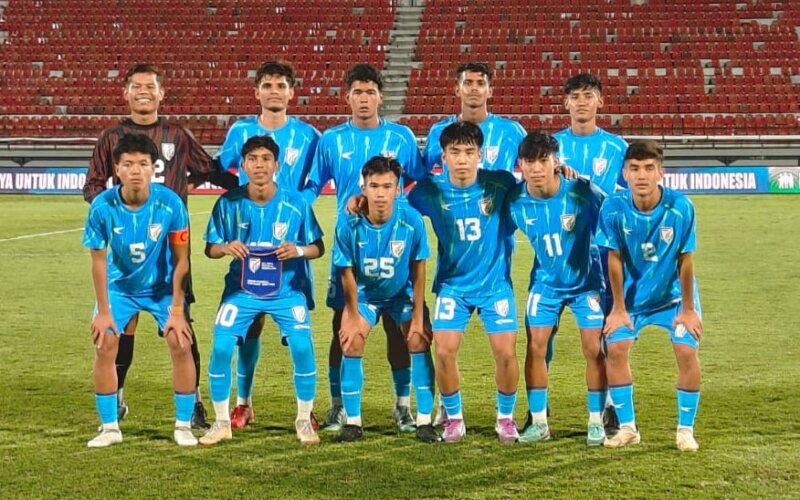
India’s path at the AFC U17 Asian Cup Saudi Arabia 2026 has suddenly become far more open after the withdrawal of DPR Korea from the tournament
India’s path at the AFC U17 Asian Cup Saudi Arabia 2026 has suddenly become far more open after the withdrawal of DPR Korea from the tournament, a development that significantly changes the dynamics of Group D and boosts the Blue Colts’ chances of qualifying for the FIFA U17 World Cup 2026.
The Asian Football Confederation (AFC) tournament, scheduled from May 5 to May 22 in Saudi Arabia, originally featured India alongside defending champions Uzbekistan, Australia, and two-time champions DPR Korea in what many viewed as one of the toughest groups of the competition. However, with DPR Korea officially pulling out just before the tournament, Group D will now consist of only three teams Uzbekistan, Australia, and India and no replacement team is expected to be added.
The implications are massive.
Under the revised scenario, the top two teams from the three-team group will qualify not only for the knockout stage of the AFC U17 Asian Cup but also directly for the FIFA U17 World Cup Qatar 2026. That means India now effectively needs to finish ahead of either Australia or Uzbekistan to secure a coveted World Cup berth.
Before the withdrawal, India faced an uphill challenge in a group featuring three traditionally strong footballing nations at youth level. Uzbekistan entered the tournament as defending champions, Australia carried a strong qualifying record, while DPR Korea had reached the semi-finals of the previous edition and historically remains one of Asia’s strongest youth football nations. The removal of DPR Korea changes both the mathematical equation and the competitive balance.
Instead of facing three difficult matches, India will now play only two group games:
vs Uzbekistan on May 10
vs Australia on May 13
This reduces the margin for error but also removes one of the most dangerous teams from the group. A single victory could potentially put India within touching distance of World Cup qualification depending on goal difference and head-to-head outcomes. For a nation chasing consistent progress in youth football, the opportunity is enormous.
India’s Qualification Journey
India earned qualification for the AFC U17 Asian Cup after an impressive campaign in the qualifiers, finishing ahead of Iran, Lebanon, Palestine, and Chinese Taipei. The Blue Colts showed discipline, organisation, and attacking intent throughout the qualification phase, earning praise for both their mentality and tactical improvement.
This will be India’s 10th appearance at the AFC U17 Asian Cup, but the stakes are even higher this time because qualification for the FIFA U17 World Cup is attached directly to continental performance. Indian football has invested heavily in youth development over the past decade, and qualification for another U17 World Cup would represent a major validation of that process.
Despite DPR Korea’s withdrawal, Group D remains extremely competitive. Uzbekistan are the defending champions and one of the strongest youth football systems in Asia. Their technical quality, physical preparation, and tournament experience make them favourites to top the group once again. India’s match against Uzbekistan on May 10 could prove decisive. A positive result would immediately place India in a strong position heading into the final group fixture.
Australia, meanwhile, qualified for the tournament after victories over Jordan, Bhutan, and the Philippines during the qualification campaign. Traditionally, Australian youth teams combine athleticism, direct attacking football, and physical intensity. India will need tactical discipline and composure under pressure to compete effectively against them. However, Australia were eliminated in the group stage of the previous edition, showing that they are not unbeatable at this level.
The revised group structure now presents India with one of its clearest recent opportunities to qualify for the FIFA U17 World Cup through merit rather than as hosts. India previously participated in the FIFA U17 World Cup in 2017 as tournament hosts, but qualifying through the AFC competition would carry greater sporting significance and underline genuine developmental progress.
For the current generation of players, this tournament could become a defining moment in their football journeys.
While the withdrawal improves India’s chances, it also increases the pressure. With only two matches remaining in the group phase, every moment becomes crucial. Goal difference, discipline, and game management could all play decisive roles. The coaching staff will likely focus heavily on preparation, defensive organisation, and transition play against two technically superior opponents. At youth level, momentum often matters as much as reputation, and India will believe that a disciplined performance can produce surprises.
Other Groups in the Tournament
The rest of the AFC U17 Asian Cup draw remains unchanged:
Group A: Saudi Arabia, Tajikistan, Thailand, Myanmar
Group B: Japan, Indonesia, China PR, Qatar
Group C: Korea Republic, Yemen, Vietnam, United Arab Emirates
Group D: Uzbekistan, Australia, India
The top two teams from each group will advance to the quarter-finals and secure FIFA U17 World Cup qualification.
India’s youth teams have shown gradual improvement in recent years, with better exposure, stronger academies, and more international competition helping player development. Now, the Blue Colts stand just two matches away from a potential World Cup qualification. The challenge remains difficult, but the equation is now significantly clearer: finish above either Australia or Uzbekistan, and India will book a place at the FIFA U17 World Cup Qatar 2026.
For Indian football, that possibility alone makes the upcoming fortnight one of the most important moments in recent youth football history.
Comments (0)
to post comments, replies, and votes.
Loading comments…