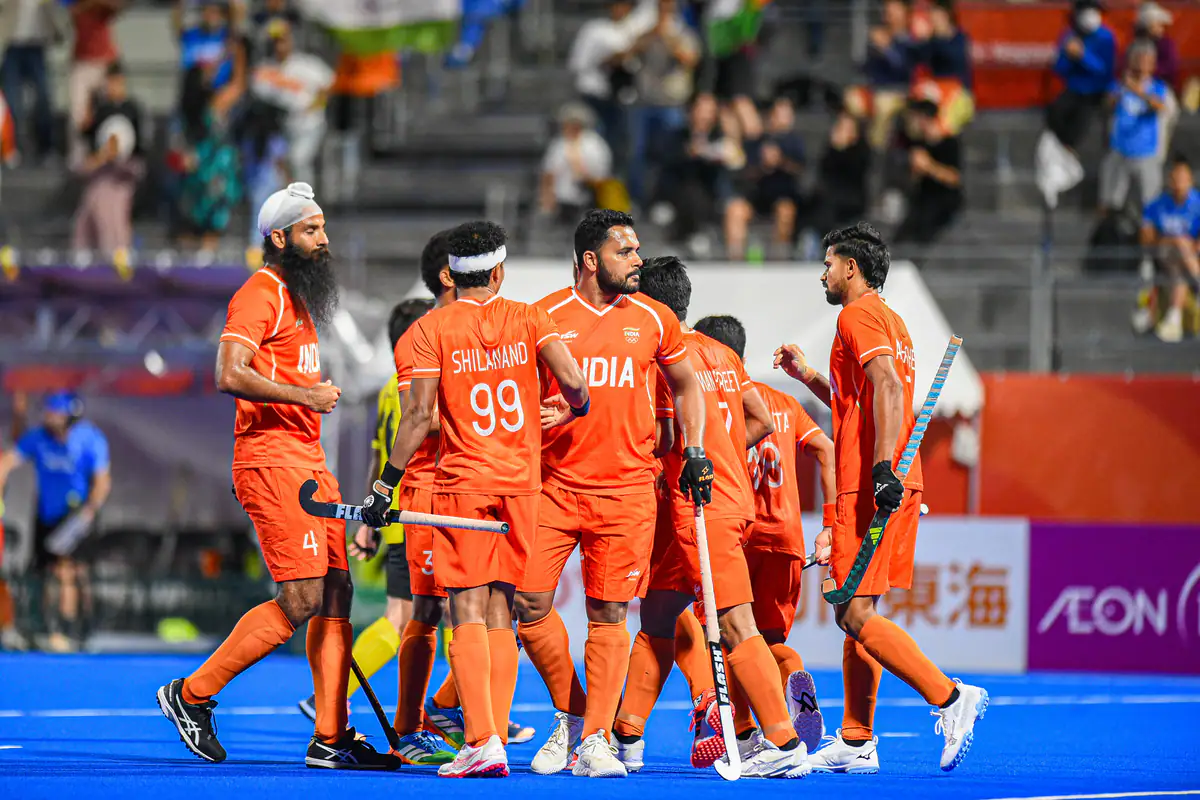
India Women Suffer Narrow 1-2 Defeat to Australia in Opening Hockey Friendly in Perth

The India women's national field hockey team began their four-match friendly series against Australia women's national field hockey team with a narrow 2-1 defeat in Perth on Tuesday.
Despite taking an early lead and producing a disciplined defensive display for large parts of the contest, India were eventually undone by two penalty-corner goals from Australia’s Abby Wilson in the second half.
The result marked a competitive start to what is expected to be a physically demanding and tactically important series for the Indian side ahead of major international competitions later this season.
The Indian team entered the match looking to build on encouraging performances earlier this year, particularly their competitive outings against Argentina. From the opening minutes, India showed confidence in possession and pressed aggressively during transitions, forcing Australia into several uncomfortable defensive situations early in the first quarter.
The breakthrough arrived through a penalty corner. Experienced forward Navneet Kaur converted from India’s set-piece opportunity to give the visitors a deserved lead in the opening quarter.
The goal reflected India’s growing efficiency from penalty corners an area that has received major focus during recent training camps under chief coach Sjoerd Marijne.
More importantly, the early goal gave India confidence against one of the world’s traditionally strongest hockey nations.
Following the opening goal, India produced one of their most organised defensive halves in recent months. Australia attempted to increase tempo through quick flank attacks and high pressing, but India’s defensive structure remained compact and disciplined across the first two quarters. The Indian backline consistently closed passing channels while the midfield unit worked aggressively to limit Australia’s transition opportunities.
Goalkeeper positioning and defensive communication also looked significantly improved compared to some earlier international matches where India had struggled under sustained pressure.
As a result, the visitors successfully carried their 1-0 advantage deep into the second quarter.
The match, however, shifted noticeably after the break. Australia gradually increased attacking intensity and began earning more circle penetrations as India struggled to maintain the same defensive pressure levels seen during the first half. The hosts also started generating more penalty corners an area where Australia remain among the world’s most dangerous teams.
Eventually, the pressure told. Abby Wilson equalised for Australia in the third quarter after converting from a penalty-corner opportunity, bringing the hosts back into the contest.
The goal significantly changed the rhythm of the match. Australia began dominating possession more consistently while India increasingly found themselves defending deeper inside their own half.
Despite the growing Australian pressure, India continued battling strongly and remained competitive entering the final quarter. However, another penalty corner ultimately proved decisive. Wilson once again capitalised from the set-piece opportunity, scoring her second goal of the match to complete Australia’s comeback and hand the hosts a 2-1 lead.
India attempted to respond late in the game and pushed forward searching for an equaliser, but Australia managed the closing stages effectively to secure victory.
Although the result ended in defeat, several aspects of India’s performance will still encourage the coaching staff. Competing closely with Australia on home soil remains a difficult challenge for any international team because of the hosts’ physicality, tactical discipline and experience under pressure.
For long stretches, India not only matched Australia physically but also looked tactically organised and composed defensively. The first-half display especially demonstrated noticeable improvement in structural discipline and defensive compactness.
Navneet Kaur’s sharp finishing and India’s early attacking transitions also reflected positive attacking intent rather than a purely defensive approach.
At the same time, the match also highlighted areas still needing improvement. Australia’s two goals both coming from penalty corners underlined India’s continuing struggles defending set-pieces consistently against elite opposition. Against top-ranked international teams, penalty corner efficiency often decides matches, and India’s inability to manage those moments proved costly in Perth.
Maintaining intensity levels across all four quarters also remains an important developmental area. India controlled significant phases early in the match but gradually lost territorial control during the second half as Australia increased pressure.
The series itself carries major significance for India beyond immediate results. The matches are part of the team’s preparation for the upcoming FIH Hockey Women's Nations Cup and other international assignments later in the year. Facing Australia provides India with exposure to elite-level speed, physicality and tactical execution that domestic competitions cannot fully replicate.
These matches are also important for testing younger players within high-pressure international environments while refining combinations ahead of major tournaments.
India will now have little time to recover before facing Australia again in the second match of the series on May 27 at 5:00 PM IST. The quick turnaround could actually benefit the Indian side because the coaching staff will immediately have an opportunity to address tactical adjustments from the opening contest.
For India, the challenge now is converting encouraging performances into results.
And while the opening game ended in defeat, the narrow margin and competitive display showed that the team remains capable of troubling higher-ranked opposition when defensive discipline and attacking execution align effectively.
Comments (0)
to post comments, replies, and votes.
Loading comments…