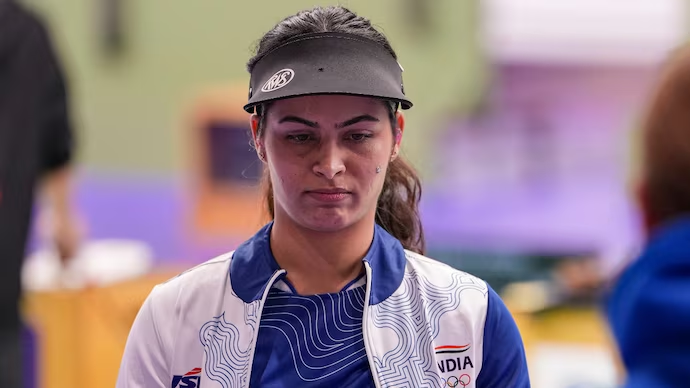
Manu Bhaker: Two Consecutive World Championship Double Finals Highlight India's Most Consistent Pistol Shooter
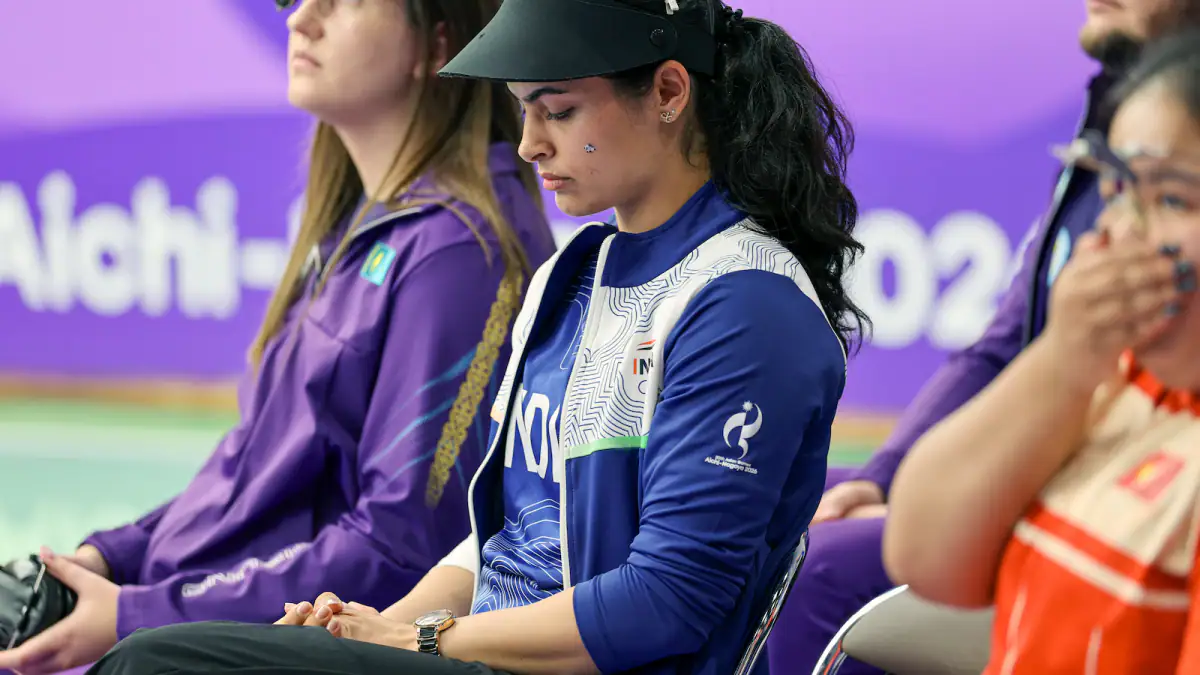
Manu Bhaker qualified for both the 10m and 25m pistol finals at consecutive ISSF World Championships in 2025 and 2026, achieving a 58.82% final qualification rate across 17 world-level starts.
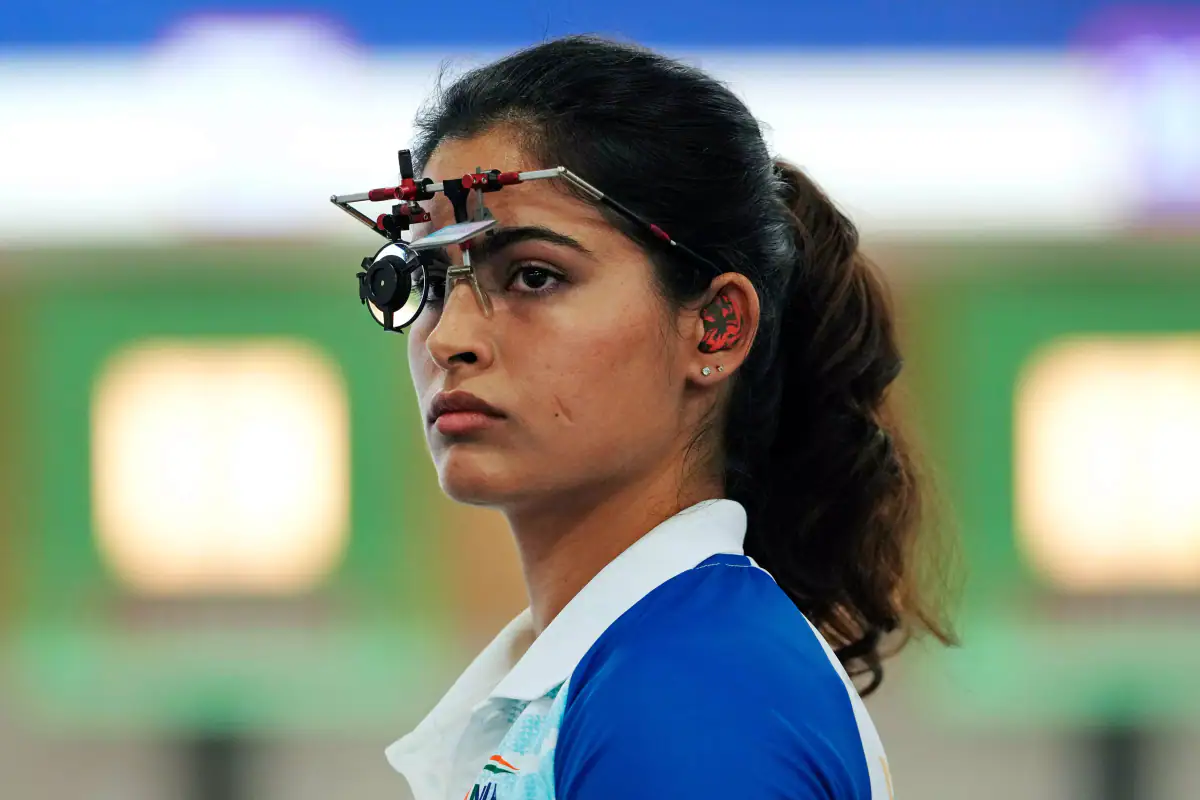
Manu Bhaker's performances at the 2025 and 2026 ISSF World Championships underline an achievement that deserves far greater recognition than the number of individual medals alone suggests.
The two-time Olympic bronze medallist has qualified for the finals of both the women's 10m air pistol and 25m pistol at consecutive World Championships, demonstrating an exceptional ability to compete across two technically demanding disciplines.
At the 2025 World Championships in Cairo, Bhaker reached both individual finals. A year later, at the 2026 edition in Doha, she repeated the feat, qualifying third in the 10m air pistol and sixth in the 25m pistol. While neither championship produced an individual medal for her, the consistency of reaching the final eight in both events is a significant achievement at the highest level of international shooting.
An analysis of her 2025–26 international record provides further context. Across 17 individual appearances at world-level competitions, including World Championships, World Cups and the World Cup Final, Bhaker secured 10 final berths. That represents a conversion rate of 58.82%, or approximately 60%.
For a shooter competing regularly in two different pistol disciplines, maintaining that level of qualification consistency is a strong indicator of technical quality and competitive resilience.
Bhaker's consecutive double-final appearances are the strongest evidence of her ability to perform across disciplines. At the 2025 ISSF World Championships in Cairo, she finished seventh in the 10m air pistol final and fifth in the 25m pistol final. She also contributed to India's silver medal in the 10m air pistol team event.
At the 2026 World Championships in Doha, she again qualified for both finals. In the 10 m air pistol, she finished third in qualification with 583 points, including 21 inner tens, before placing fifth in the final. In the 25m pistol, she recovered from a 289 in the Precision stage with an outstanding 298 in Rapid, finishing qualification with 587-24x and securing sixth place.
She eventually finished fourth in the 25m pistol final after surviving multiple elimination stages and shoot-offs. The individual results may appear disappointing when viewed only through the medal table. However, qualifying for both finals at consecutive World Championships requires sustained performance across qualification rounds, different competition formats and high-pressure environments.
The challenge of mastering two different disciplines
The significance of Bhaker's achievement becomes clearer when the technical differences between the two events are considered. The 10m air pistol demands exceptional stability, fine motor control and precision. Shooters compete over 60 shots, with the target's central ten-ring measuring just 11.5 mm in diameter. Maintaining posture, controlling breathing and executing a consistent trigger release are fundamental to success.
The 25m pistol, meanwhile, requires a different combination of skills. Its competition consists of Precision and Rapid stages, with the latter demanding quick arm movement, sight acquisition and controlled shooting within strict time limits. The mechanical pistol also has a minimum trigger pull weight of 1,000 grams, twice that of the air pistol.
The transition between these disciplines is not straightforward. Air pistol rewards controlled stillness and deliberate execution, while rapid fire requires speed, recoil management and repeatable movement under time pressure.
Many elite shooters concentrate on one discipline to maximise their competitive advantage. Bhaker's ability to remain a regular finalist in both reflects the breadth of her technical preparation and her capacity to adapt between contrasting shooting requirements.
The 2025–26 performance audit records 10 individual final qualifications from 17 world-level starts, giving Bhaker a 58.82% conversion rate. Her results include a silver medal in the 10m air pistol at the Lima World Cup in 2025, a bronze in the 25m pistol at the Hangzhou World Cup in 2026, and final appearances at both World Championships and the 2025 World Cup Final.
The record also shows that her performances have not been limited to one particular competition or venue. She has reached finals across the World Cup circuit and major championships, demonstrating an ability to remain competitive through different stages of the international calendar.
At Doha in 2026, her contribution extended beyond individual qualification. She helped India win silver in the 10m air pistol team event alongside Suruchi Singh and Sainyam Vij. In the 25m pistol, her performance combined with Esha Singh and Divya Subbaraju delivered team gold.
These results illustrate why Bhaker's contribution to the Indian shooting team cannot be measured solely by her individual podium finishes.
Bhaker's consistency has also coincided with the emergence of a strong generation of Indian women pistol shooters. Esha Singh has established herself as a major international contender, winning medals at World Cups and World Championships. Suruchi Singh has produced outstanding results in the 10m air pistol, while Simranpreet Kaur Brar has also demonstrated her ability to win at the highest level.
This growing depth makes India's pistol-shooting programme increasingly competitive internationally. Bhaker remains an important part of that group, bringing Olympic experience and the ability to deliver across both individual events.
Her performances also need to be viewed in the context of the expectations created by Paris 2024, where she became the first athlete from independent India to win two medals at a single Olympic Games. Since then, the absence of frequent individual podium finishes has sometimes overshadowed her continued presence in major finals.
Shooting is a sport decided by extremely small margins. A fourth- or fifth-place finish can involve a handful of shots separating an athlete from a medal. Reaching the final itself is evidence of an elite performance, even when the final result does not produce a podium finish.
More than medals: Bhaker's influence on Indian shooting
Bhaker's influence has also extended beyond competition. In November 2026, she entered the ISSF's administrative arena as a candidate for the Athletes Committee for the 2026–2030 term. Her campaign focused on athlete welfare, prize money, technical stability and protecting the interests of shooters.
Her continued involvement in the sport's development reflects a broader role within Indian shooting.
As the focus shifts towards the Los Angeles 2028 Olympic cycle, Bhaker remains one of India's most important pistol-shooting assets. Her 2025–26 record demonstrates that she can continue to compete in both disciplines, contribute to team medals and regularly challenge for individual podiums.
The headline figures are worth remembering: two consecutive World Championships, four individual final appearances across the two editions, and 10 finals from 17 world-level starts over the 2025–26 cycle.
Manu Bhaker deserves to be recognised not just for the medals she has won, but also for the consistency with which she continues to represent India at the highest level. In a sport where a single shot can change an entire competition, maintaining a near-60% final qualification rate across two disciplines is an achievement in its own right.
Comments (0)
to post comments, replies, and votes.
Loading comments…