Sepaktakraw: India Aim to Break Into Asia’s Big Two at Asian Games 2026
 Follow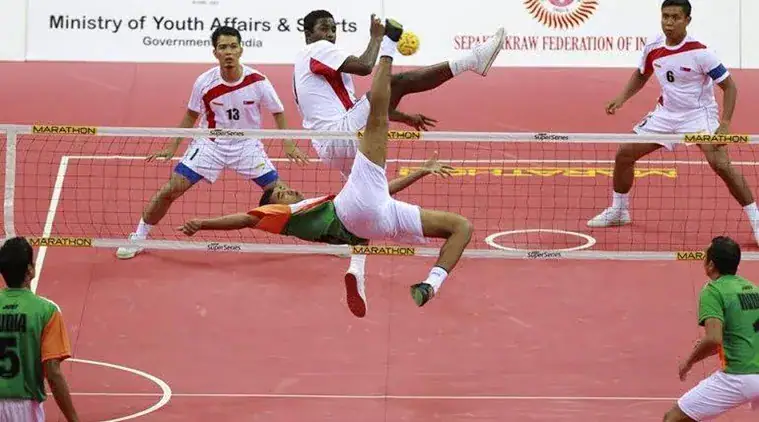
India’s sepaktakraw campaign at the Asian Games 2026 arrives at an interesting juncture.
A sport long dominated by Southeast Asian powerhouses Thailand and Malaysia, sepaktakraw is beginning to see India emerge as a genuine contender, with the country entering the Games carrying momentum from an encouraging run of results since 2025.
The signs of progress have been difficult to ignore. India won seven medals at the ISTAF World Cup 2025 in Bihar and followed that up with gold in the men’s quadrant event at the Asian Championships earlier this year. Those performances have given the Indian team belief that it can challenge the traditional hierarchy of the sport.
The biggest indication came at the Thai King’s Cup in August. The prestigious competition is considered the equivalent of a world championship in sepak takraw, and India’s men’s quadrant team reached the semifinals before going down to Thailand 15-9, 9-15, 9-15. The defeat still brought a bronze medal and, more importantly, demonstrated that India could compete against the sport’s strongest nation.
For a team that finished its campaign in the group stage at the 2023 Asian Games, the progress is significant.
India’s men are now training at the Sports Authority of India’s Sonepat Centre and have also gained valuable international exposure through an overseas training trip. The preparation has been designed to ensure that the players arrive in Japan with both match sharpness and confidence.
Chief coach and former player Sandeep Saroha believes the team has made considerable strides. India has increasingly been breaking into the top four at major events despite sepaktakraw’s deep roots in Southeast Asia, and the recent titles have provided further evidence of that improvement.
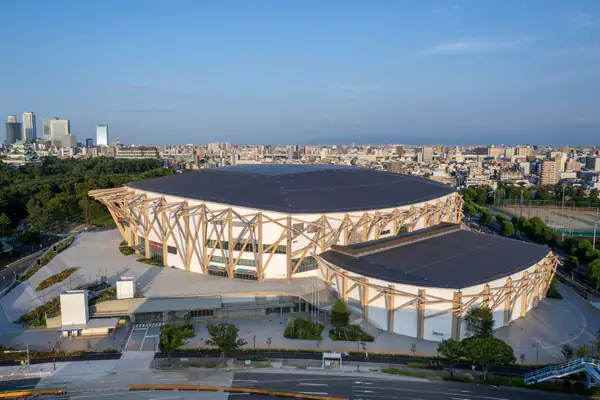
The men’s quadrant team will be particularly important to India’s medal hopes. Having won the Asian Championships at Mizuho Park Gymnasium earlier this year, the players are returning to a familiar venue, with the same facility set to host their Asian Games matches. Familiarity with the court and surroundings could offer an additional advantage when the pressure rises.
For some members of the team, however, the Asian Games represent far more than another international competition.
Delhi’s Ashish has travelled a long road to reach this stage. Growing up in difficult circumstances and later rising through the ranks of sepaktakraw, his journey reflects the transformative potential of sport. He missed the previous Asian Games cycle after suffering a bike accident while travelling to training, an injury that required stomach surgery and kept him away from competition for a year.
His return gives the 2026 Games a deeply personal significance. With his confidence high and years of work behind him, Ashish now has the opportunity to perform on the biggest stage of his career. For players like him, success in Japan could have consequences well beyond a medal, potentially opening doors for future generations and giving the sport greater visibility in India.
That broader impact is crucial because sepaktakraw continues to face a basic challenge in the country: access to infrastructure and adequate playing space.
While government support has helped athletes through employment opportunities and other avenues, the availability of dedicated spaces to train remains a concern. For a sport seeking to expand beyond its traditional pockets, regular access to courts and structured coaching is essential.
The women’s team is also carrying its own ambitions. India made history at the 2023 Asian Games when the women’s regu team of Maipak Devi Ayekpam, Bi Devi Elangbam, Chaoba Devi Oinam, Khushbu and Priya Devi Elangbam won a bronze medal. Drawn alongside China, Vietnam and South Korea, India finished second in its group before losing to eventual champions Thailand but still secured a historic podium finish.
A new-look women’s team now hopes to build on that achievement. Among the players is Menenu Tsukru from Nagaland, who was introduced to the sport by her cousin and coach Holshe Khreio. Her presence also highlights the geographical expansion of sepaktakraw within India, with athletes from smaller states seeing the Asian Games as a platform to bring greater attention to the sport.
Full Asian Games 2026 Coverage
India’s challenge in Japan remains enormous. Thailand and Malaysia have decades of experience, deeper competitive ecosystems and a strong domestic culture around sepaktakraw. Breaking their hold will require India to maintain composure in crucial moments and convert recent progress into performances under Asian Games pressure.
Yet India is no longer arriving as an outsider simply hoping to survive the group stage. The medals at the World Cup, the Asian Championships title and the semifinal appearance at the Thai King’s Cup have changed the expectations.
The target is now to compete with the best.
For the Indian men, the quadrant team provides the clearest opportunity to turn recent progress into another landmark result. For the women, repeating their 2023 bronze would be another important step in the sport’s growth.
Sepaktakraw may still be fighting for space and recognition in India, but the players heading to Japan have an opportunity to change that. A strong Asian Games campaign could bring medals, recognition and, perhaps most importantly, a larger pathway for the next generation of Indian sepaktakraw players.
Comments (0)
to post comments, replies, and votes.
Loading comments…