India’s Rowing Gold Hunt: Can Aichi-Nagoya Bring Another Asian Games Triumph?
 Follow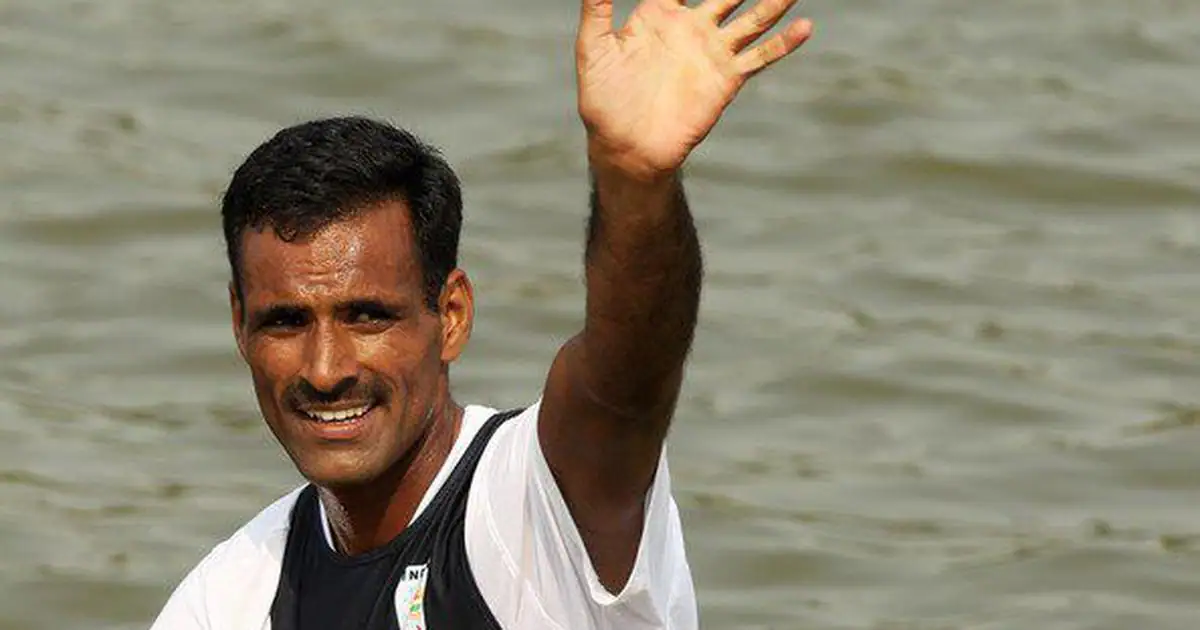
Rowing has quietly developed into one of India’s most reliable medal-producing sports at the Asian Games. It may not command the same attention as shooting, wrestling or athletics, but the numbers tell a different story.
India has consistently found a place on the podium, building a substantial continental record through generations of rowers. As the countdown to the 2026 Asian Games in Aichi-Nagoya continues, the challenge is to convert that consistency into more gold. India currently has 28 Asian Games rowing medals two gold, seven silver and 19 bronze placing it sixth in the all-time continental standings. The medal tally reflects a programme that has regularly produced competitive crews, although gold has remained considerably harder to secure.
India’s first rowing medal at the Asian Games came at the 1982 New Delhi Games, when the country won bronze in the men’s coxed pair. Since then, rowing has developed into an important part of India’s Asian Games campaign, with medals coming across both sculling and sweep events.
The breakthrough at the top of the podium, however, took much longer.
Takhar ends the wait
India finally won its first Asian Games rowing gold at Guangzhou in 2010. Bajrang Lal Takhar triumphed in the men’s single sculls, delivering one of the defining performances in the country’s rowing history. Takhar had already won silver at the 2006 Asian Games but went one better four years later. In Guangzhou, he qualified directly from his heat before producing a composed final. He took control early and maintained his rhythm through the middle section of the 2,000-metre race before resisting a late challenge from Chinese Taipei’s Wang Ming-hui.
Takhar finished in 7:04.78, more than two seconds ahead of Wang, to secure India’s first rowing gold at the Asian Games. The victory demonstrated that an Indian rower could dominate an international final through disciplined pacing and technical efficiency rather than simply relying on physical strength.
Eight years later, India found gold again this time through a crew.
At Jakarta-Palembang in 2018, India’s men’s quadruple sculls crew produced the country’s second Asian Games rowing gold. Sawarn Singh, Dattu Baban Bhokanal, Om Prakash and Sukhmeet Singh combined to win the M4x final. The triumph was particularly impressive because the crew had to deal with concerns over Bhokanal’s physical condition after his single-sculls final the previous day. The team adjusted its approach, placing greater emphasis on synchronisation and boat balance.
That decision paid off. India took control during the middle portion of the race and maintained its speed through the decisive stages. The crew crossed the finish line in 6:17.13, comfortably ahead of Indonesia and Thailand. It remains one of the most important achievements in Indian rowing at the continental level.
Consistency without the gold
India’s performances since then have underlined the depth of its rowing programme.
At the 2023 Asian Games in Hangzhou, India won five medals two silver and three bronze matching the medal haul from Guangzhou 2010. The men’s lightweight double sculls won silver, as did the men’s eight. India also secured bronze in the men’s four, pair and quadruple sculls. The results demonstrated that India continues to possess considerable strength across multiple boat classes. Yet they also exposed the gap between finishing on the podium and winning gold.
Check full Asian Games Coverage
Indian boats were able to stay with the leading Chinese crews through the opening 1,000 metres in some races but lost ground during the crucial middle and closing sections. Small technical inefficiencies under intense physiological pressure ultimately became decisive. That is the gap India will attempt to close in Aichi-Nagoya.
The men’s quadruple sculls will again be one of the focal points of India’s campaign. The 2026 combination of Satnam Singh Ghurde, Jakar Khan, Salman Khan and Balraj Panwar is being viewed as a primary gold-medal target. Balraj Panwar’s inclusion brings international experience to a crew that also contains established Indian scullers. The objective is clear: challenge China and Uzbekistan and attempt to reclaim the title India won in 2018.
Other Indian crews will also be targeting the podium. Arvind Singh is set to compete in the men’s single sculls, while India will field crews in the lightweight double sculls, double sculls, men’s four and pair. Experienced rowers Jaswinder Singh and Babu Lal Yadav are expected to provide stability in the sweep events.
Preparation has also moved towards greater technical precision. India has invested in specialised equipment, custom-built racing shells, improved oars and grip technology, while sports-science interventions are being used to address the late-race drop-offs that affected the team at Hangzhou. The rowing competition will take place from September 20 to 24 at the Nagaragawa International Regatta Course, with the schedule moving from preliminary heats and repechages into semifinals and finals.
For India, the objective is therefore not simply to add another medal to an already impressive tally. It is to add another gold. Takhar provided the breakthrough in 2010. The quadruple sculls crew repeated it in 2018. Since then, India has continued to collect silver and bronze medals, proving that the country remains among Asia’s strongest rowing nations.
Now, with a new generation and greater emphasis on technical refinement, Aichi-Nagoya offers another opportunity to turn that consistency into championship success.
The challenge will be to maintain speed when the race reaches its decisive final stages. If India can solve that equation, another golden chapter in the country’s Asian Games rowing history could be waiting at the finish line.
Comments (0)
to post comments, replies, and votes.
Loading comments…