The Great Delhi Redemption: Can the Badminton World Championships Erase the India Open Nightmare?
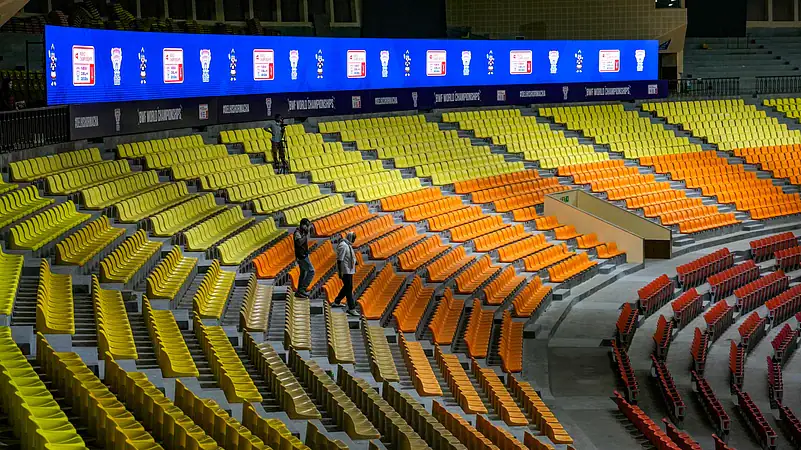
Earlier this year, the India Open was supposed to be another major week on the badminton calendar. Instead, the tournament became news for reasons that had very little to do with badminton.
Players raised concerns over air quality, hygiene and the general condition of the venue. Bird droppings became a talking point. Open access points raised questions about security. There were concerns over upkeep and, eventually, the now-infamous monkey story.
In another context, the monkey might have been an amusing footnote to a sporting event. In this one, with the World Championships only months away, it became another symbol of a bigger problem.
The India Open had given Delhi a warning. The World Championships have given it a deadline.
The issues at the India Open were not simply the routine operational problems that accompany a large sporting event. They concerned the fundamentals — the things athletes should never have to worry about when they enter an international competition.
Is the venue clean?
Is it secure?
Is the air good enough?
Can I concentrate entirely on the match?
For badminton players, these questions matter. This is a sport built on fractions fractions of a second, fractions of an inch and movements that demand complete concentration. A shuttle drifting through the air should be the only thing occupying a player's attention.
The possibility of a bird flying overhead should never become part of the equation. That was the uncomfortable question after the India Open: if these problems could surface during one of India's biggest badminton tournaments, what would happen when the world's best players arrived for the World Championships?
The question was not limited to India. International players, coaches, officials and badminton followers were watching.
Fixing the Gaps
The response since then has been considerably more serious. The venue has undergone a series of changes aimed at addressing the problems exposed during the India Open. Open access points have been closed, while additional doors and access-control measures have been introduced.
Security has been strengthened, including round-the-clock guards. Bird nets have been installed. Old nests have been removed. Sections of the ceiling have been repaired. Toilets and other facilities have been upgraded.
None of this is glamorous.
Nobody buys a ticket to see a new toilet. Nobody remembers a repaired ceiling when a player lifts the World Championship trophy. Nobody talks about access-control systems after a thrilling three-game final. But this is precisely the work that makes a major sporting championship function.
The best sporting venues have one important quality: they allow the athlete to forget that the venue exists. The court becomes the centre of the universe. The crowd disappears. The surroundings disappear. The only thing that matters is the shuttle.
That is the standard Delhi now has to meet.
More Than a Clean-Up
The changes cannot simply be viewed as a hurried clean-up exercise ahead of one tournament. The India Open exposed shortcomings that required a broader response. It also increased pressure for closer monitoring of major sporting events and greater accountability when international competitions are hosted in India.
Officials need to be closer to the action. Problems need to be identified before athletes experience them. Small issues need to be addressed before they become international headlines. That mindset matters because India's sporting calendar is expanding.
More international competitions are being hosted across the country. Indian athletes are increasingly competing at home in front of global audiences. With that comes greater scrutiny and greater responsibility.
For the Badminton Association of India, the World Championships also represent an opportunity to change the conversation. Nobody wants to spend another tournament explaining what went wrong. The federation maintains that the problems have been addressed. That is the right starting point.
But ultimately, it will not be statements or assurances that determine whether Delhi has succeeded. It will be the athletes. They will walk into the stadium. They will sit courtside. They will look around. And then they will wait for the first shuttle to go into the air.
That is why these World Championships matter so much for Delhi. If the tournament runs smoothly, the India Open episode can gradually become what it should have been all along: a warning, a lesson, a failure that was acknowledged and corrected.
The story ends there.
But if the same problems return, the narrative changes completely. This time, there will be no argument that nobody saw them coming. The world will be watching New Delhi. Players will arrive from across the globe. Coaches, officials and international media will notice everything. The city will be judged not only by the quality of badminton played inside the stadium but also by everything surrounding it.
That is the challenge. And perhaps, also, the opportunity.
Delhi Gets Its Second Chance
There is something powerful about redemption in sport. A player loses a final and returns to win the next one. A team suffers a humiliating defeat and finds a way to come back stronger. A champion falls, only to discover that the story is not finished.
This time, the redemption story belongs to a city.Delhi gets its second chance. The India Open showed the cracks. The World Championships are the opportunity to seal them.
By the time the final is played on August 23, nobody should be talking about bird droppings, open gates, security concerns or monkeys in the stands. They should be talking about badminton.
About the world champion.
About rallies that seemed to have no ending.
About unexpected upsets and extraordinary comebacks.
And, most importantly, about a packed Delhi stadium roaring as an Indian walks onto the court on the biggest stage of all. That is the redemption Delhi is looking for. For a city with thousands of years of history, the World Championships offer a very modern test: can it deliver a sporting spectacle worthy of the occasion?
After the lessons of the India Open, there is little room for error. But there is also a chance to get it right.
And when the first shuttle rises into the Delhi air, the only thing the world should have to think about is where it lands.
Follow the Author on Substack
Comments (0)
to post comments, replies, and votes.
Loading comments…