AFI Tightens Selection Pathway for Asian Games 2026 with Single-Trial Policy and Strict Compliance Rules

The Athletics Federation of India (AFI) has laid down a clear and uncompromising framework for the selection of the Indian athletics contingent for the 2026 Asian Games in Nagoya, Japan.
The guidelines, released on May 8, mark a shift towards a more performance-driven and administratively disciplined selection process, with the National Inter-State Championships emerging as the central pillar of qualification. At its core, the policy reinforces AFI’s role as the governing authority responsible for selecting and managing India’s athletics teams for major international events, including the Olympics, Asian Games, Commonwealth Games, and other global competitions. However, beyond administrative clarity, the guidelines signal a stricter, almost high-performance ecosystem where accountability, readiness, and compliance are as critical as performance.
The most significant aspect of the new guidelines is the decision to make the 65th National Inter-State Senior Athletics Championships scheduled in Bhubaneswar from June 24 to 28, 2026 the sole selection trial for the Asian Games. This effectively eliminates the ambiguity that often surrounds selection decisions based on multiple competitions or subjective evaluations. Athletes now have a single, clearly defined window to prove their readiness.
From a performance standpoint, this approach aligns with global best practices where peak competition readiness is tested under pressure. However, it also raises the stakes significantly. A single poor performance, injury, or external factor during the Inter-State Championships could potentially end an athlete’s Asian Games hopes, regardless of prior form.
The AFI has, however, left a narrow window for flexibility. In recognition of the evolving global competition calendar, the guidelines allow for exemptions in exceptional circumstances. Athletes competing in elite international events such as the Diamond League or those officially cleared by AFI may be exempted from the mandatory trial. However, this is not an open-ended clause. Any exemption must be secured through prior written permission from the federation, well in advance. This ensures that the provision remains controlled and does not dilute the integrity of the selection process.
The intent is clear international exposure is valued, but not at the cost of transparency or accountability.
One of the more stringent aspects of the guidelines revolves around athlete responsibility beyond performance. AFI has placed the onus squarely on athletes and their coaches to manage accreditation, documentation, and communication. This includes declaring training locations, maintaining updated whereabouts, and ensuring all paperwork is submitted within stipulated timelines. The consequences of non-compliance are severe. Even if an athlete meets qualification standards and is selected, failure to complete accreditation requirements could result in exclusion from the final contingent.
This reflects a broader shift in Indian sport moving from a system where federations managed logistics to one where athletes are expected to operate with professional accountability. The guidelines also clarify AFI’s approach to the number of athletes per event. In principle, only one athlete per event achieving the prescribed qualification standard will be selected. However, the Selection Committee retains discretion to include additional athletes if multiple contenders meet the standard and there is a realistic medal prospect.
This introduces a strategic dimension to selection. Rather than purely rewarding participation, AFI is clearly prioritising medal potential and tactical considerations. Importantly, the final decision rests entirely with the Selection Committee, reinforcing a centralized decision-making structure.
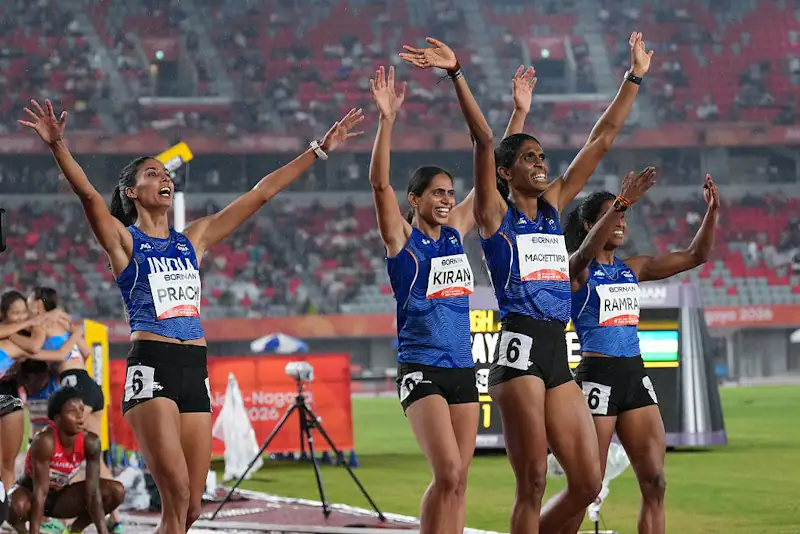
For relay events, AFI has reiterated its long-standing policy only athletes training at AFI-recognized centers will be considered for selection. This ensures cohesion, coordination, and standardized training methodologies for relay teams, which are heavily dependent on synchronization and baton exchange efficiency. While this approach strengthens team performance, it may also limit opportunities for athletes training outside the centralized system, further emphasizing the importance of aligning with AFI’s high-performance structure.
The guidelines extend beyond selection into athlete conduct and health management. Selected athletes are required to report any injury, illness, or change in training status immediately. Non-disclosure could lead to removal from the team, highlighting AFI’s focus on ensuring that only fully fit athletes represent the country. Additionally, the federation has reinforced its strict “No Needle Policy,” a measure aimed at maintaining anti-doping integrity and ethical standards within the sport.
The inclusion of mandatory SRY gene testing for female athletes also underscores compliance with international regulations, though it remains a sensitive and evolving area within global sport governance. Taken together, these guidelines represent a decisive shift towards a high-performance, accountability-driven model in Indian athletics. The pathway to the 2026 Asian Games is now sharply defined one championship, strict compliance, and minimal room for error. While this may appear कठोर, it reflects an attempt to align Indian athletics with global elite standards, where selection is as much about professionalism and preparedness as it is about performance.
For athletes, the message is unambiguous. The road to Nagoya runs through Bhubaneswar and only those who deliver, both on and off the track, will make the cut.
Comments (0)
to post comments, replies, and votes.
Loading comments…