Did India miss a trick by leaving Amoj Jacob out of the men’s 4x400m relay at World Relays?
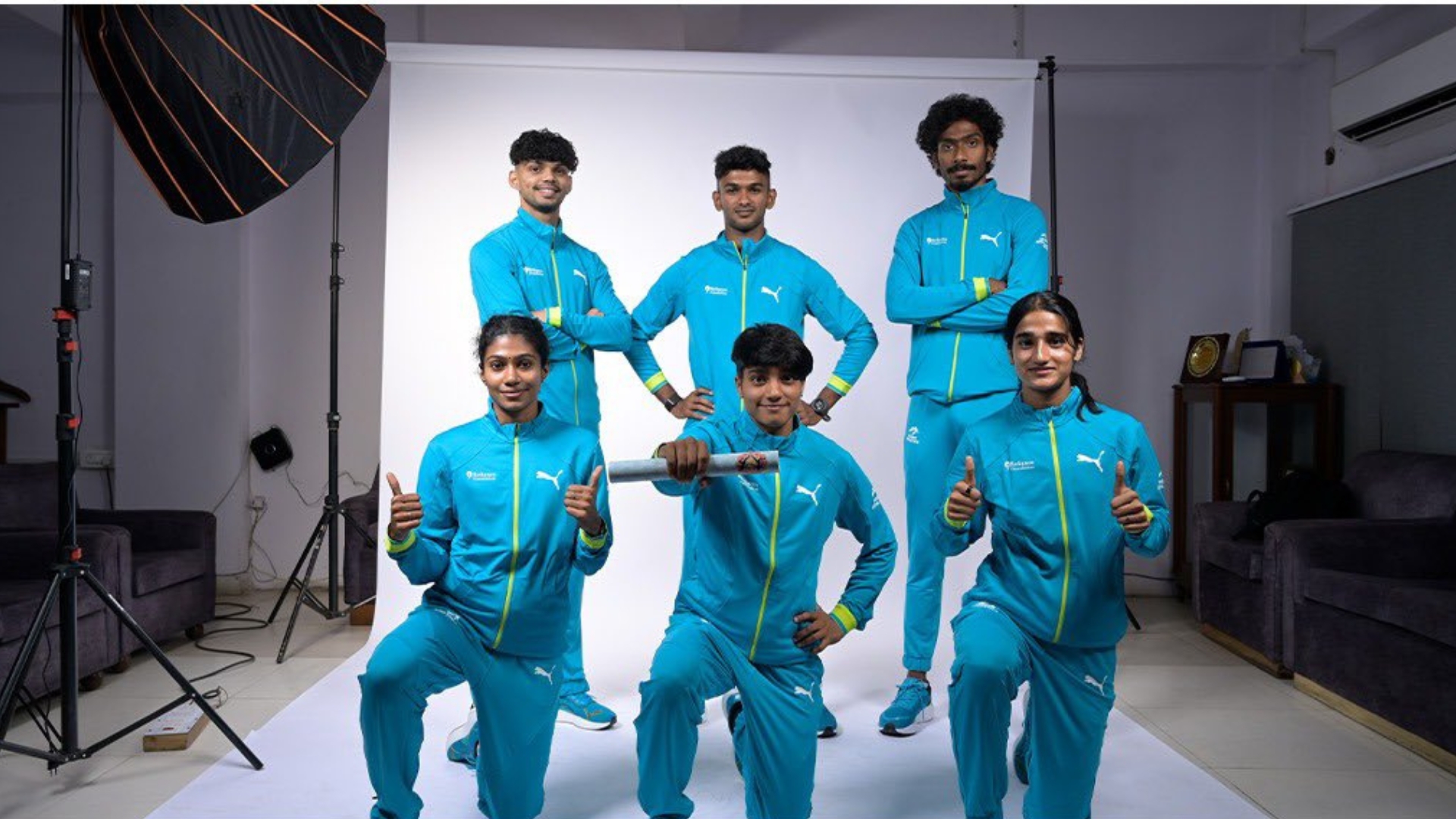
India’s opening day at the World Relays 2026 in Gaborone ended without a single relay team reaching the final, but the biggest talking point among Indian athletics followers quickly became the men’s 4x400m relay and more specifically, whether India missed a major opportunity by leaving Amoj Jacob out of the quartet.
On paper, India’s men’s 4x400m team still delivered a respectable performance. The quartet of Dharamveer, Rajesh Ramesh, Vishal TK and Manu TS clocked 3:00.32 to finish 12th overall in a stacked international field.
For large portions of the race, India even looked capable of winning the heat. The opening exchanges were aggressive, Rajesh Ramesh produced another exceptional leg, and Vishal TK maintained strong momentum against elite relay nations like Japan, Belgium and Great Britain. But by the final exchange, the race began slipping away.
India eventually faded to fourth place in the heat, missing out on automatic qualification for both the final and the 2027 World Championships in Beijing. That is where the questions started. Because while India’s chosen quartet struggled late in the race, Amoj Jacob had already shown earlier in the day why many still consider him India’s most dependable relay runner under pressure.
Running in the mixed 4x400m relay alongside Theerthesh Shetty, Ansa Babu and Rashdeep Kaur, Amoj produced a 45.04-second split one of the best among Indian runners across all relay events on Day 1. That immediately intensified the debate surrounding team selection and running order.
The split timings from the men’s relay only added more fuel:
Dharamveer — 45.6
Rajesh Ramesh — 44.7
Vishal TK — 44.5
Manu TS — 45.5
Rajesh and Vishal delivered exactly what India needed. Both runners kept India firmly in contention against world-class opposition and at one stage even placed the team in front.
But the race management raised eyebrows.
Many observers questioned why Rajesh Ramesh, arguably India’s strongest relay finisher at present, was not used as the anchor. Others wondered why Amoj a proven relay specialist was omitted entirely despite his experience in pressure situations.
Relay racing is rarely just about individual timings.
Order, temperament, tactical placement and race-reading often matter equally. That is where India may have missed an important detail. Amoj Jacob has repeatedly demonstrated an ability to elevate himself during relay races. His individual 400m timing may place him in a similar bracket to Manu TS and Dharamveer, but his relay temperament is often different altogether.
That distinction matters at the highest level. Several Indian athletics followers pointed out that a possible order of Vishal TK, Manu or Dharamveer, Amoj Jacob and Rajesh Ramesh could have created a stronger race structure. Vishal’s explosive opening speed would have provided India a fast early position. Amoj’s experience in handling traffic and maintaining rhythm during middle exchanges could then have stabilised the race. Finally, Rajesh India’s most consistent closer in recent seasons could have anchored the team against the world’s best finishers.
Instead, India found themselves fading during the final phase of the race. The frustration became greater because the overall performance still showed India had the raw ability to compete. Rajesh’s 44.7 split and Vishal’s 44.5 demonstrated that India’s relay depth is currently among the strongest in Asia. Against Asian rivals Japan and Qatar, India looked competitive for most of the race. Qatar eventually clocked 2:59.83 while India finished in 3:00.32. The gap was significant but not unreachable.
At the same time, India’s overall relay campaign also exposed broader technical concerns.
The mixed 4x100m relay ended disastrously after a baton exchange breakdown between Nithya and Animesh Kujur resulted in a DNF. Jamaica later stole global headlines in the same event by becoming the first team ever to go below 40 seconds in the mixed 4x100m relay, clocking a stunning world record of 39.99s.
Meanwhile, Asian rivals Japan and China once again showcased sprint relay efficiency with timings of 38.01s and 38.02s respectively in the men’s 4x100m relay.
India, in contrast, finished outside the sub-39 bracket at 39.07s. The women’s 4x100m relay at least provided a modest positive. The Indian quartet clocked 43.97s to finish 13th overall in difficult conditions, particularly in a field where multiple teams were disqualified due to exchange errors. But the men’s 4x400m remains the event where India genuinely believed qualification was possible.
That is why the selection debate around Amoj Jacob now feels unavoidable. To be fair, team management likely prioritised freshness across events and attempted to distribute workload strategically across the squad. With multiple relay events compressed into a short schedule, balancing athlete recovery becomes critical. Still, the numbers from Day 1 suggest Amoj’s inclusion could potentially have made a difference.
Whether it would have been enough for direct qualification is impossible to know. But in a race decided by margins, India arguably left one of their most trusted relay performers on the sidelines when the moment demanded experience.
The repechage round now offers India another opportunity to qualify for Beijing 2027.
And after Friday’s performance, attention will inevitably return to one key question does India reshuffle the order and bring Amoj Jacob back into the men’s 4x400m lineup?
Comments (0)
to post comments, replies, and votes.
Loading comments…