Explained: How qualification works at the World Relays 2026 and what India still needs to do
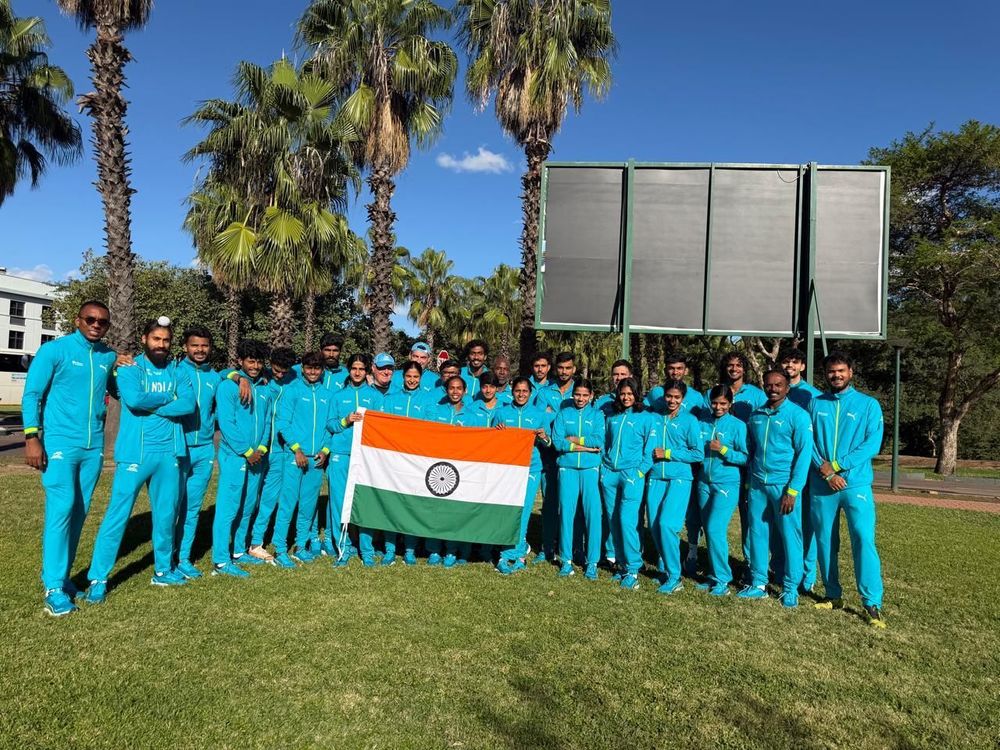
The format at the World Relays 2026 in Gaborone has once again created confusion among several athletics fans, especially with qualification for the 2027 World Championships and the newly introduced Ultimate Championship also attached to the event.
With India failing to directly qualify for any relay final on Day 1, attention now shifts entirely toward the repechage rounds on Sunday. But how exactly does the qualification structure work?
The World Relays format is designed to reward both immediate performance and second-chance consistency across all relay disciplines.
This year, six relay events are being contested: Men’s 4x100m, Women’s 4x100m, Men’s 4x400m, Women’s 4x400m, Mixed 4x100m & Mixed 4x400m
Each event had three heats on Day 1.
The qualification system is straightforward at first glance but becomes more layered afterward.
Direct qualification on Day 1
In every event, the top two teams from each of the three heats automatically qualify for the final of that event & 2027 World Athletics Championships in Beijing
That immediately accounts for six qualifying teams. The remaining two spots in the final are then awarded to the two fastest teams outside the automatic qualification positions across all heats.
So, in total 8 teams reach the final & those same 8 teams automatically secure qualification for the 2027 World Championships. This makes Day 1 extremely important because teams not only fight for medals but also for early World Championship qualification.
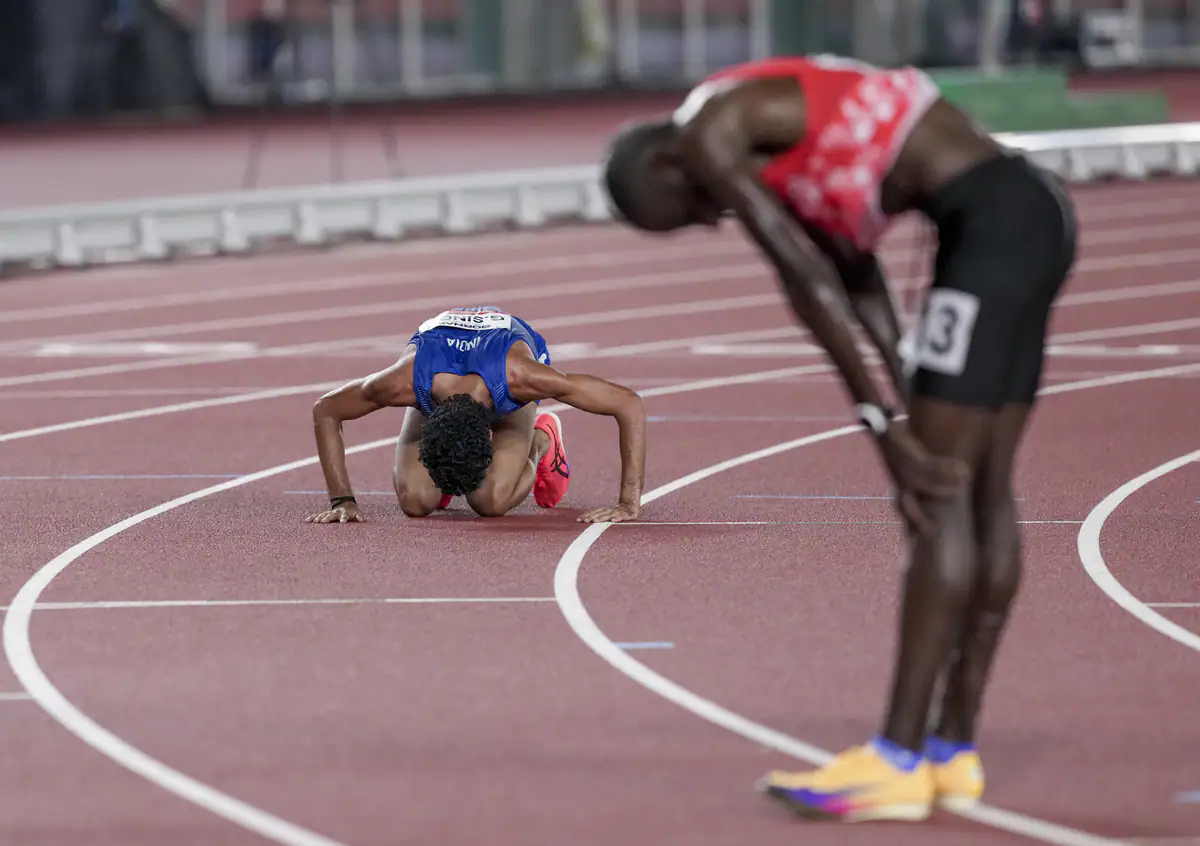
India unfortunately fell short in all events on the opening day. The men’s 4x400m relay came closest after clocking 3:00.32 and finishing fourth in their heat. However, the timing only placed India 12th overall, meaning they missed both automatic qualification and the two fastest loser spots.
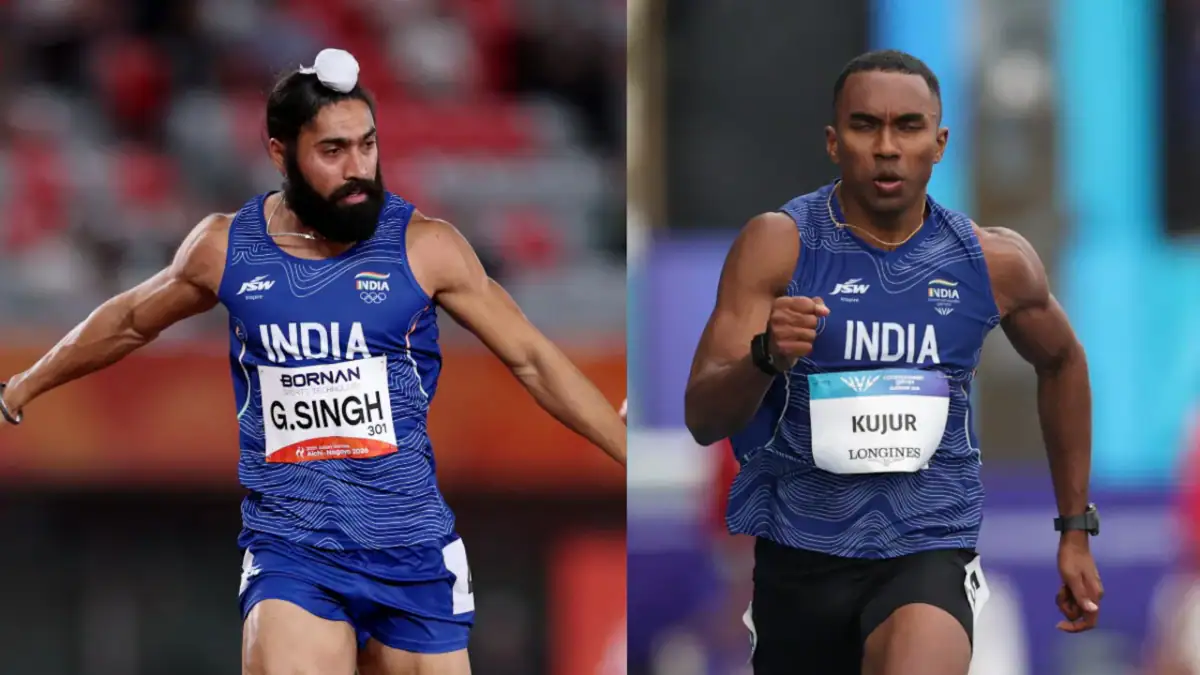
Similarly, the women’s 4x100m team finished 13th overall with a season-best 43.97s, while the men’s 4x100m team ended 20th overall in 39.07s. The mixed 4x100m relay suffered a baton exchange error leading to a DNF, and the mixed 4x400m quartet finished 18th overall in 3:16.00.
But importantly, elimination from the finals does not mean elimination from World Championship qualification. That is where the repechage system comes into play.
What happens in the repechage round?
All teams that fail to qualify directly on Day 1 receive another opportunity on Day 2.
The remaining teams in each event are split into two repechage heats.
From those repechage heats, the top two teams from each heat qualify for the 2027 World Championships. That means four additional nations qualify through repechage in every relay event.
In total, each relay discipline sends 8 teams through Day 1 qualification & 4 teams through repechage
Resulting in 12 qualified teams for the 2027 World Championships. This system keeps more nations alive deep into the competition and places huge importance on squad depth and recovery management. For India, Sunday’s repechage rounds are now effectively the real qualification battles.
The men’s 4x400m team, despite missing the final, remains India’s strongest hope for Beijing qualification. The quartet showed enough quality in the heats to suggest qualification is still achievable with better race management and possibly a revised lineup. There is already growing debate around whether India should bring Amoj Jacob back into the men’s relay after his impressive 45.04 split in the mixed relay.
The men’s 4x100m team will also hope to improve after recording a season-best timing despite finishing low in the standings. Meanwhile, the mixed 4x100m relay simply needs a clean baton exchange to stay competitive.
Once qualification races conclude, the eight teams who advanced directly from Day 1 compete in the finals later on Day 2.
Those finals decide Gold, silver and bronze medals, World Championship seeding positions & Prize money
The repechage teams do not re-enter medal contention. Their focus remains purely on qualification.
The two mixed relay disciplines carry an additional layer of importance this year. In both the mixed 4x100m and mixed 4x400m finals, the top six teams will also earn qualification for the inaugural World Athletics Ultimate Championship 2026 in Budapest later this year.
That event is being positioned as a major new global championship featuring the world’s best athletes and relay teams. So for elite nations like the United States, Jamaica, Netherlands and Belgium, qualification for Budapest is also a major objective.
India’s situation heading into Day 2
India now enter Sunday needing cleaner execution, sharper baton exchanges and tactical clarity. The raw pace remains competitive in certain events, especially the men’s 4x400m relay. But at the World Relays, precision matters just as much as speed. One poor exchange, one mistimed leg order or one lapse under pressure can end qualification hopes instantly.
India experienced exactly that reality on Day 1.
Now, the repechage offers one final opportunity to rescue the campaign and secure places at Beijing 2027.
Comments (0)
to post comments, replies, and votes.
Loading comments…