“No one believed we could go under 2:12, but I did”: Sawan Barwal targets Asian Games after national record run
Fresh from rewriting Indian marathon history in Rotterdam, Sawan Barwal is already looking ahead to the next major target the Asian Games.
Fresh from rewriting Indian marathon history in Rotterdam, Sawan Barwal is already looking ahead to the next major target the Asian Games.
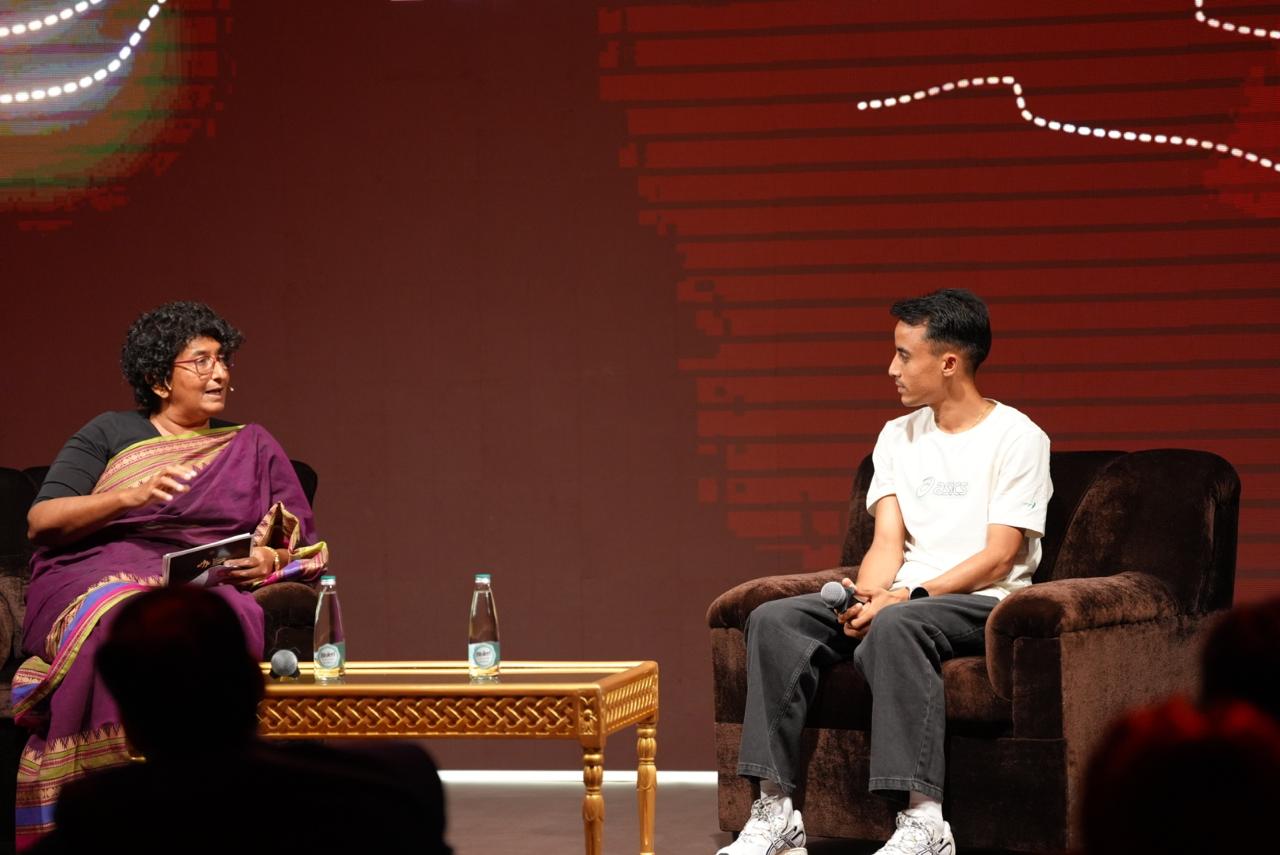
The national record holder spoke confidently about his ambitions and journey during the “Beyond the Finish Line” (BTFL) session held as part of the TCS World 10K Bengaluru 2026 race week, where athletes, administrators and sports professionals gathered to discuss performance, development and the future of Indian sport. Barwal, who recently clocked a stunning 2:11:58 at the Rotterdam Marathon to become the first Indian man to break the 2:12 barrier, reflected on the belief that drove him towards the historic achievement.
“Probably the way we train now is far more scientific but more importantly, maybe no one believed that they could run faster than 2 hours and 12 minutes,” Barwal said during the session. “Everything comes down to self-belief. When I was told by my coach in Army Sports Institute that I have great potential in marathon, I actually believed that I can take up this challenge and had always set that target of going under 2 hours and 12 minutes.”
The statement captured the transformation currently taking place in Indian distance running. For years, the 2:12 mark had seemed almost untouchable for Indian marathoners, but recent performances from athletes such as Barwal, Gopi T, Man Singh and Kartik Karkera have shown that the standard is steadily rising. Barwal’s Rotterdam performance was not only a national record but also a strong indication that Indian marathon running is entering a more competitive phase internationally.
Despite the significance of the achievement, the Army runner made it clear that his focus has already shifted towards the 2026 Asian Games.
“It is a very important year for me with the Asian Games coming up and yes, at the moment I am looking at focusing on the full-distance marathon,” he said. “We have sufficient time to prepare and I am far more confident after my debut marathon race in Rotterdam.”
While conversations around the Los Angeles 2028 Olympics have already begun within Indian athletics circles, Barwal emphasized that his immediate priority remains continental success.
“LA is much later, right now Asian Games is priority. Doing well here will set the momentum for 2028,” he added.
The BTFL session brought together several prominent voices from Indian sport and fitness. Alongside Barwal, the panel featured former Indian hockey captain and Olympian Viren Rasquinha, Rainmatter Head of Investments Dilip Kumar, and Sisters in Sweat co-founder Swetha Subbiah. The discussion was moderated by veteran sports journalist Sharda Ugra. Also present was TCS World 10K Bengaluru 2026 International Event Ambassador and double Olympic medallist Blanka Vlašić, who shared insights from her own elite sporting journey.
Barwal also highlighted the importance of events like the TCS World 10K in exposing Indian runners to international standards and helping young athletes understand the finer aspects of elite competition.
“Events like the TCS World 10K in India give us, especially youngsters coming up in distance running, the right kind of exposure,” he said. “It’s a good opportunity to closely watch established runners from Kenya, Ethiopia among other countries and also interact with them. The way they pace their race is also a good learning for us.”
His comments reflect a broader reality within Indian athletics, where interaction with world-class runners and exposure to elite race environments are increasingly viewed as essential for bridging the performance gap with traditional long-distance powerhouses.
Former India hockey captain Viren Rasquinha used the discussion to reflect on how elite Indian sport has evolved over the years, particularly in areas beyond technical training.
Recalling India’s campaign at the Athens Olympics, Rasquinha spoke about the lack of structured athlete support systems during his playing days.
“I remember feeling extremely frustrated, not because we lost, but because I didn’t think the system had geared us well enough to handle pressure against the best teams in the world when it really mattered,” he said. “At that level, the margins are so fine, and when your heart rate is at 200 and you have nothing left in the tank, that’s when you need to make the right decisions.”
Rasquinha also pointed out how limited access to sports science and athlete management resources affected players of his generation.
“In my entire nine-year career for India, I never spoke to a nutritionist. I never spoke to a psychologist. We had no knowledge about nutrition, recovery, strength and conditioning,” he said. “There were so many things that we could have done far better.”
Swetha Subbiah focused on the importance of creating inclusive sporting spaces, especially for women at the grassroots level.
“We realised it wasn’t that women hate sport, it’s just that there were too many barriers to participation,” she explained. “By creating a women-only, safe and inclusive space, we were able to bring more women into sport and give them a chance to claim that space.”
Meanwhile, Dilip Kumar spoke about the larger sports ecosystem and the need for innovation to improve public participation in physical activity.
“If India has to stay healthy and fit, we need a lot of entrepreneurs building solutions that help people move more and live better,” he said. “Sport has to move from being something we watch to something we actively participate in.”
For Indian athletics, however, the strongest message of the evening perhaps came from Barwal himself. His national record has already altered perceptions around Indian marathon running. More importantly, his confidence and ambition signal a growing belief among Indian distance runners that global benchmarks are no longer beyond reach.
And as the Asian Games approach, India’s fastest marathoner is determined to keep pushing those limits further.
Comments (0)
to post comments, replies, and votes.
Loading comments…