Gulveer Singh Set For Crucial Speed Test At Music City Track Carnival Ahead Of Major International Season

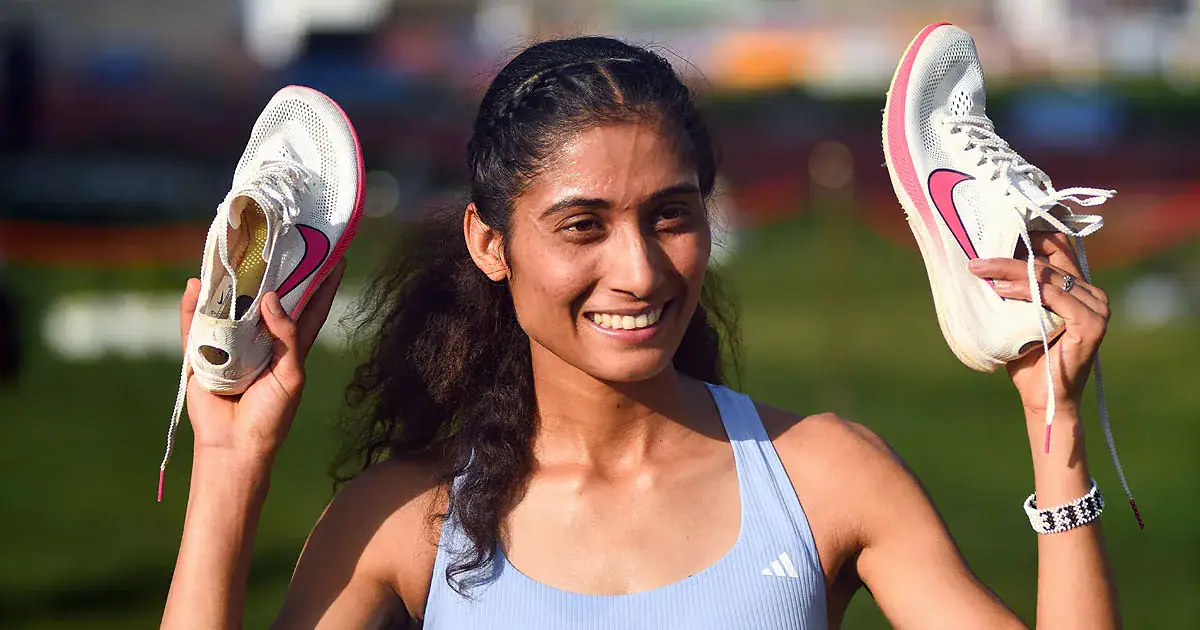
Indian distance runner Gulveer Singh will compete in the men’s mile and 1500m at the Music City Track Carnival in the USA ahead of a crucial international season.
India’s leading distance runner Gulveer Singh is set to take another important step in his rapidly evolving international career as he prepares to compete at the Music City Track Carnival in the United States on May 29 and 30.
The World Athletics Continental Tour Challenger-level competition, classified as a Category D meet, will see Gulveer compete in two events the men’s mile on May 29 and the men’s 1500m on May 30.
While Indian fans are more accustomed to seeing Gulveer dominate longer distance races such as the 5000m and 10,000m, his decision to compete in shorter middle-distance events offers a fascinating glimpse into the direction of his preparation ahead of a packed international season. More than simply chasing results, the races appear to be part of a deliberate strategy to improve one of the most critical components required for modern elite distance running speed.
And at the highest level of global athletics today, raw endurance alone is no longer enough.
Over the last two years, Gulveer Singh has steadily emerged as one of India’s strongest long-distance athletes. His consistency across domestic competitions, combined with major breakthroughs internationally, has elevated him into serious conversations surrounding India’s medal prospects at upcoming continental competitions. However, as competition standards continue rising globally, especially in tactical championship races, athletes increasingly need the ability to change pace aggressively during final laps.
That is where events like the mile and 1500m become extremely important.
The shorter distances force runners to improve cadence, acceleration, finishing kick and tactical responsiveness all crucial qualities when competing against elite international fields in longer races. For Gulveer, these races could therefore serve as far more than just standalone events. They may represent a key phase in transforming him from a strong endurance runner into a more complete championship athlete.
The fields at the Music City Track Carnival also suggest that Gulveer will receive quality competition.
In the men’s 1500m Pro race, Gulveer enters with a personal best of 3:36.58, placing him among several experienced international runners. The field includes athletes such as Shane Streich of the United States, who enters with a 3:37.86 mark, alongside France’s Felix Rivet and multiple American middle-distance runners.
The mile race presents another interesting challenge. Unlike the 1500m, the mile requires slightly different pacing patterns and tactical execution. Competing in the event could help Gulveer sharpen his ability to sustain higher speeds over longer segments something that becomes extremely useful during championship-style 5000m races where the pace often fluctuates dramatically.
Indian distance running has historically struggled in this specific area. Many Indian runners have possessed strong aerobic capacity and endurance bases but found it difficult to respond to sudden pace injections from African, European or East Asian runners during major finals. The final 600-800 metres of elite races often turn highly tactical and explosive, making speed endurance absolutely essential.
That reality likely explains Gulveer’s current race selection. The timing is also significant.
The next two seasons could become defining years for Indian athletics, with major events including the Asian Games, Commonwealth Games qualification cycles and World Championships preparation all approaching rapidly.
Athletes are increasingly looking beyond domestic dominance and attempting to bridge the gap with elite global standards. Gulveer appears to be following exactly that path.
Instead of remaining within a comfort zone of domestic long-distance races, he continues exposing himself to international competition environments where pacing quality, tactical intelligence and finishing speed are significantly higher. That willingness to race abroad regularly is already becoming one of the most encouraging aspects of India’s evolving athletics culture.
Indian runners historically competed too infrequently outside Asia, limiting both exposure and development. But the current generation increasingly understands that global competitiveness requires consistent international racing against stronger fields. For Gulveer, the Music City Track Carnival becomes another important learning opportunity.
The World Athletics Continental Tour structure also adds value to these races because ranking points remain important for qualification pathways to major global competitions. Even Challenger-level meets can contribute significantly to world ranking accumulation when athletes perform strongly against quality opposition. At the same time, these races provide valuable feedback regarding Gulveer’s current conditioning and speed progression.
If he can remain competitive in fast middle-distance races, it would signal encouraging development heading into bigger championships later in the season.
The broader picture surrounding Gulveer’s rise is equally important for Indian athletics. India has traditionally produced far fewer internationally competitive distance runners compared to sprinting, throwing events or jumps. Distance running requires years of structured aerobic development, international exposure and scientific training systems areas where India historically lagged behind stronger nations. But athletes like Gulveer are beginning to slowly change that perception. His willingness to experiment with race distances, travel internationally and adapt training methods reflects a more modern approach increasingly visible among India’s elite athletes.
The Music City Track Carnival may not carry the prestige of a Diamond League event or World Championships. Yet for Gulveer Singh, these two races could still become highly significant.
Because sometimes, major breakthroughs in distance running begin not with medals but with learning how to run faster when it matters most.
Credit Rahul Bhutani on X
Comments (0)
to post comments, replies, and votes.
Loading comments…