Indian Shooting's Four-Cycle Evolution: From Individual Dependence to a Deep Olympic Contender
Indian rifle and pistol shooting has undergone a significant transformation over the past four Olympic cycles.
From the Rio 2016 qualification pathway to the opening stages of the Los Angeles 2028 cycle, the country's performance at the ISSF World Championships reflects a steady expansion in international competitiveness, with more athletes reaching finals and medals coming across a wider range of disciplines.
A longitudinal assessment of the World Championships in Granada (2014), Changwon (2018), Cairo (2022) and Doha (2026) reveals two parallel developments. While the International Shooting Sport Federation (ISSF) has progressively reduced the number of Olympic quotas available directly at the World Championships, India has increased its finalist count from three to eight. The contrast highlights a programme that has expanded its competitive depth even as the qualification system has become more restrictive.
The 2014 ISSF World Championship in Granada marked the beginning of the Rio 2016 Olympic qualification cycle. The competition offered 50 Olympic quotas across 10 rifle and pistol events, with each country eligible to secure up to two quotas per event.
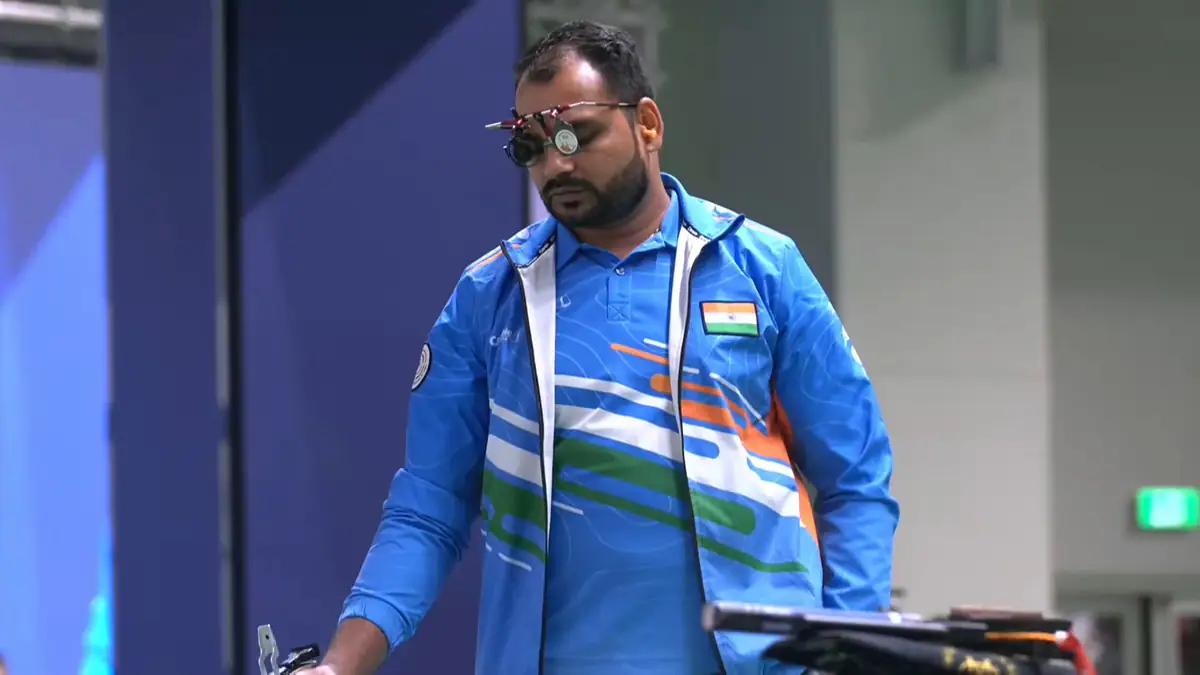
India's campaign was heavily dependent on a small group of performers. Jitu Rai reached the finals in both men's 50m pistol and men's 10m air pistol, while Ayonika Paul qualified for the women's 10m air rifle final. Rai's silver medal in the men's 50m pistol was India's only medal, and he also secured the country's sole Olympic quota at the championship.
Although India eventually assembled a 12-member shooting contingent for Rio through subsequent qualification events, Granada exposed the limited depth of its senior international finalist pool.
Four years later, the 2018 World Championship in Changwon offered evidence of progress. India's individual finalists increased to four: Anjum Moudgil and Apurvi Chandela in women's 10m air rifle, Abhishek Verma in men's 10m air pistol and Gurpreet Singh in men's 25m rapid fire pistol.
The women's 10m air rifle final produced a particularly significant result. Moudgil won silver, while Chandela finished fourth. Under the two-quota-per-country rule then in force, India secured both available Olympic quotas in the event. The campaign delivered one medal and two Olympic quotas, demonstrating a stronger presence across the disciplines.
Cairo 2022: Greater Depth Under Tighter Quota Rules
The 2022 World Championship in Cairo brought a major change to the qualification architecture. The ISSF separated rifle and pistol competitions from shotgun events and reduced the number of direct Olympic quotas available across the 10 rifle and pistol disciplines to 32. More importantly, the maximum allocation per country in an event was reduced from two quotas to one.
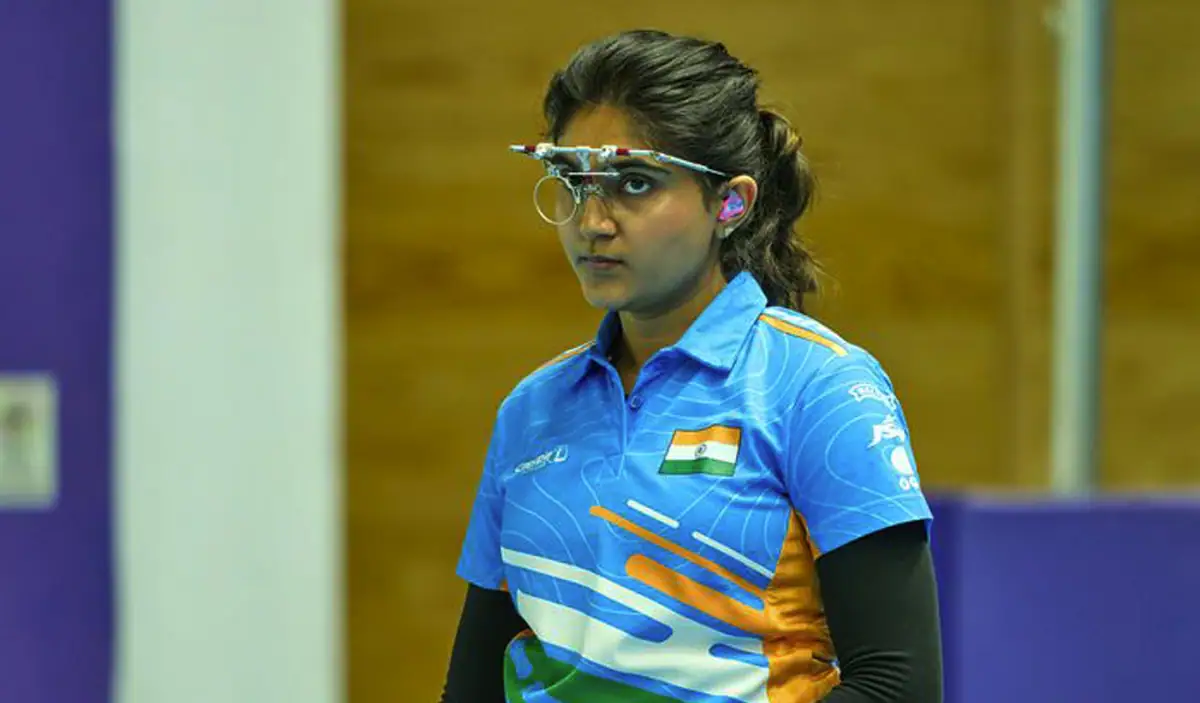
India responded with six individual finalists, representing a broader spread of disciplines. Rudrankksh Patil reached the men's 10m air rifle final, Swapnil Kusale the men's 50m rifle 3 positions final, Anjum Moudgil the women's 50m rifle 3 positions final, Rhythm Sangwan the women's 25m pistol final, Mehuli Ghosh the women's 10m air rifle final and Shiva Narwal the men's 10m air pistol final.
Patil won gold in men's 10m air rifle, securing India's first Paris 2024 quota at the championship. Kusale finished fourth in men's 50m rifle 3 positions and earned another quota through the allocation process.
The two-quota total was achieved across separate disciplines, within the new one-quota-per-event restriction. Kusale's performance also became an important part of India's Olympic pathway, as he went on to win bronze at Paris 2024.
Doha 2026: Eight Finalists and Two Medals
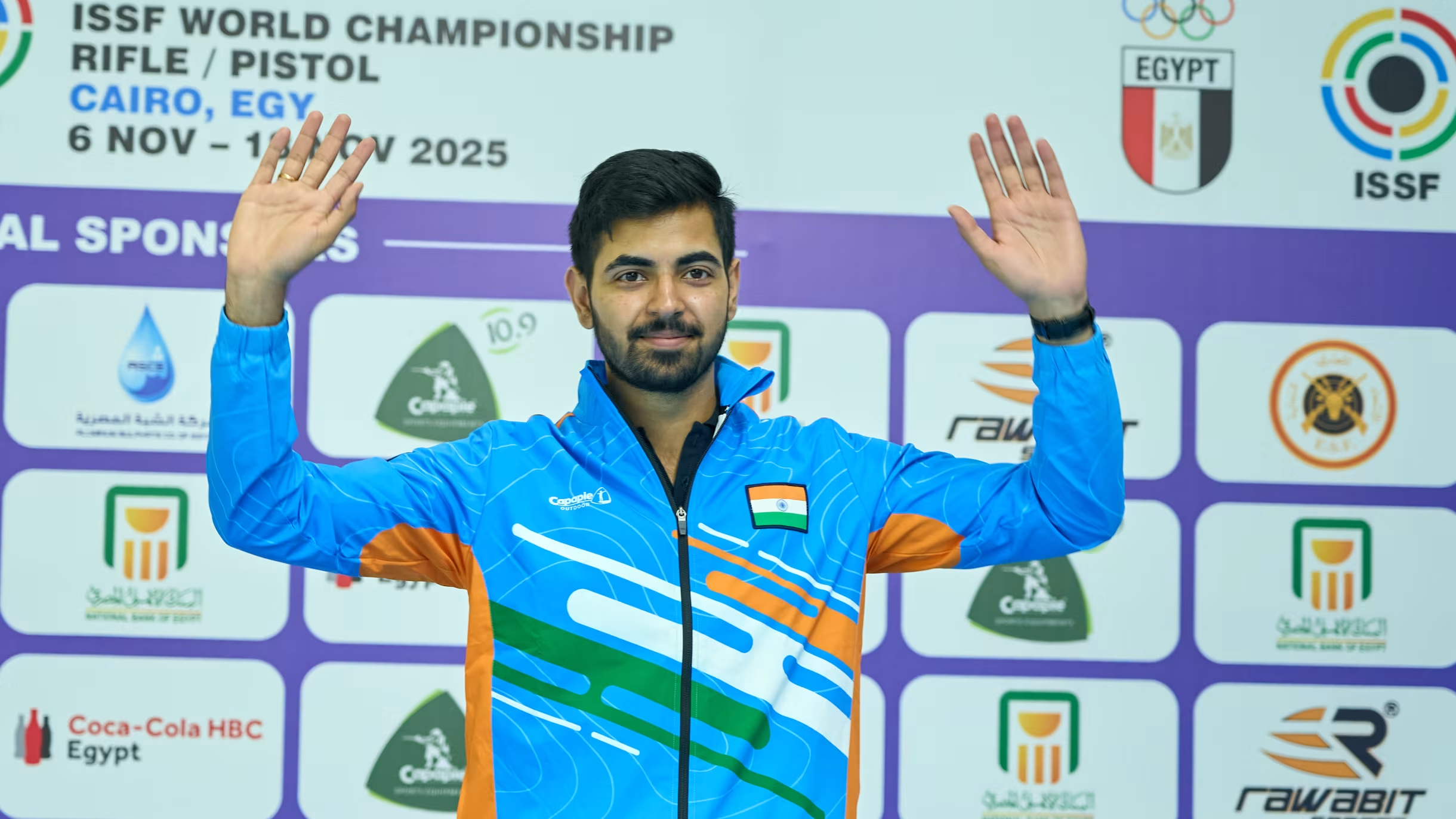
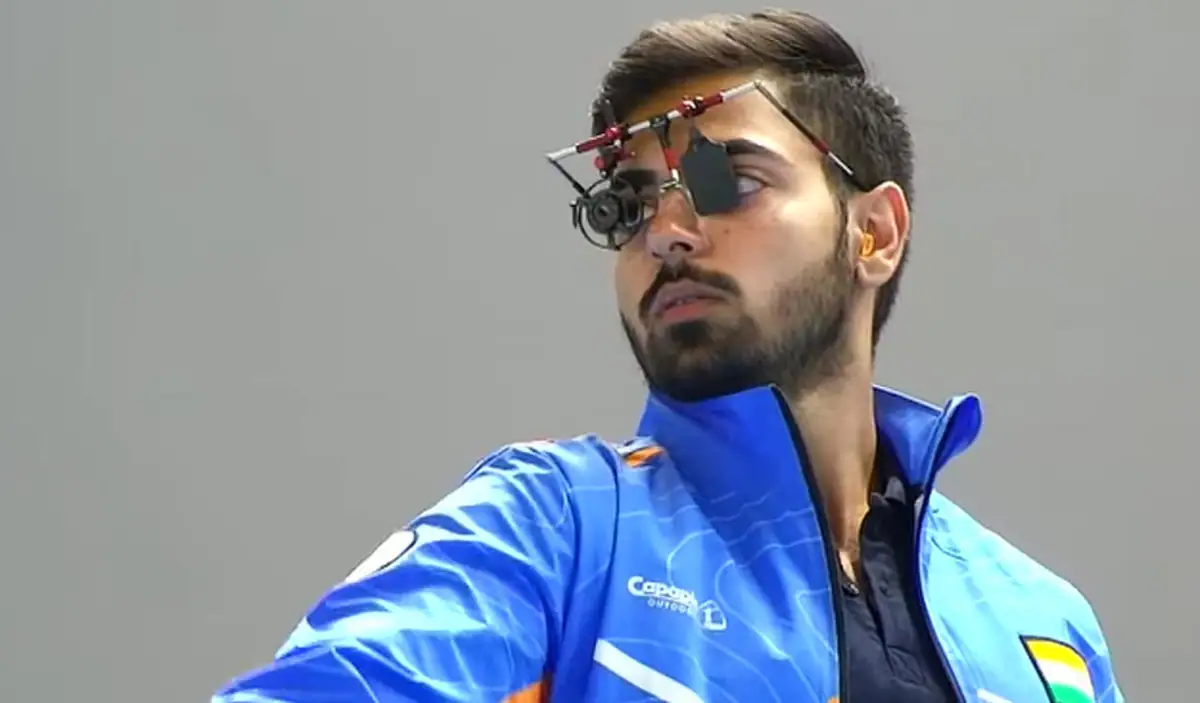
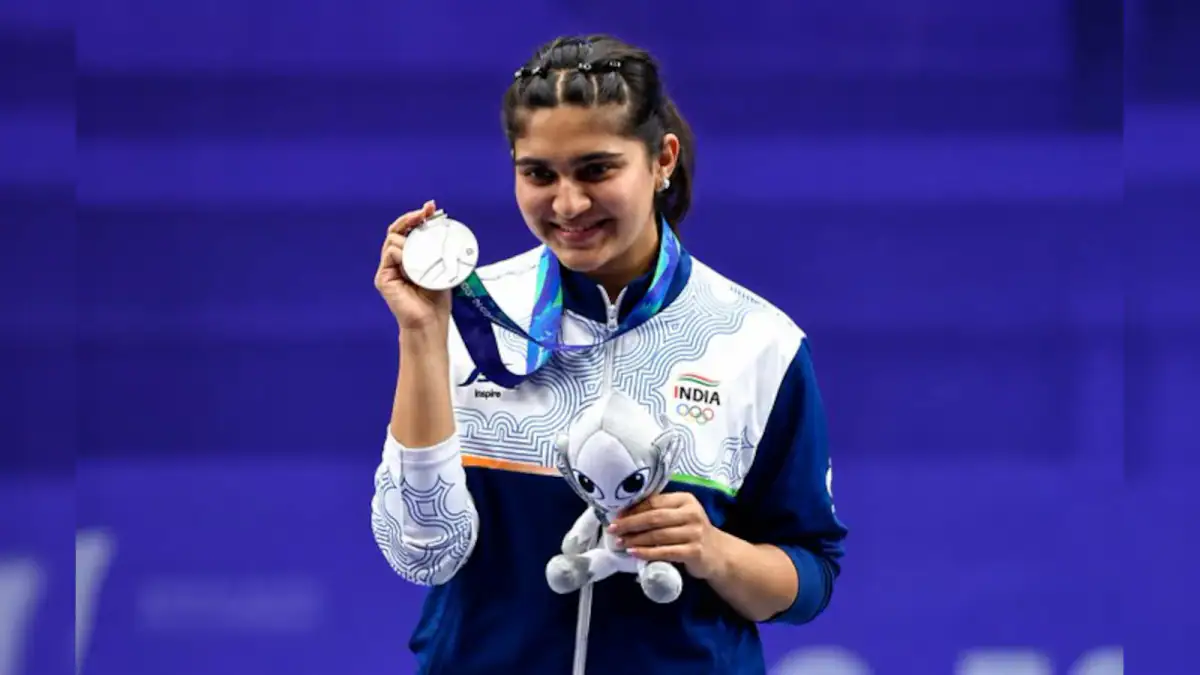
The 2026 World Championship in Doha opened the qualification cycle for Los Angeles 2028. The rifle and pistol events offered 24 Olympic quotas, with the one-quota-per-country-per-event ceiling retained. India recorded eight individual finalists across the 10 rifle and pistol events, the highest number across the four championships considered. The contingent also secured two medals, including Jaypal Malviya's silver in men's 10m air pistol.
India won two Olympic quotas across different disciplines, reaching the maximum allocation possible under the event-level restriction in the disciplines where it secured quotas.
The increase from three finalists in 2014 to eight in 2026 represents a 166.7% rise. The progression through four cycles three, four, six and eight finalists points to a larger pool of Indian shooters capable of competing at the highest level.
The number of rifle and pistol quotas available directly at the World Championships has fallen from 50 in 2014 to 24 in 2026, a reduction of 52%. The country-level event cap has also fallen from two to one. This has changed the strategic value of a World Championship final. Under the earlier system, two Indian shooters finishing among the leading competitors in an event could potentially secure both available quotas. The current rules prevent that outcome, regardless of how many athletes from the same country reach the final.
Consequently, national federations must depend more heavily on other qualification routes, including continental championships, Olympic qualification tournaments and ISSF World Ranking allocations.
India's finalist-to-medal conversion has fluctuated across the four editions: 33.3% in 2014, 25% in 2018, 16.7% in 2022 and 25% in 2026. The figures show that a larger finalist pool does not automatically translate into a proportionate increase in medals. The challenge remains converting qualification-round consistency into decisive performances in elimination finals, where shot timers, cumulative decimal scoring and immediate knockouts place considerable demands on athletes.
The relationship between World Championship performances and Olympic results has also evolved. India won one medal at each of the 2014, 2018 and 2022 championships, followed by two in 2026. At the Olympic level, the most significant breakthrough came at Paris 2024, where India won three shooting bronze medals.
The Paris campaign featured Manu Bhaker's bronze in women's 10m air pistol, her mixed-team bronze with Sarabjot Singh and Swapnil Kusale's bronze in men's 50m rifle 3 positions.
The pathway to Paris also involved changes in selection strategy. The supplied analysis identifies the NRAI's multi-stage domestic trials in 2024, which placed quota winners and challengers in direct competition, as an important departure from earlier selection approaches. The emphasis shifted towards current form and performance under pressure rather than treating an Olympic quota as an individual entitlement.
The LA 2028 Challenge: Converting Depth into Gold
Doha has given India a strong starting platform for the LA 2028 cycle: eight finalists, two medals and two Olympic quotas under a more restrictive system. The next task is to secure additional qualification places through the remaining international competitions while maintaining competitive depth across disciplines.
The Target Olympic Podium Scheme and sports science infrastructure are identified in the analysis as important elements of India's high-performance framework. Their value will ultimately depend on how effectively athletes translate preparation and international experience into final-round execution.
India's shooting programme is no longer defined by dependence on a handful of individual performers. The rise from three finalists in Granada to eight in Doha is evidence of a broader international presence. But the next measure of progress will be more demanding: turning that depth into Olympic finals, medals and, ultimately, gold at Los Angeles 2028.
Information Courtesy: Vaibhav Manocha
Comments (0)
to post comments, replies, and votes.
Loading comments…