Ahvar Rizvi’s Long Road Back: From a One-Point Heartbreak to Asian Games Dream
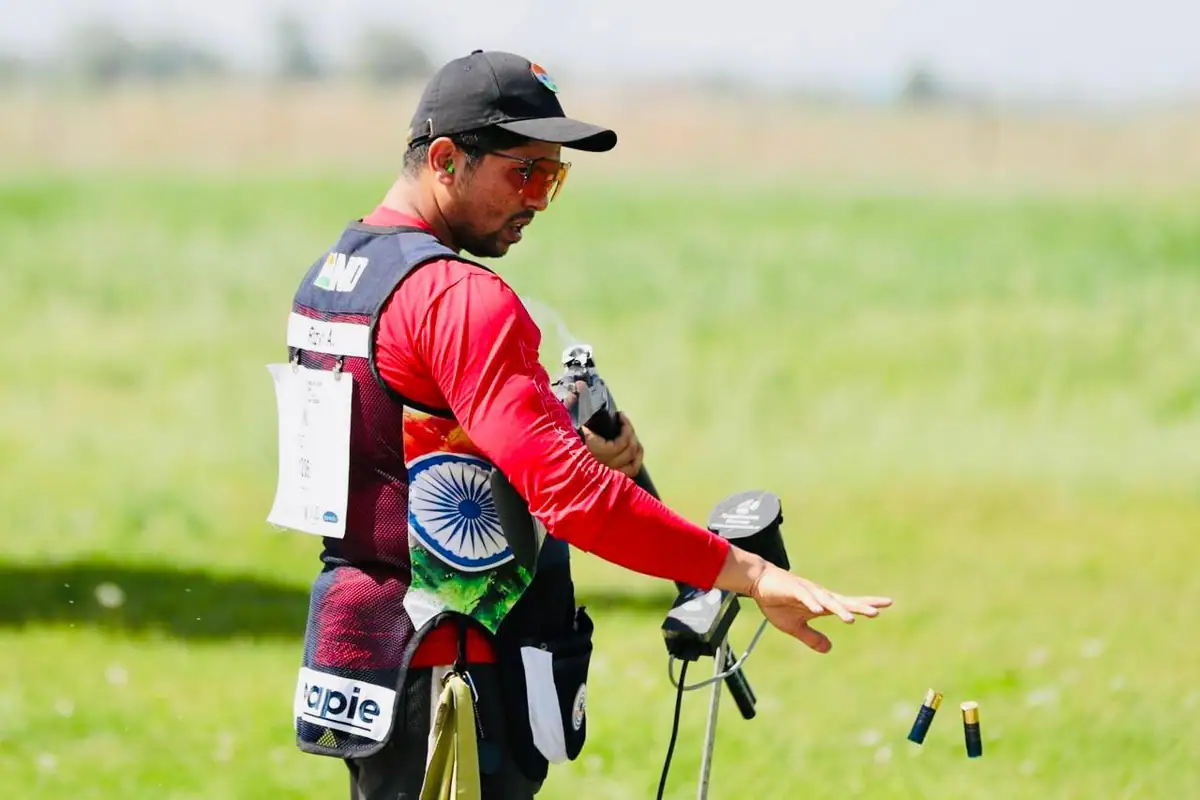
For Ahvar Rizvi, the call confirming his selection for the Asian Games was not simply another milestone. It was the emotional release of eight years of disappointment, uncertainty, and persistence.
The 26-year-old shooter will represent India in the Men’s Trap event at the 2026 Asian Games in Aichi-Nagoya, Japan. When his coach Vikram Singh Chopra delivered the news after a competition in Kazakhstan, Rizvi struggled to process what he had just achieved.
“My body went numb,” he recalled, describing how he broke down in tears before hugging his coach. The moment carried the weight of a missed opportunity from 2018, when Rizvi fell agonizingly short of making India's Asian Games squad by just one point.
Eight years later, he finally has his chance.
Rizvi's heartbreak in 2018 came at a particularly difficult moment in his career. He had already established himself as one of India's promising shotgun shooters, but missing the Asian Games by a single point meant another four-year wait for an opportunity that athletes dream about throughout their careers.
Then came an even bigger disruption. The discipline in which Rizvi had become a world champion, Double Trap, was removed from the international shooting program. Suddenly, the path he had built his career around disappeared.
The setback forced him to make a difficult transition from Double Trap to Olympic Trap. For nearly three years, Rizvi struggled to reproduce the scores that had once made him a world champion. The adjustment was technical, mental and emotional, and there were moments when he considered walking away from shooting altogether.
It was his long-time coach who helped him change perspective. Chopra, who has worked with Rizvi since 2014, reminded him that his ability had not disappeared simply because his discipline had changed. If he could win medals in Double Trap, he could learn to do the same in Trap.
That message ultimately kept Rizvi's career alive.
Rizvi's early career had already shown extraordinary promise. He began shooting in 2012 in Meerut, growing up in a family deeply connected to shotgun shooting. His father, brother, uncles and cousins were all involved in the sport, giving him an environment where shooting was part of everyday life.
At only 12, however, Rizvi was still too young to comfortably handle the weight and recoil of a shotgun. His family found ways to help him overcome those early obstacles. His cousin Arsh Ahmed would stand behind him during training to absorb some of the recoil, while another cousin, Rayyan Rizvi, provided his gun and helped manage the visa paperwork required for international competitions.
The investment eventually paid off. Rizvi won silver at the 2017 ISSF Junior World Championship in Moscow before producing an even bigger performance in Changwon in 2018. He won individual gold with a score of 141, a mark that even surpassed the score achieved by the senior world champion.
But almost immediately, the discipline disappeared from the international calendar. His greatest success had arrived just as the event that produced it was being taken away.
The transition to Trap created another major problem: equipment. Shooting is a sport in which equipment can have a significant influence on performance, and Rizvi did not initially have a suitable trap gun.
That is where fellow Indian shooter Lakshya Sheoran stepped in. Sheoran, an Asian Games silver medallist in 2018, lent Rizvi his own competition gun so that he could train and compete in the trials. Rizvi eventually used that very gun to earn his place in India's 2026 Asian Games squad. It was an important gesture in a sport where athletes rarely part with their competition weapons.
For Rizvi, it became another example of how people around him helped keep his career moving when circumstances were working against him.
Rizvi will now travel to the Asian Games alongside Olympian Kynan Chenai and childhood friend Shapath Bharadwaj in India's Men's Trap squad. The combination gives him both experience and familiarity.
Rizvi describes Chenai as a senior figure who treats the younger shooters like brothers, while his relationship with Bharadwaj stretches back to their junior Double Trap days. The two have even been roommates during their journey through the sport. Behind the shooters, Rizvi has also credited the National Rifle Association of India for providing structured national camps, technical assistance, and overseas exposure in countries including the UK and Italy.
That support has helped him remain competitive while adapting to the demands of his new discipline.
Now, after years of setbacks, Rizvi has reached the stage he once missed by the smallest possible margin. His approach to the Asian Games is deliberately simple.
Control the breathing. Focus on one target. Manage the pressure. There is no need to think about the missed opportunity from 2018 anymore. There is no need to dwell on the disappearance of Double Trap. The only thing in front of him now is the target at Aichi-Nagoya. And beyond the target is the image of Rizvi carrying the Indian Tricolour rising while the national anthem plays.
Eight years ago, one point kept him away. Now, he finally has the opportunity to turn all those years of disappointment into an Asian Games medal.
Comments (0)
to post comments, replies, and votes.
Loading comments…