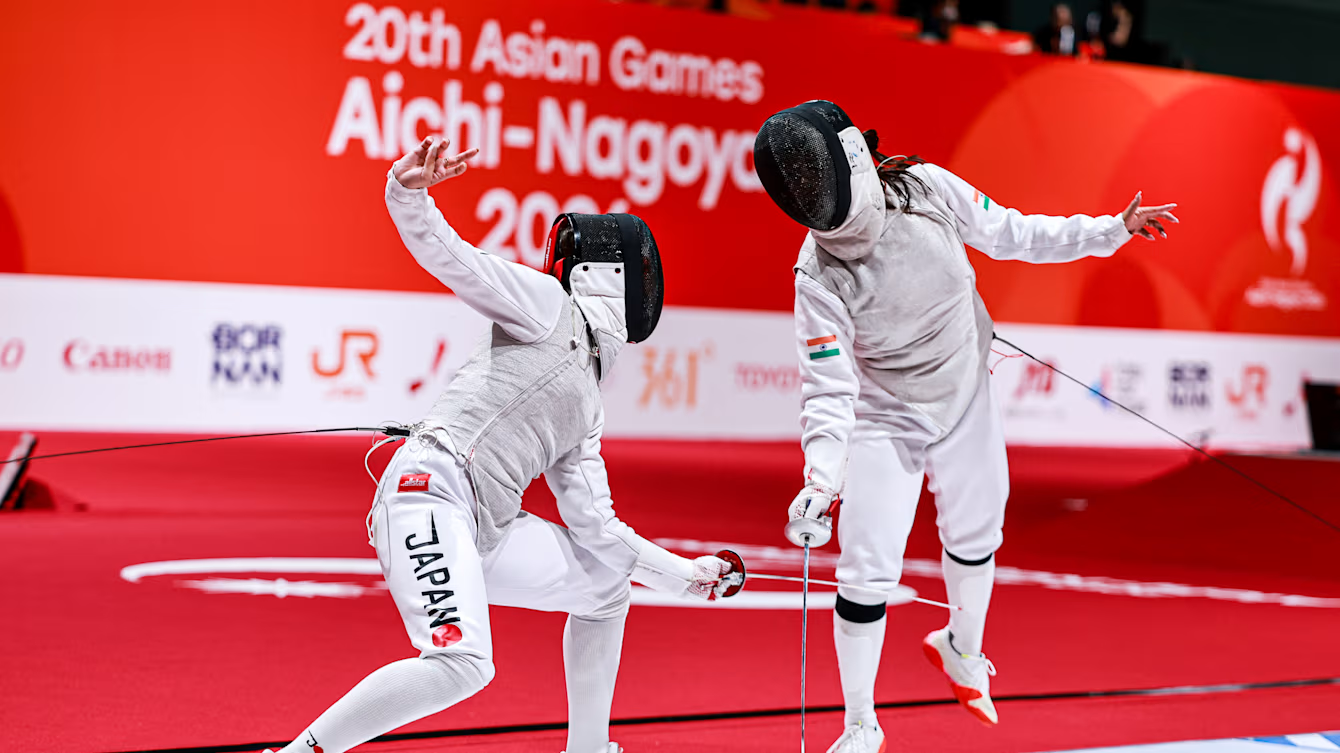
Aichi-Nagoya Asian Games 2026: Inside India’s Unusual Athletes Village Setup
The Aichi-Nagoya Asian Games 2026 will feature an athletes accommodation model unlike the traditional mega-sporting event village. Instead of bringing thousands of competitors together under one purpose-built residential complex, organisers have opted for a decentralised system spread across Aichi Prefecture and other locations.
The decision was driven primarily by rising construction costs. The original plan was to construct a dedicated Athletes Village on the former Nagoya Racecourse site in Minato-ku, Nagoya. However, increasing material, labour and supply-chain costs made the project financially unattractive, prompting organisers to abandon the conventional model.
What has emerged is a three-part accommodation network involving a cruise ship, temporary wooden modular units and commercial hotels. It is an unusual solution, but one that reflects the changing economics of hosting major international sporting events.
Why Aichi-Nagoya abandoned the traditional village
The original concept was straightforward: build one large athletes village where competitors from across Asia could live, train, eat and interact during the Games.
But the economics changed significantly. The estimated operational cost of the Games rose from approximately ¥85 billion to ¥140.5 billion by early 2023. Against this backdrop, constructing a permanent residential complex became increasingly difficult to justify.
Instead, organisers chose to use infrastructure that already existed or could be repurposed after the Games. This has resulted in what can broadly be described as a hybrid accommodation strategy: athletes will stay in a cruise liner docked at Kinjo Pier, temporary wooden villas at the Port of Nagoya Garden Wharf, and hotels spread across the region.
The approach reduces the risk of being left with a huge purpose-built village after the Games end, but it also creates a very different logistical challenge.
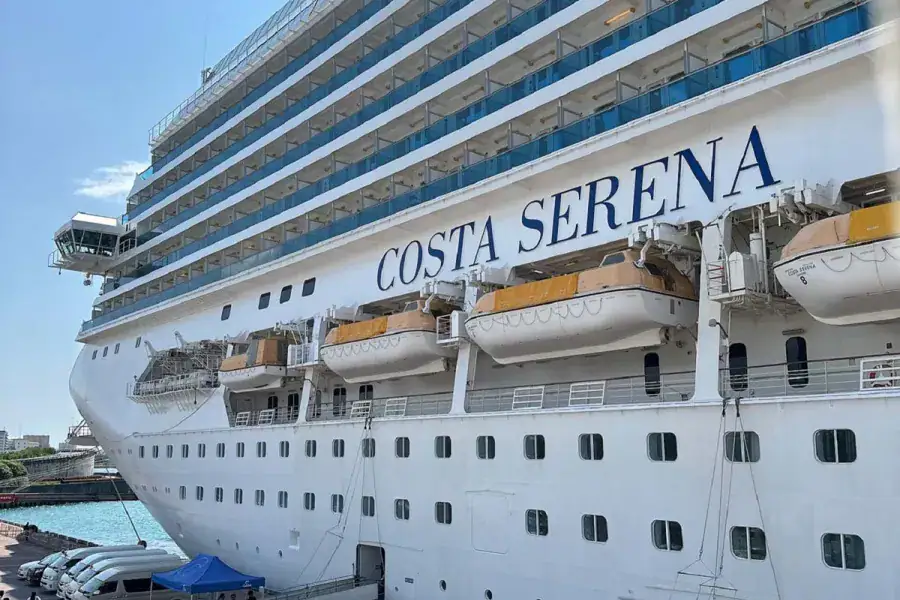
Costa Serena becomes a floating athletes village
The most striking element of the accommodation plan is the use of the Costa Serena as a floating hotel. The Italian-flagged passenger liner, built by Fincantieri, will be docked at Kinjo Pier in the Port of Nagoya. The 114,500-gross-tonne vessel has 1,502 passenger cabins, eight dining venues, seven swimming pools and dedicated training facilities.
Between 4,000 and 5,000 athletes and team officials are expected to be accommodated aboard the ship. Interestingly, accommodation aboard the Costa Serena will not necessarily be organised primarily by nationality. Instead, organisers are prioritising athletes according to the location of their sporting venues. Competitors from disciplines such as judo, gymnastics, wrestling, weightlifting, tennis, rugby, rowing and wushu are among those expected to benefit from the port-side location.
This could reduce daily travel requirements for athletes competing in venues around Nagoya Port.
The second major component is a temporary village at the Port of Nagoya Garden Wharf. Around 200 modular wooden units, designed in a shipping-container style, will provide accommodation for approximately 2,000 athletes and delegation members. The concept goes beyond simply providing beds.
The temporary complex includes dining facilities, medical clinics, retail areas, administrative spaces and cultural exchange zones. The interiors use timber to create a more comfortable environment for athletes living there during the Games. But perhaps the most interesting part of the project comes after the Games.
Rather than demolishing the units and treating them as temporary infrastructure with limited value, the structures are intended for reuse as disaster-response housing and tourist accommodation. That gives the project a longer-term purpose and fits into Japan's wider emphasis on disaster preparedness.
The remainder of the athlete and delegation population will be accommodated in commercial hotels. The distributed network stretches across Aichi Prefecture, Gifu and other locations, with approximately 10,000 to 11,000 participants expected to be accommodated through this network according to the operational plan. Some sports requiring specialised facilities will also have delegations based in Tokyo.
This arrangement provides organisers with flexibility, particularly because the Games involve a large number of sports spread across a wide geographical area. But it also creates a major transportation challenge.
A traditional central athletes village allows organisers to operate relatively predictable shuttle routes between one main accommodation hub and competition venues. The Aichi-Nagoya model requires transport operations across multiple accommodation clusters.
That means buses, security teams and competition schedules must be synchronised across a much larger geographic footprint.
The accommodation model becomes even more complicated because the Games are scheduled for September 19 to October 4, a period when Japan can still face significant typhoon activity. For organisers, this is particularly important because two of the principal accommodation facilities are located around the Port of Nagoya.
The Costa Serena presents one type of risk, while the Garden Wharf modular village presents another. For the cruise ship, severe weather requires maritime contingency planning. The operational framework envisages the vessel leaving Kinjo Pier under appropriate severe-weather conditions and moving into Ise Bay, where it can ride out the storm away from the immediate hazards around the quay.
The modular village requires a different response.
Because the Garden Wharf site is exposed to coastal hazards, organisers have prepared evacuation procedures for severe storms, storm surges and tsunami situations. In the event of an approaching typhoon, residents can be moved inland before the worst conditions arrive. In a sudden earthquake or tsunami warning, designated high-rise evacuation buildings become part of the emergency response.
A different model for future Asian Games?
The Aichi-Nagoya accommodation strategy demonstrates the difficult balance modern sporting events face. Building a permanent athletes village provides convenience and creates a single operational centre, but it can also result in enormous construction expenses and questions about what happens to the infrastructure after the event.
A decentralised model avoids much of that capital expenditure but transfers the burden into logistics, transportation and emergency management. For Aichi-Nagoya, the most innovative aspect may ultimately be the attempt to make temporary infrastructure useful beyond sport.
The wooden modular units can become disaster-response housing, while existing hotels and the cruise ship avoid the creation of another large permanent residential development. The model is therefore more than simply an alternative athletes' village.
It is a reflection of how major sporting events are being forced to rethink infrastructure in an era of rising construction costs, sustainability concerns and increasingly complex disaster-preparedness requirements.
For the thousands of athletes arriving in Japan, however, the practical objective remains the same: a safe place to stay, efficient access to competition venues and an environment in which they can focus on performing at the Aichi-Nagoya Asian Games 2026.
The difference is that this time, there will be no single village waiting for them. Instead, their Asian Games experience will unfold across a floating hotel, a temporary wooden village and a network of hotels across the region.
Comments (0)
to post comments, replies, and votes.
Loading comments…