Asian Games 2026 Men’s Cricket: India’s Road to Gold Explained as T20 Knockout Draw Takes Shape
India’s men’s cricket team will begin its Asian Games 2026 title defence with a direct entry into the quarterfinal stage, avoiding the preliminary group phase and needing just three victories to retain the gold medal.
The men’s cricket competition in Aichi-Nagoya will be played in the T20 format and features a 10-team field. India, Pakistan, Bangladesh and Sri Lanka have received direct qualification to the quarterfinals based on their seeding, while the remaining six teams must first battle through a preliminary group stage for the four remaining knockout spots. The format and schedule place India directly into Quarter-final 2 on September 28. (Jagran Josh)
For India, the road is therefore straightforward on paper but potentially challenging in practice. The defending champions will first face the second-placed team from Group A. A victory would take them into the semifinals, where they would meet either Sri Lanka or the winner of Group A. From there, India would move into either the gold medal match or the bronze medal contest.
The route is short. The stakes, however, could not be higher.
How the Asian Games 2026 cricket format works
The competition begins with six teams competing in two preliminary groups of three. Group A consists of Afghanistan, Japan and Nepal. Group B features Hong Kong, Malaysia and Oman. Each team will look to finish among the top two in its group. The top two teams from both groups will qualify for the quarterfinals, joining the four seeded sides India, Pakistan, Bangladesh and Sri Lanka.
This means four of the six preliminary-round teams will progress, while two teams will see their campaigns end before the knockout stage. The format gives the higher-ranked teams a significant advantage. India and the other three seeded nations do not have to navigate the group stage and will enter the competition only when the quarterfinals begin.
India’s direct entry reflects its status as one of the leading cricketing nations in Asia and also gives the defending champions more preparation time before their first match. The quarterfinal pairings have been structured to place each seeded side against a group-stage qualifier.
Pakistan will face the second-placed team from Group B, while India will take on the second-placed team from Group A. Sri Lanka will meet the Group A winners, while Bangladesh will face the winners of Group B. The winners of those four matches will advance to the semifinals.
India’s first match on September 28
India’s Asian Games campaign begins on September 28, when the team plays its quarterfinal at 14:00 JST. The opponent will be the team that finishes second in Group A.
With Afghanistan, Japan and Nepal forming the group, the final standings will determine India’s first challenge. On current expectations, Afghanistan would enter the group stage as one of the strongest contenders, but the short T20 format leaves plenty of room for surprises. Nepal also has a growing reputation in T20 cricket, while hosts Japan will have the advantage of playing in familiar conditions.
India will therefore have to wait until the group stage is completed before knowing its opponent. The direct route into the quarterfinals may reduce the number of matches India needs to play, but it also means there is little room for error. Unlike a league format, one defeat would immediately end the dream of winning gold.
Every match from September 28 onwards is effectively a knockout.
If India win their quarterfinal, they will move into the semifinal on October 1. Their opponent will come from the other side of the same half of the draw.
Sri Lanka will face the winner of Group A in Quarter-final 3, and the winner of that match will potentially face India in the semifinals. This creates a possible India-Sri Lanka clash in the last four. However, the Group A winner could also emerge as India’s semifinal opponent if Sri Lanka are beaten in their quarterfinal.
India therefore knows the broad route but not the exact opponents.
The quarterfinal is a direct test against the second-best team from Group A. The semifinal could then bring Sri Lanka or the strongest preliminary-round team from that group.
The structure also means India and Pakistan have been placed on opposite sides of the draw and cannot meet in the semifinals. An India-Pakistan clash is possible only in a medal match, either the final or the bronze medal contest. (India Today)
India’s task is simple: win the quarterfinal, win the semifinal and win the final. A victory on September 28 would put the team into the last four. Another win on October 1 would guarantee a medal. The final hurdle will come on October 3, when the winners of the semifinals will compete for gold.
https://www.indiasportshub.com/articles/indian-cricket-team-schedule-at-asian-games-2026
The two losing semifinalists will also play on October 3 in the bronze medal match. For India, the target will be to ensure that the campaign ends in the gold medal contest.
The format rewards the seeded teams with a shorter route, but it also creates immediate pressure. India will have no opportunity to recover from a poor opening match. The first game of the tournament will already be a quarterfinal. That is what makes the September 28 fixture so significant.
India enters as one of the seeded favourites, but in T20 cricket, momentum can change quickly. The preliminary-stage teams will arrive battle-tested, while India will need to hit the ground running in its first competitive match of the tournament. The road to gold is now clear.
India’s route at the Asian Games 2026: a quarterfinal against the second-placed team from Group A on September 28, followed by a potential semifinal against Sri Lanka or the Group A winner on October 1, before either the gold medal match or bronze medal match on October 3.
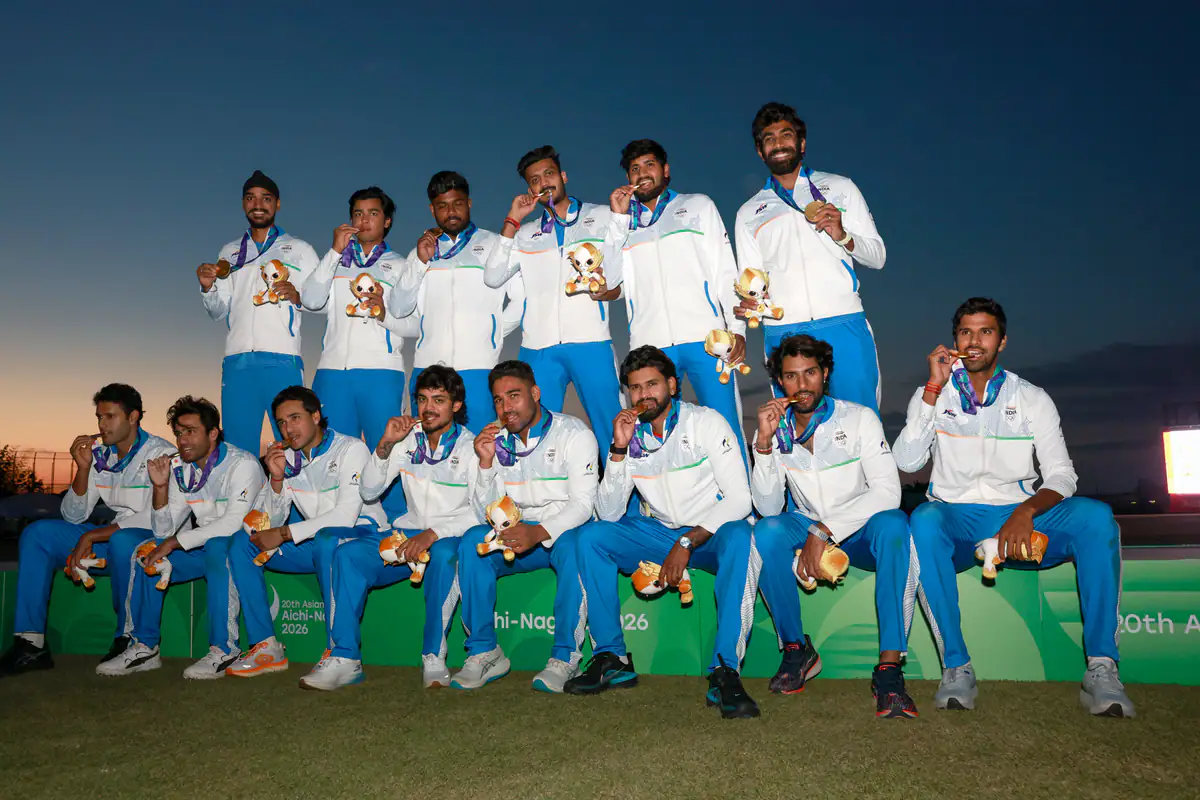
India are only three wins away from defending their Asian Games crown.
Comments (0)
to post comments, replies, and votes.
Loading comments…