Asian Games 2026: How India Performed Across Team Sports in Aichi-Nagoya
India’s team sports campaign at the 2026 Asian Games produced six gold medals, a historic bronze and several encouraging performances across disciplines.
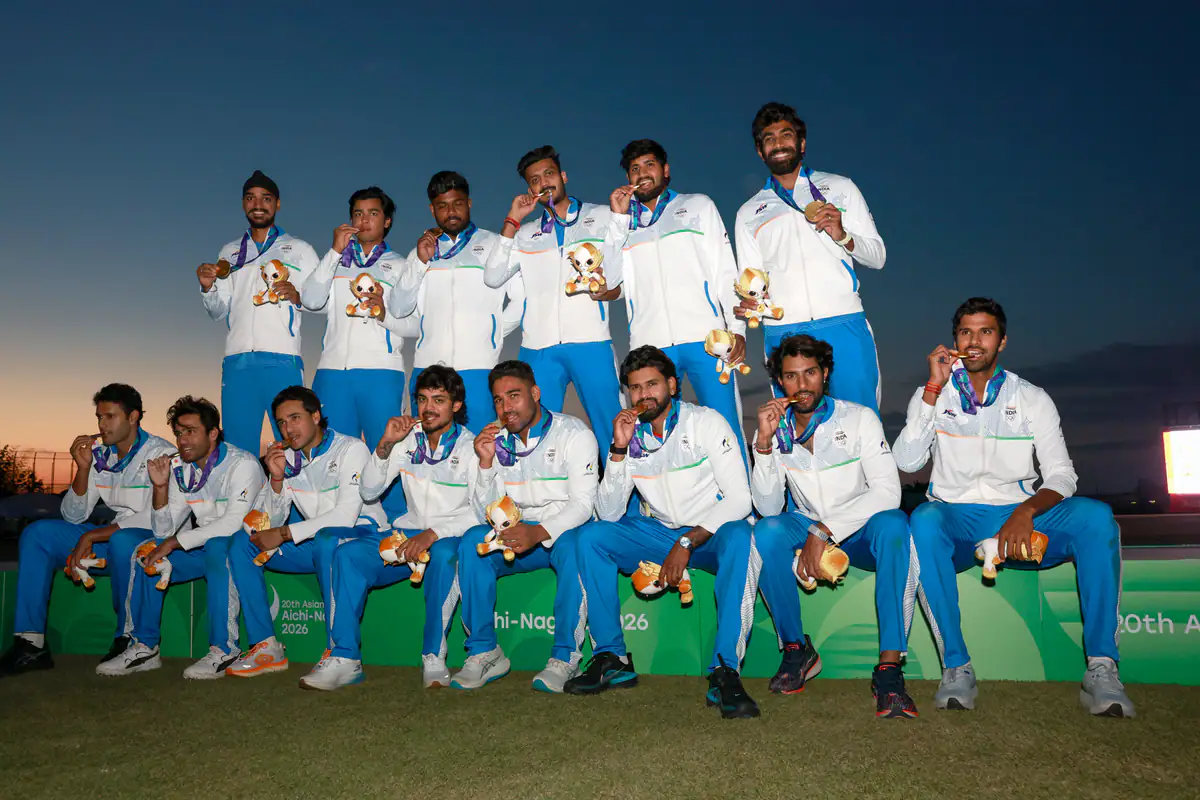
The strongest results came from the country’s established team-sport programmes, with India completing gold-medal sweeps in cricket, hockey and kabaddi across the men’s and women’s competitions.
The campaign also offered a clearer picture of where India’s emerging team sports stand against the continent’s established powers. Men’s sepak takraw broke through for a bronze, while men’s volleyball and women’s rugby sevens finished sixth. The women’s sepak takraw team, meanwhile, exited in the preliminary round.
Cricket: Another Gold for India
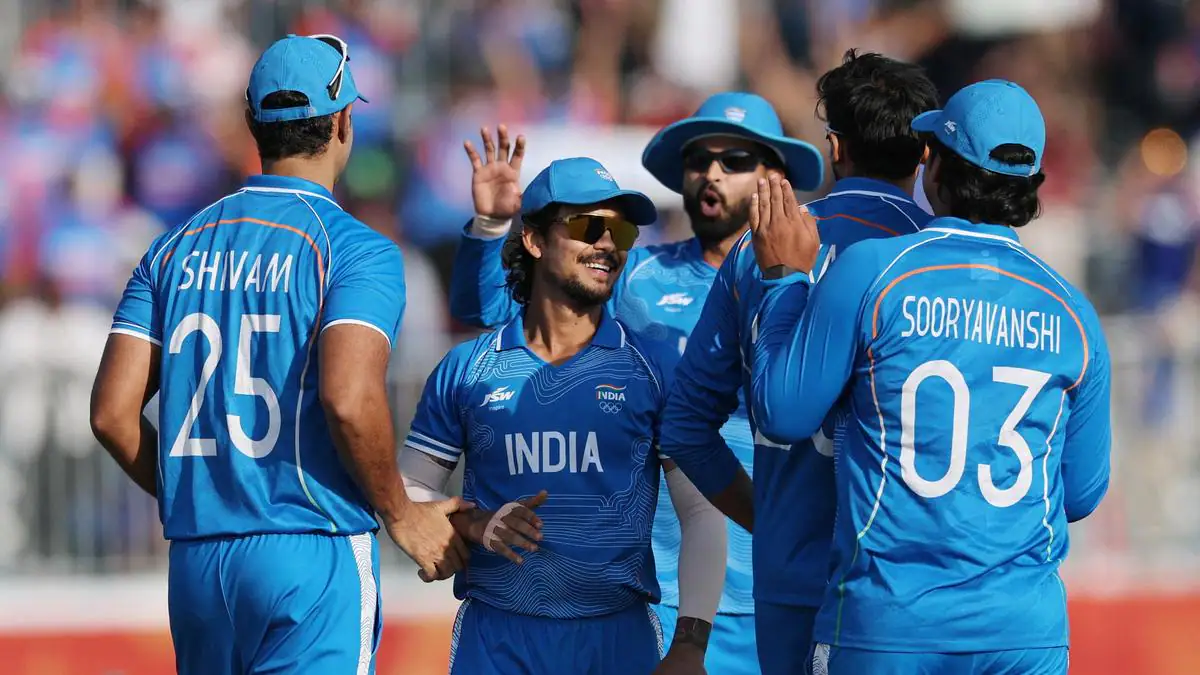
India retained the men’s T20 cricket gold, completing an undefeated knockout campaign despite an unusual quarterfinal. The quarterfinal against Afghanistan on September 28 was abandoned without a ball being bowled because of persistent rain. India progressed to the semifinal on the basis of its superior seeding. Against Sri Lanka in the semifinal, India produced a dominant performance, scoring 169/7 before bowling Sri Lanka out for just 45 in 9.5 overs to win by 124 runs.
The final against Pakistan was a much tighter contest. India posted 211/6 from 20 overs and then restricted Pakistan to 192/6, securing a 19-run victory and successfully defending its Asian Games title.
Hockey: Champions and Olympic-Bound
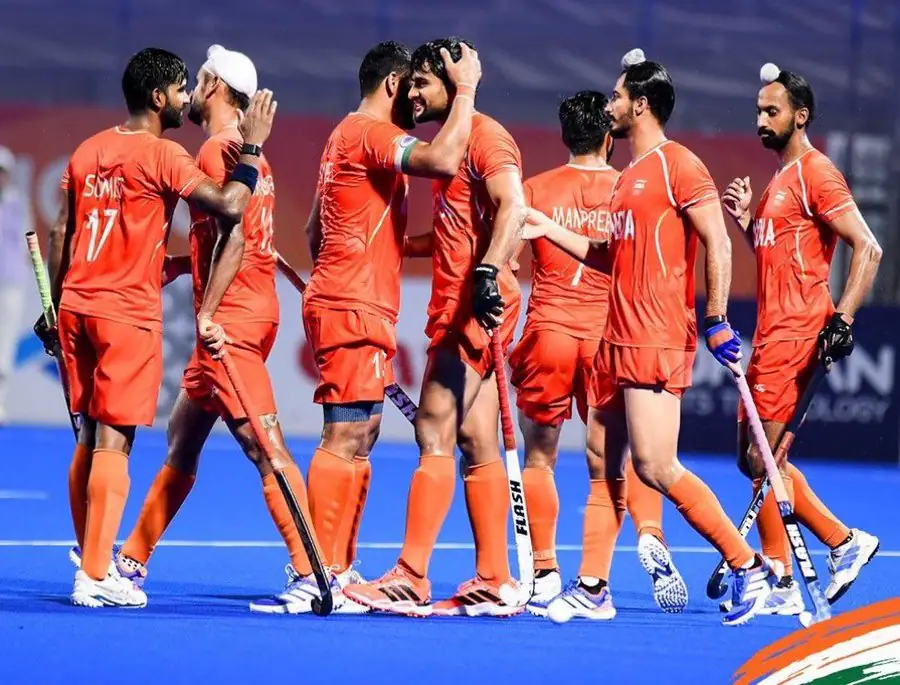
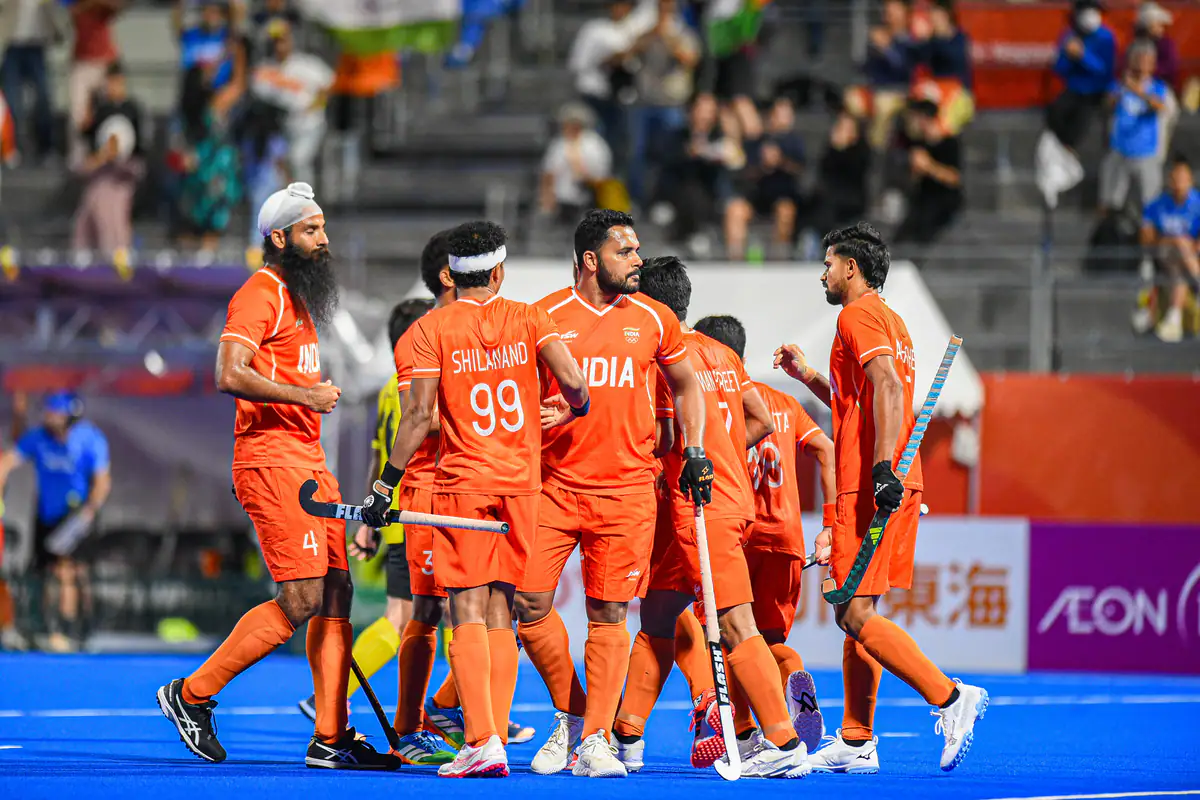
Men’s hockey delivered one of the most important results of the Games. India went through the pool stage unbeaten, scoring 49 goals and conceding only four for a tournament-leading +45 goal difference. The team then navigated the knockout rounds before defeating Malaysia 5-1 in the final. The victory gave India its fifth Asian Games men’s hockey title and, crucially, a direct qualification quota for the 2028 Los Angeles Olympics.
It was also India’s first successful defence of the Asian Games men’s hockey title, making the campaign significant beyond the gold medal itself.
Kabaddi: Ninth Gold in Ten Editions
India’s men completed another successful kabaddi campaign, defeating Iran 40-34 in the final. Iran led 18-17 at half-time after disrupting India’s raiding patterns with coordinated defensive structures. India responded after the interval by varying its raiding depth and improving its defensive stability. A decisive second-half scoring surge helped India establish a 39-30 advantage before Iran mounted a late challenge. India held its shape to close out the six-point victory.
The title was India’s ninth men’s kabaddi gold across ten Asian Games editions.
Sepak Takraw: Historic Bronze
Men’s sepak takraw produced an important breakthrough with a bronze medal in the quadrant event. India topped its preliminary group after victories over Laos, Vietnam and Myanmar. The team then faced hosts Japan in the semifinal, where Japan won 2-0. The semifinal defeat ended India’s hopes of reaching the final, but the team secured the bronze medal alongside Myanmar.
The result was particularly significant for a sport in which India has traditionally operated behind the leading Southeast Asian nations. The medal demonstrated that specialised preparation and tactical development can translate into a podium finish.
Volleyball: Sixth After Strong Start
India’s men’s volleyball team finished sixth after an unbeaten group-stage campaign. India defeated Vietnam and Hong Kong in straight sets before edging Qatar 3-2 in a dramatic contest that ended 24-22 in the deciding set.
The quarterfinal against Pakistan exposed weaknesses under sustained pressure, with India losing 0-3. India recovered in the classification round, beating South Korea 3-1, but lost a five-set fifth-place match to Thailand, 15-17 in the decider.
The sixth-place finish matched India’s previous Asian Games placing, but the tournament also showed the gap that remains between India and the continent’s strongest volleyball programmes.
Cricket: Dominant Back-to-Back Champions
India’s women retained their Asian Games cricket title with a perfect campaign. After beating Japan by eight wickets in the quarterfinal, India defeated Bangladesh by 114 runs in the semifinal, powered by a century from Shafali Verma. The final against Sri Lanka was even more emphatic. India scored 216/3, led by Smriti Mandhana’s 79 from 45 balls, before bowling Sri Lanka out for 69.
The 147-run victory secured consecutive Asian Games gold medals and underlined the depth of India’s women’s cricket programme.
Hockey: 44-Year Wait Ends
The women’s hockey team delivered one of India’s biggest team-sport breakthroughs. India swept its pool, scoring 66 goals while conceding only three. Deepika Sehrawat led the tournament scoring charts with 21 goals.
After beating South Korea 2-0 in the semifinal, India faced defending champions China in the final. Lalremsiami scored the decisive goal in the 10th minute, and India’s defence held firm for a 1-0 victory. Goalkeeper Savita Punia produced a crucial penalty-stroke save as India secured its first Asian Games women’s hockey gold in 44 years.
The victory also secured direct qualification for the 2028 Los Angeles Olympics.
Kabaddi: Another Successful Defence
India’s women completed the kabaddi double by defeating Iran 37-34 in the final. The match remained closely contested early, but India adjusted its attacking approach after the interval. Substitute raider Sanju Devi played a decisive role with consecutive multi-point raids that created the separation India needed.
The defence then held firm through Iran’s late push. The victory gave India its fourth women’s kabaddi gold and completed gold-medal sweeps for India in cricket, hockey and kabaddi.
Rugby Sevens: Sixth Place
India’s women’s rugby sevens team finished sixth after progressing through the classification rounds. India lost to China and Hong Kong in the group stage but defeated Malaysia to finish third in Group B and qualify for the 5th–8th bracket. A strong 22-5 victory over Singapore in the classification semifinal secured a place in the fifth-place match. India, however, lost 0-20 to Kazakhstan to finish sixth.
Sepak Takraw: Early Exit
The women’s sepak takraw team could not replicate the breakthrough achieved by the men. India competed in the regu, team regu and quadrant events but faced difficult opposition, including established powers Thailand, Vietnam and South Korea.
The team exited during the preliminary round-robin stage without reaching the knockout rounds.
India’s team-sport results at Aichi-Nagoya reveal a clear divide. Cricket, hockey and kabaddi have developed sufficiently strong competitive ecosystems to consistently challenge for Asian titles. Their six gold medals formed the backbone of India’s team-sport campaign. The emerging programmes showed encouraging signs but remain short of the consistency required against Asia’s strongest teams. Men’s sepak takraw provided the clearest breakthrough, while volleyball and women’s rugby demonstrated competitive potential without reaching the podium.
For the next Olympic and Asian Games cycle, the challenge is to replicate the structures that have strengthened hockey, kabaddi and cricket in sports such as volleyball, rugby and sepak takraw.
Aichi-Nagoya therefore delivered both confirmation and a roadmap: India’s established team sports are producing titles, while the next step is turning promising performances in emerging disciplines into regular podium finishes.
Comments (0)
to post comments, replies, and votes.
Loading comments…