Balwan Singh to Lead India’s Kabaddi Team at Asian Games 2026: Can the Veteran Coach Deliver Another Gold?
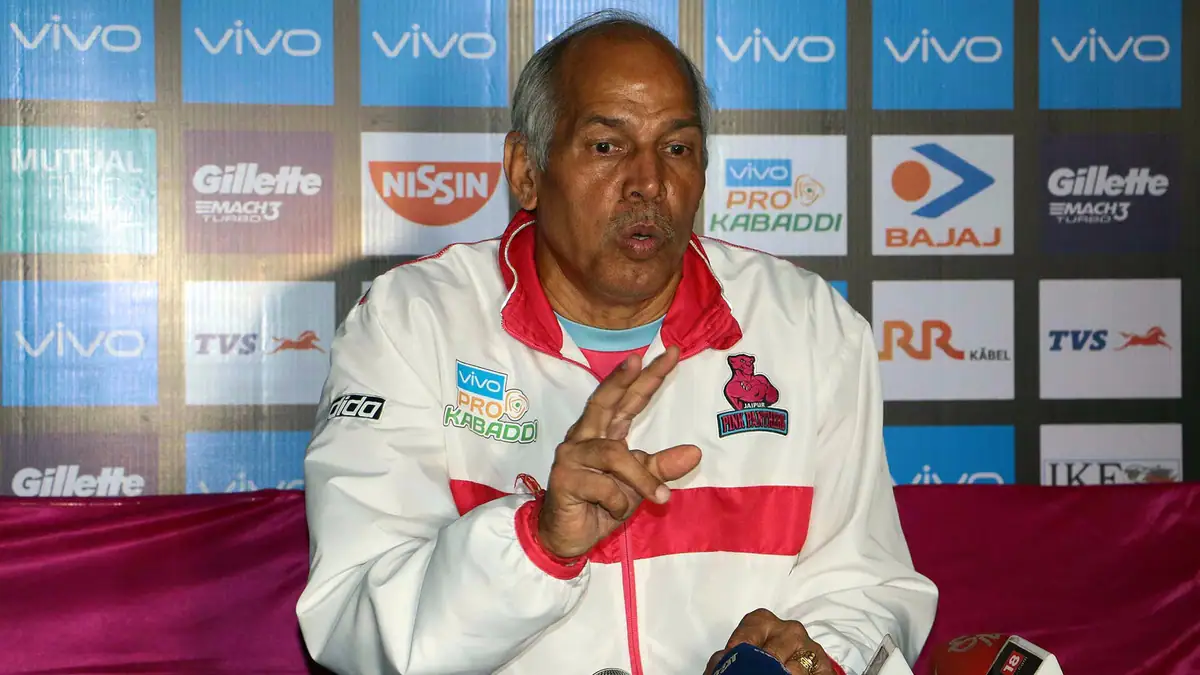
India will have one of kabaddi’s most decorated coaches at the helm when the men’s team begins its campaign at the 20th Asian Games in Aichi-Nagoya, Japan.
Dronacharya Awardee Balwan Singh has been appointed as the Head Coach of the Indian men’s kabaddi team for the Asian Games 2026, putting an experienced tactician in charge of India’s bid to defend its continental title.
For Balwan Singh, the appointment represents a return to a stage where he has already enjoyed extraordinary success. His coaching career includes Asian Games gold medals with India at Guangzhou 2010 and Incheon 2014, as well as a major contribution to India’s dominance at the 2006 Doha edition. He also guided India to three Kabaddi World Cup titles, including the 2016 World Cup in Ahmedabad.
Now, more than a decade after his previous Asian Games triumphs, Singh has another opportunity to shape an Indian team facing a changing competitive landscape.
Balwan Singh’s association with kabaddi stretches back more than four decades. Originally a wrestler, he switched to kabaddi following a cervical injury and went on to compete at the highest level of national-style kabaddi between 1981 and 1993.
During his playing career, he won nine national championship gold medals before completing a coaching diploma at the National Institute of Sports. He subsequently worked with the Armed Forces Services team, developing a disciplined and physically demanding training philosophy that would later become a defining feature of his national-team coaching.
His contribution to Indian kabaddi was recognised when he received the Dronacharya Award in 2005. Singh also demonstrated his ability to adapt outside the traditional national-team environment. When the Pro Kabaddi League began, he coached the Jaipur Pink Panthers to the inaugural PKL title, adding another major achievement to his résumé.
What makes Balwan Singh’s system different?
Singh’s coaching philosophy is built around defensive organisation, controlled raiding and minimising unnecessary errors. Rather than encouraging constant high-risk attacks, his system places considerable emphasis on maintaining defensive compactness, carefully rotating raiders and managing the clock during crucial phases of a match. Do-or-die raids receive particular attention, with the objective of reducing turnovers and maintaining defensive integrity during the closing stages of tight games.
That approach could prove particularly important in Aichi-Nagoya.
India enters the Asian Games as defending champions after beating Iran 33-29 in the men's final at Hangzhou in 2023. However, the competition at the top of Asian kabaddi has become increasingly demanding, with Iran, South Korea and Pakistan all capable of putting India under pressure.
One of Singh’s biggest challenges will be managing a squad that represents a significant generational transition. Only four players from India's gold-medal-winning Hangzhou squad have been retained for the 2026 tournament: Arjun Deshwal, Sunil Kumar, Pawan Sehrawat and Aslam Inamdar.
The new-look squad includes several players who have made their mark in domestic competition.
Raiders Ayan Lohchab, Devank Dalal and Ashu Malik provide India with a younger attacking core, while Arjun Deshwal offers experience and familiarity with the Asian Games environment. In defence, Sunil Kumar is expected to provide leadership alongside Jaideep Dahiya, Rahul Sethpal, Gaurav Khatri, Sumit Sangwan and Ankit Jaglan.
Pawan Sehrawat and Aslam Inamdar add further versatility as all-round options. Interestingly, the new squad also demonstrates the growing importance of domestic franchise systems. Nine of the 12 selected men's players have developed through the Kabaddi Champions League ecosystem, highlighting how domestic competition is increasingly feeding directly into the national setup.
Singh will not be working alone. Arjuna Awardee B.C. Ramesh has been appointed Assistant Coach for the men's team. Ramesh brings significant experience in defensive systems, particularly corner-chain coordination and backline traps.
Former India captain and 2012 Arjuna Awardee Anup Kumar will serve as Team Manager. His experience as both an elite player and national captain gives the coaching setup another link between tactical planning, player management and match-day execution.
The wider support team includes strength and conditioning coach Neeraj Kumar, physiotherapist Arjun Puranik H. L. and masseur Pradeep Chaurasiya.
Iran remains India's most significant continental rival. The Iranian side is known for its physically imposing defenders and disciplined defensive chains, while years of exposure to Indian players through international and franchise kabaddi have given Iran considerable familiarity with India's playing style. South Korea and Pakistan can also exploit attacking errors with structured defensive systems.
Singh and his coaching staff are therefore expected to prioritise quick, efficient raiding while avoiding unnecessary risks.
The combination of Ayan Lohchab, Devank Dalal and Ashu Malik gives India pace and attacking variety, while experienced players such as Pawan Sehrawat and Aslam Inamdar can provide composure in decisive moments. Defensively, the central combination of Sunil Kumar and Jaideep Dahiya will be crucial to India's ability to maintain structure rather than committing premature tackles.
Can Balwan Singh deliver another Asian Games gold?
India's kabaddi dominance at the Asian Games has created enormous expectations, and Balwan Singh knows better than most what it takes to win on the continental stage.
The challenge in 2026 is different from previous editions. India has a younger squad, established rivals have improved and the margin for error in knockout matches remains extremely small.
But Singh brings something invaluable: experience of winning when the pressure is at its highest.
With B.C. Ramesh alongside him, Anup Kumar handling team management and a squad combining established stars with emerging talent, India has assembled a coaching and playing structure capable of mounting another title defence.
The kabaddi competition is scheduled for September 21 to 26, 2026, at the Nagoya City Trade and Industry Centre.
For Balwan Singh, the objective will be simple but demanding: take a new generation of Indian kabaddi players onto the Asian Games stage and bring home another gold medal.
If he succeeds, it would add yet another defining chapter to one of the most accomplished coaching careers in Indian kabaddi history.
Comments (0)
to post comments, replies, and votes.
Loading comments…