Indian Hockey Begin Asian Games Gold-Medal Defence With Olympic Qualification in Sight
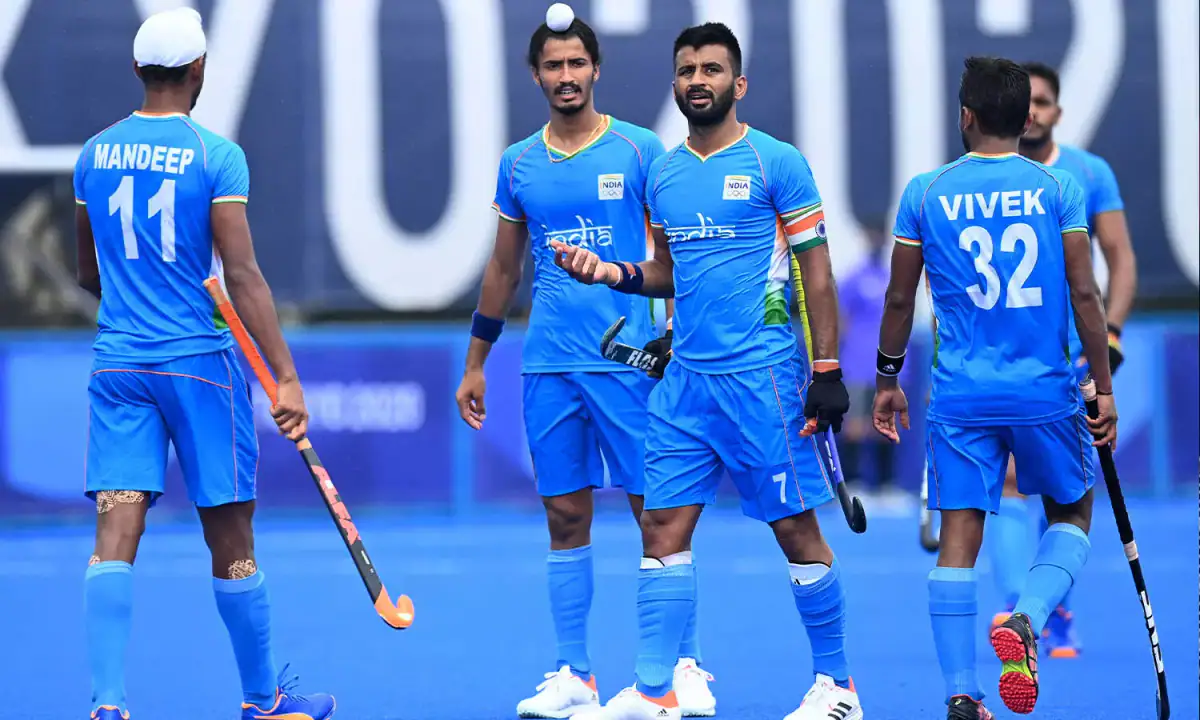
India begin their Asian Games 2026 hockey campaign in Japan with a gold medal to defend and a direct LA 2028 Olympic qualification spot at stake.
The disappointment of the World Cup is still fresh, but the Indian men’s hockey team has little time to dwell on it.
On Tuesday evening, India departed for Japan with a different target in sight defend their Asian Games crown, restore momentum and, most importantly, secure direct qualification for the LA 2028 Olympic Games.
The Asian Games 2026 hockey competition will be played in Kakamigahara, around 35 kilometres from Nagoya, with the tournament scheduled from September 19 to October 4. India’s campaign begins on September 20 against Indonesia, marking the first step in what the team hopes will be another gold-medal journey.
The timing could hardly be more significant.
India arrive in Japan just weeks after an underwhelming eighth-place finish at the FIH Hockey World Cup 2026 in the Netherlands and Belgium. For a team that has spent much of the last decade setting the benchmark in Asian hockey, the result was a disappointment.
But the Asian Games offer an immediate opportunity to change the narrative. And there is far more than a medal waiting at the end of this tournament.
Gold means an Olympic ticket
India’s objective is straightforward. Win the Asian Games, retain the continental title and book a direct ticket to the LA 2028 Olympics. That makes the tournament particularly important for a team that has already established itself as the leading force in Asian hockey. India won gold at the Hangzhou Asian Games in 2023, comfortably overcoming the field to reclaim the continental crown. The team has also maintained its position at the top of Asian hockey through strong performances at the Asia Cup.
Now, the challenge is to do it again.
Captain Harmanpreet Singh knows that the pressure will increase with every passing round. Yet his message to the squad is not to get consumed by the final objective.
“We don’t want to think too far ahead and will focus on one game at a time,” Harmanpreet said.
That approach could prove crucial. Asian Games hockey rarely allows a team to cruise through an entire tournament without facing moments of pressure. One poor quarter, a lapse in concentration or an inability to convert opportunities can completely alter the course of a campaign.
“There are no easy games because you want to play well consistently throughout the competition and not let up,” Harmanpreet added.
The eighth-place finish in Europe will inevitably remain part of the conversation. India showed enough at the World Cup to suggest that the quality remains there. But too often, promising performances were followed by lapses at crucial moments. In close games, those small periods of inconsistency proved costly.
The Asian Games therefore represent more than another tournament. They are a chance to demonstrate that the team has learned from those setbacks. For chief coach Craig Fulton, the answer is unlikely to be found in thinking about the medal ceremony before the tournament has even begun.
Execution will be the priority.
India need to control matches better, maintain intensity for longer periods and make the most of their scoring opportunities. The talent is not in question. The challenge is putting together complete performances when the pressure is at its highest.
That becomes particularly important once the knockout stage arrives.
India has been placed in Pool A alongside hosts Japan, South Korea, Bangladesh, Sri Lanka and Indonesia. The defending champions begin against Indonesia on September 20 before facing the rest of their pool opponents. Their final pool match comes against Bangladesh on September 28.
On paper, India enters as the strongest side in the group. But the team will be wary of treating any match as routine. Japan will have home support behind them, while South Korea has traditionally been one of Asia’s more competitive hockey nations. Bangladesh and Sri Lanka will also look to make the most of their opportunities against the tournament favourites.
For India, the pool stage is about building rhythm rather than simply collecting points. The aim is to enter the knockout phase with confidence, consistency and a clear understanding of what needs to improve.
The semifinals are scheduled for October 1, followed by the final on October 3. That is where India's campaign will ultimately be judged. The team has already shown it can win the Asian Games. Now it must prove it can handle the expectations that come with being the defending champion.
For Harmanpreet and his teammates, the path forward is therefore relatively simple: improve with every game, avoid unnecessary pressure and peak when the tournament reaches its decisive stage. “We want to keep improving with every match and hit peak form when it matters the most during the knockout phase,” Harmanpreet said.
That could be the defining principle of India’s campaign. The World Cup exposed vulnerabilities. Japan provides the opportunity to address them.
A gold medal would restore continental dominance. More importantly, it would guarantee India a place at the next Olympics. The journey starts against Indonesia on September 20. The destination, however, is much bigger than the Asian Games podium.
LA 2028 is waiting.
Comments (0)
to post comments, replies, and votes.
Loading comments…