India's 24-Member Fencing Team Ready for World Championship Challenge in Hong Kong
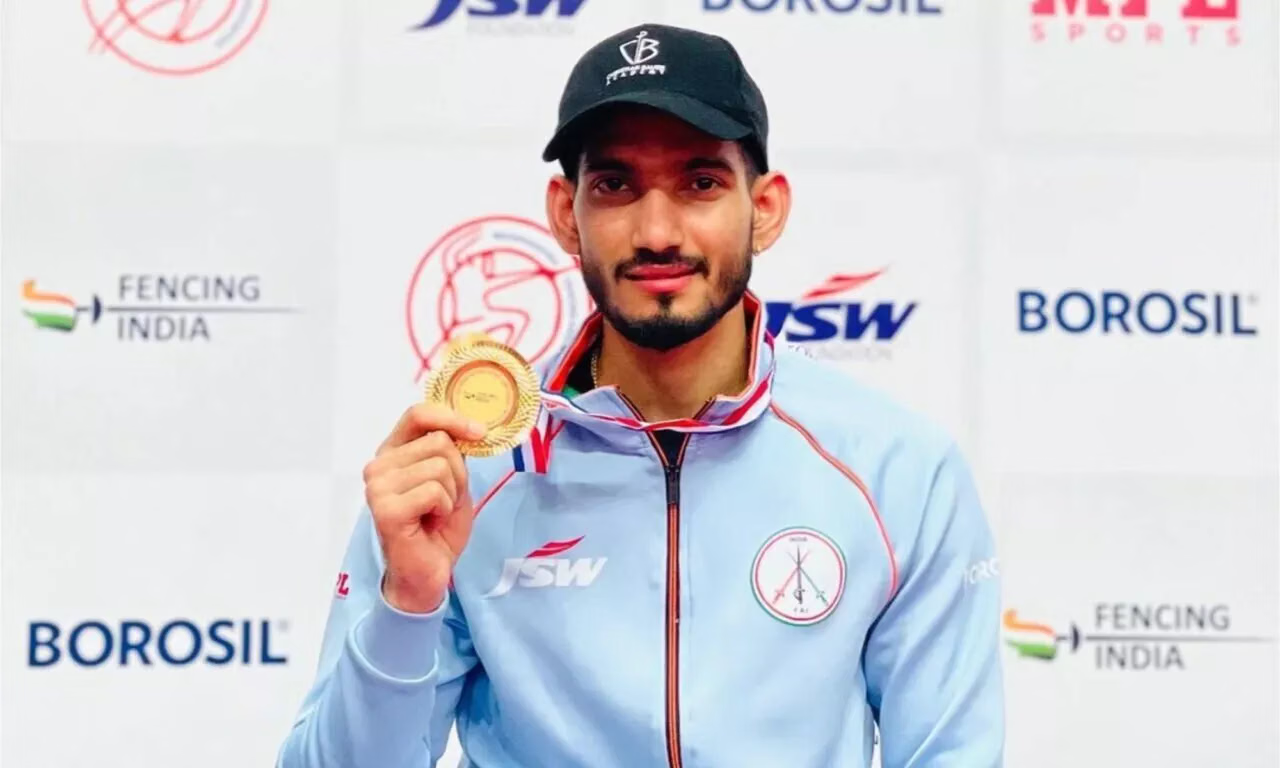
India's top fencers are set to take on the world's best as a 24-member contingent begins its campaign at the Senior World Fencing Championships in Hong Kong on Wednesday.
The prestigious nine-day competition, hosted at the AsiaWorld-Expo, will bring together elite athletes from across the globe, offering Indian fencers an opportunity to test themselves against Olympic medallists, world champions and some of the strongest fencing nations.
The Indian squad comprises 12 men and 12 women, who will compete across all three fencing disciplines Épée, Foil and Sabre in both individual and team events. It marks one of India's largest and most balanced squads for the World Championships and reflects the steady growth of the sport in the country over recent years. Backed by five national coaches and two physiotherapists, the contingent enters the championships with the objective of gaining valuable international experience while challenging established fencing powers on the global stage.
The Senior World Championships represent the highest level of competition outside the Olympic Games. Every major fencing nation, including Italy, France, Hungary, South Korea, Japan, the United States and China, fields its strongest athletes, making the tournament an important benchmark for emerging countries such as India. For Indian fencers, the event is more than just another international competition. It serves as an opportunity to measure their progress against the world's elite while earning valuable ranking points and exposure ahead of future continental and Olympic qualification events.
Speaking ahead of the championships, Fencing Association of India Secretary-General Rajeev Mehta expressed confidence in the team's preparations and mindset.
"This World Championship represents a major milestone for Indian fencing as we test our strength against the very best in the world."
He highlighted the commitment shown by the athletes throughout the season and emphasised the federation's belief that the team is capable of competing fearlessly against higher-ranked opponents.
"Our athletes across Épée, Foil, and Sabre have put in intense preparation and shown remarkable grit throughout the national and international season. We have immense belief in this contingent's ability to compete with fearlessness, push boundaries, and bring pride to the nation in Hong Kong."
One of the biggest positives for India is its representation across every fencing discipline. In women's épée, the country will be represented by Taniksha Khatri, Prachi Lohan, Yashkeerat Kaur Hayer and Mitva Jesangbhai Chaudhari. The men's épée squad includes Sherjin Rajendran Shanthimol, Joseph Bennet, Siva Magesh Sathasivan Nirmala and Shaurya Ashwini.
Foil, one of the most technically demanding fencing disciplines, also features full Indian representation. The women's foil team comprises Joys Ashitha Stalinraj, Mina Devi Naorem, Kanupriya Chawla and Sonia Devi Waikhom, while the men's foil squad includes Sachin, Hemash Singh Sanasam, Aditya and Tejas Manoj Patil.
India will also compete in both men's and women's sabre events.
The women's sabre team consists of Shreya Gupta, Jefarlin Jani Rexlin Simla, Shruti Joshi and Aakhri, while Karan Singh, Gisho Nidhi Kumaresan Padma, Lakshay Badser and Vishal Thapar will represent the country in the men's sabre competition. The presence of complete squads in every discipline ensures that India will participate not only in the individual competitions but also in the team events, providing athletes with additional opportunities to compete against the world's strongest fencing nations.
Although fencing remains a developing sport in India compared to traditional disciplines such as wrestling, boxing or athletics, its progress over the past decade has been encouraging. Indian fencers have steadily increased their participation in Asian Championships, Commonwealth events and World Cups, gaining valuable international exposure that has helped raise competitive standards.
Improved coaching structures, greater support from the Sports Authority of India and increased international competition have contributed to the emergence of a broader pool of athletes across all three weapons. While India is yet to establish itself among the world's elite fencing nations, consistent participation at major international championships is playing a crucial role in bridging the gap.
The World Championships provide invaluable experience that cannot be replicated at domestic competitions, particularly for younger athletes making the transition to senior-level international fencing.
Beyond the individual events, the team competitions hold significant importance for the Indian contingent. Team fencing demands not only technical ability but also tactical planning, communication and composure under pressure. Facing established fencing nations in this format allows Indian athletes to understand the pace and intensity required at the highest level.
With full squads available in all disciplines, India's coaching staff will also have the opportunity to evaluate combinations and strategies ahead of future continental events, including the Asian Championships and qualification tournaments for major multi-sport competitions.
Realistically, India enters the championships as an underdog against countries with decades of fencing excellence. Nations such as Italy, France, Hungary, South Korea and Japan possess deep talent pools and Olympic pedigree that make them favourites in most events. However, the objective for India extends beyond immediate results.
Strong performances against higher-ranked opponents, progression through preliminary rounds and valuable ranking points would represent meaningful success. Every bout contested at the World Championships contributes to the long-term development of Indian fencers and prepares them for future challenges on the international circuit.
As the competition begins in Hong Kong, India's 24-member squad carries the hopes of a growing fencing community eager to establish itself on the global stage. With representation across épée, foil and sabre, a balanced mix of experienced athletes and emerging talent, and comprehensive support from coaches and support staff, the championships offer another important step in the continued evolution of Indian fencing. While podium finishes may remain a difficult target, the experience gained against the world's best could prove invaluable in shaping the next generation of Indian fencers.
Comments (0)
to post comments, replies, and votes.
Loading comments…