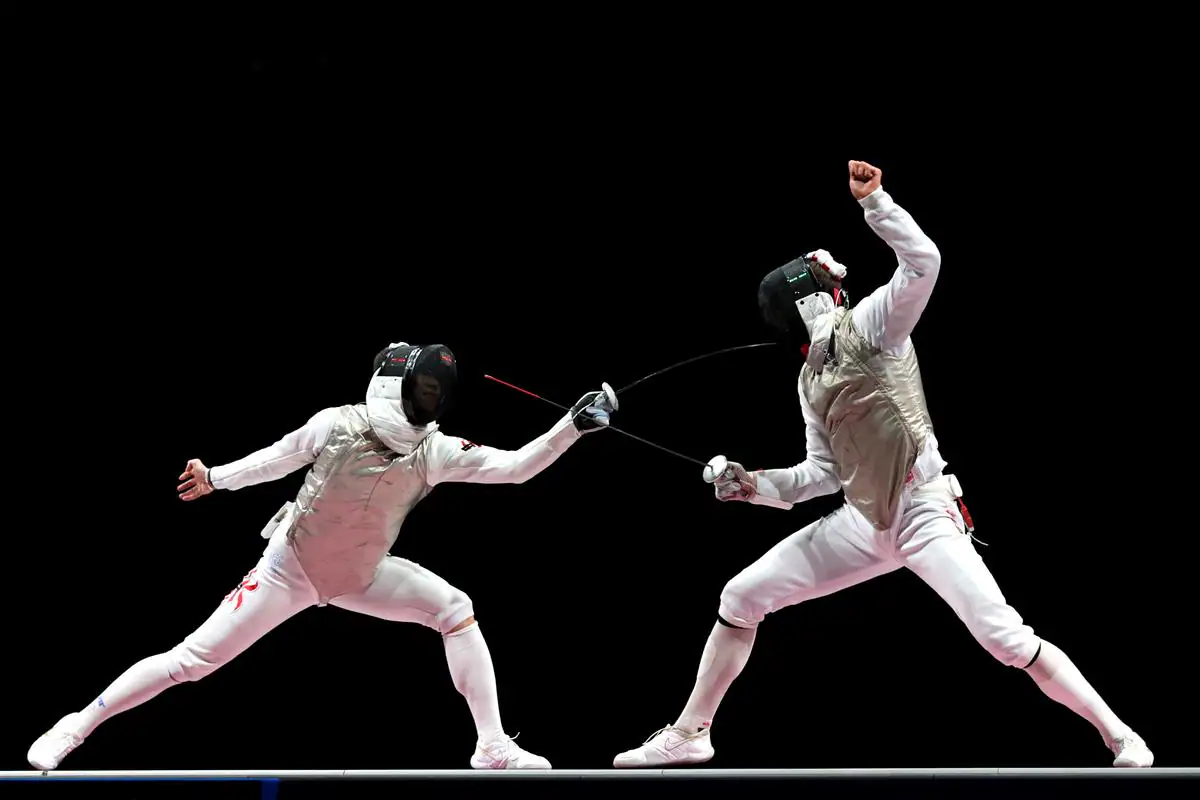
Fencing in India: 2026 Asian Championships & Future
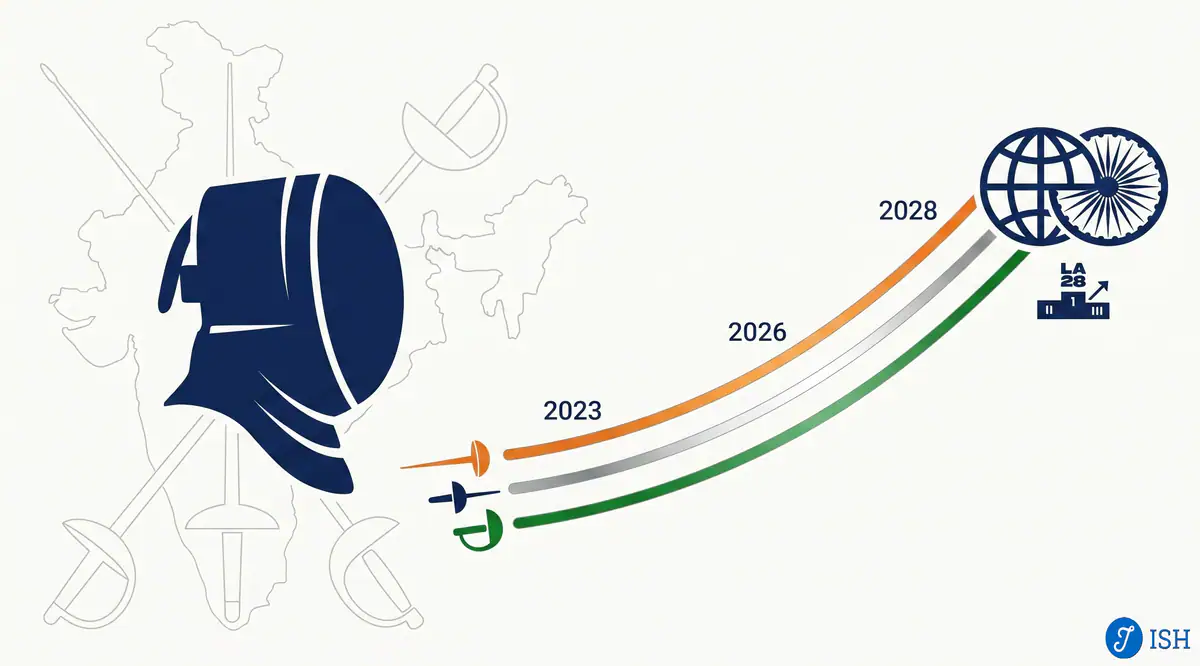
Explore the rise of fencing in India, the landmark FIE-FAI MoU, and key athlete performances from the historic 2026 Asian Fencing Championships in New Delhi.
Administrative Structures, Strategic Partnerships, and Performance Diagnostics from the 2026 Asian Championships.
The hosting of the 26th Senior Asian Fencing Championships from June 19 to June 24, 2026, in New Delhi represents an institutional turning point for the sport of fencing in India. Widely regarded as the "Asia Cup" of fencing, this premier annual competition brought together more than 400 world-class athletes from over 34 countries to compete on Indian soil for the first time. Beyond the elite athletic display, the tournament served as an administrative, technical, and infrastructural milestone. By transforming the iconic Bharat Mandapam at Pragati Maidan (historically reserved for high-profile diplomatic summits such as the G20) into a sports arena, India demonstrated its growing capacity for international sports management. This development aligns with the country's broader strategic aspirations under the Khelo Bharat Niti 2025, showcasing sports capability as India prepares bids for the 2030 Commonwealth Games and the 2036 Olympic Games.
Institutional Foundations and Historical Evolution of Fencing Administration
To understand the trajectory of fencing in India, it is essential to examine the administrative foundations of both the global governing body and its national counterpart. The International Fencing Federation (FIE), founded on November 29, 1913, in Paris, France, and currently headquartered in Lausanne, Switzerland, acts as the central umbrella organization for the sport globally, overseeing more than 150 national member federations. Over more than a century, the FIE has standardized rules, implemented technological milestones such as electronic and wireless scoring, and expanded the competitive calendar through the Fencing World Cup circuit launched in the 1971–1972 season. To support international coaching and development, the FIE established structural coaching academies in Budapest (2016) and Dakar (1999) to build coaching capacities in developing fencing regions.
In contrast, organized fencing in India is a relatively recent development. The Fencing Association of India (FAI) was established in 1974 and officially recognized by the Government of India in 1997. FAI is recognized by the Indian Olympic Association (IOA) and is affiliated with the FIE, the Fencing Confederation of Asia (FCA), and the Commonwealth Fencing Federation. FAI's early development was slow, but the sport was adopted under the Special Area Games Scheme of the Sports Authority of India (SAI) from 1989 to 1996, which brought German and Russian coaches to establish foundational athletic pathways.
A major administrative acceleration occurred starting in 2017 under the leadership of then-FAI President Rajiv Mehta, who resolved pending cases in the sports ministry, secured fencing's upgrade to a "priority sport," mobilized international competition funding, and successfully integrated the sport into the South Asian Games in Nepal. Under the current leadership of FAI President Satej Dynandeo Patil (managing the 2025–2029 term) and Secretary General Rajeev Mehta, who also serves as the Secretary General of the FCA, the administration has executed a modernized strategy aimed at grassroots expansion, structural coaching programs, and the hosting of elite international events.
Parameter | Fédération Internationale d'Escrime (FIE) | Fencing Association of India (FAI) |
Established | November 29, 1913, Paris, France | 1974, Delhi, India |
Headquarters | Lausanne, Switzerland | Delhi, India (formerly Patiala) |
Affiliations | International Olympic Committee (IOC) | IOA, FCA, FIE, Commonwealth Fencing Federation |
Current Leadership | Abdelmoniem El Husseiny (Interim President, 2026) | Satej Dynandeo Patil (President, 2025–2029 term) |
Global/National Reach | Over 150 national member federations | 30 state associations and 2 services associations |
Key Objectives | Standardizing global rules, Olympic qualification, coach education | Grassroots expansion, elite training, hosting international events |
The 2026 Strategic MoU: A Roadmap for Fencing Development
During the championships on June 23, 2026, the FIE and FAI signed a historic Memorandum of Understanding (MoU) to accelerate the growth of the sport in India. This strategic agreement, signed by FIE Interim President Abdelmoniem El Husseiny and FAI Secretary General Rajeev Mehta, establishes a structured framework for long-term development in the lead-up to the Los Angeles 2028 Olympic Games.
The partnership is built on several key collaborative pillars, which outline the strategic focus areas for the next Olympic cycle:
Athlete Promotion: Designing initiatives to identify and elevate promising Indian fencers, providing them with enhanced opportunities to train and compete internationally.
Fan Engagement and Visibility: Implementing communications strategies and stakeholder outreach programs to increase the public appeal and visibility of fencing in India.
Coaching and Officiating Capacity Building: Leveraging FIE’s global technical expertise to conduct national workshops and training seminars for domestic coaches, referees, and event managers.
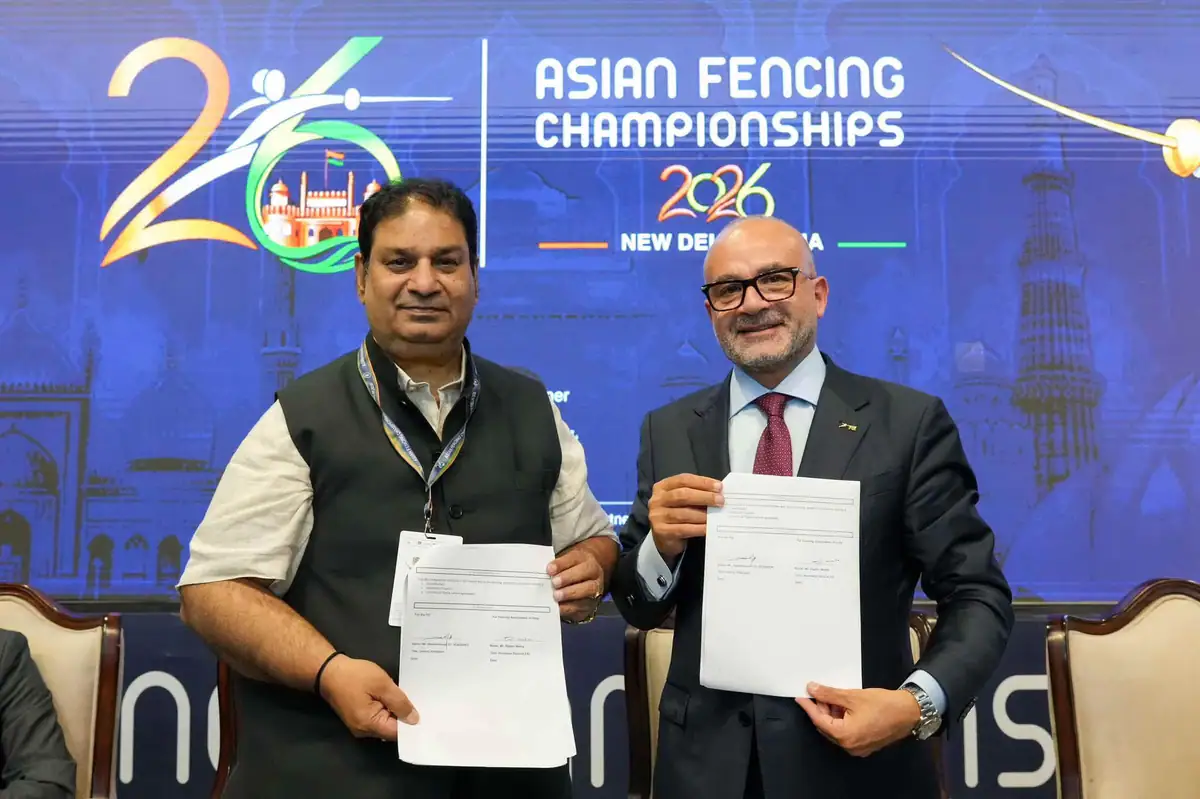
Source: Fencing Association of India
According to FIE leadership, India represents one of the most exciting growth opportunities for fencing globally. For the FAI, the MoU marks a necessary step to strengthen the domestic sport ecosystem, create greater awareness, and establish a legacy that inspires the next generation of fencers.
Technical and Infrastructural Landmarks of the New Delhi Championships
The 2026 Senior Asian Fencing Championships marked a significant technological leap forward for the global sport. New Delhi served as the official global testing ground for high-precision, artificial intelligence-driven video refereeing and performance analysis systems. Prior to the tournament, the FAI organized a specialized workshop focused on the implementation of the AI Video Referral System, establishing a new international benchmark for officiating precision and technical management in continental indoor sports.
The event featured 12 distinct competitive categories, comprising individual and team formats for both men and women across the three recognized Olympic weapon disciplines:
Foil: A light thrusting weapon where points are registered strictly via hits on the opponent's torso, governed by "right of way" tactical rules.
Épée: A heavier thrusting sword where the entire body, from head to toe, is a valid target area.
Sabre: A high-speed, dynamic weapon where points are scored using both the blade's edge and the tip, restricting the target area to everything above the waist.
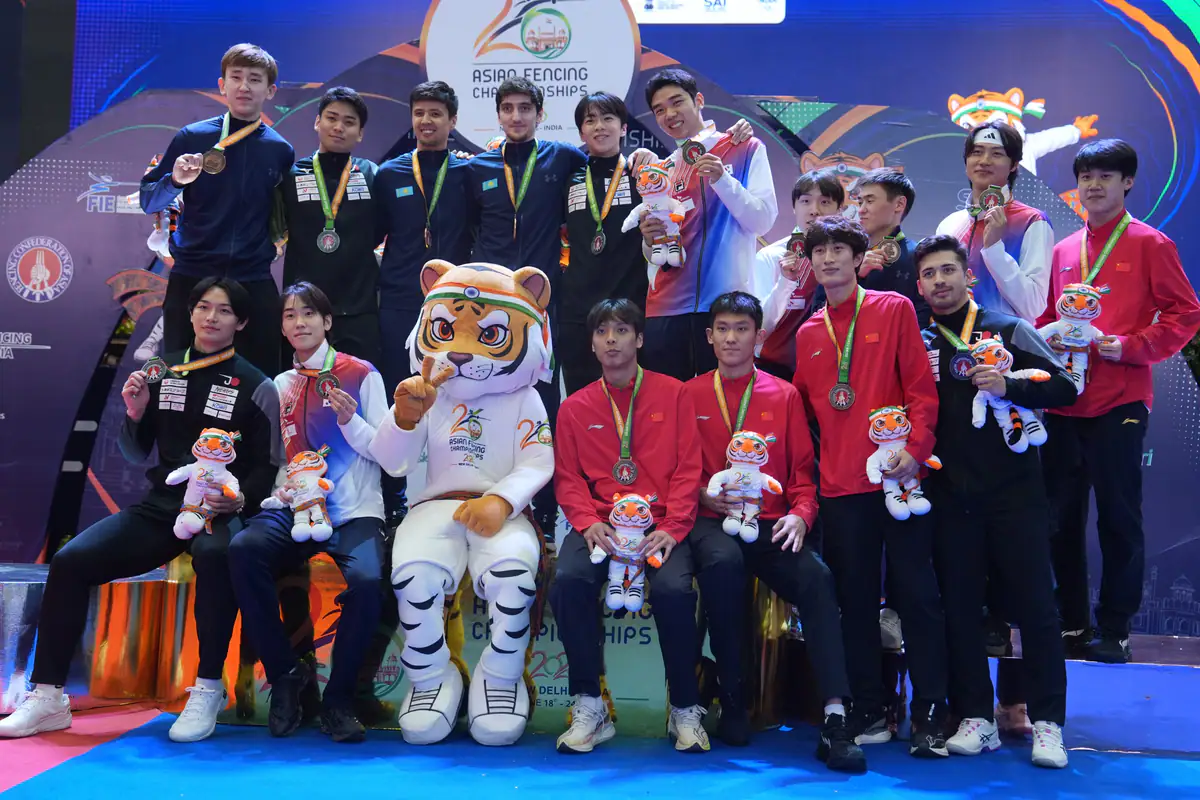
The competitive infrastructure hosted 787 total accreditations, including 406 athletes, 75 coaches, and 40 delegates from 36 participating nations. Conducted under the tournament motto, "ONE DREAM | ONE BLADE | ONE PRIDE," and represented by the tiger mascot "Lakshya," the championship integrated elite athletics with Indian cultural elements.
Comprehensive Performance Analysis of Team India at the New Delhi Championships
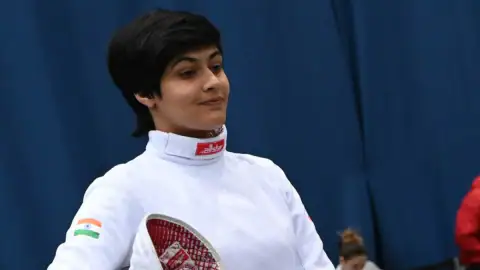
The 24-member Indian squad, split evenly between 12 male and 12 female athletes, faced elite international opposition, including reigning Olympic and world champions. Supported by the Ministry of Youth Affairs and Sports under the Assistance to National Sports Federations Scheme, the host nation demonstrated competitive resilience, highlighted by several top-32 finishes and a vital team qualification.
Foil Category: Breakthrough Qualification
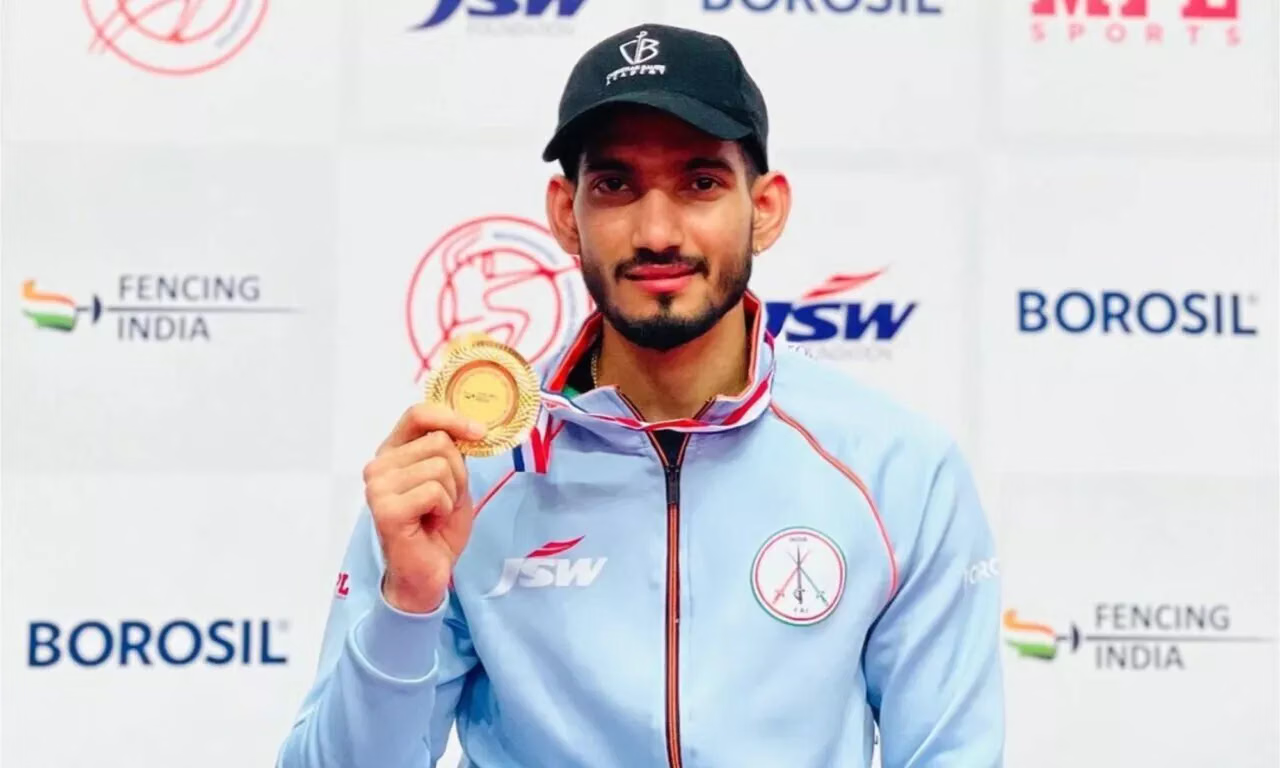
The Men's Foil division witnessed a significant competitive breakthrough. Individually, Sachin Sachin paced the Indian squad by finishing 25th in Asia, progressing to the Table of 32 before being defeated 15-10 by Australia’s Joseph Glasson. Sanasam Hemash Singh placed 37th, Tejas Manoj Patil finished 47th, and Aditya placed 57th. In the Men's Foil Team event, the unit comprising Sachin, Singh, Patil, and Aditya finished eighth overall. This eighth-place finish secured a direct qualification berth for the upcoming Aichi-Nagoya Asian Games.
In the Women's Foil category, Kanupriya Chawla registered India's best individual result of the championships. Chawla navigated the preliminary pools and advanced deep into the knockout brackets to finish 20th in Asia. Her teammates Joys Ashitha Stalinraj, Naorem Mina Devi, and Sonia Devi Waikhom faced a steep developmental curve, finishing 43rd, 45th, and 46th, respectively. In the Women's Foil Team event, the squad demonstrated grit but was ultimately stopped in the team relay grids, securing a 10th-place finish.
Sabre Category: Strategic Depth and Elite Standoffs
In the Men's Sabre category, South Korea’s reigning Olympic champion Oh Sang-uk dominated the field to capture individual gold. However, the Indian men's squad delivered highly encouraging individual performances by securing three placements within the top 32. Vishal Thapar finished 22nd overall, Karan Singh placed 25th after a highly competitive 15-11 individual bout against Oh Sang-uk, and Gisho Nidhi Kumaresan Padma finished 28th. Lakshay Badser narrowly missed the direct elimination cut, placing 33rd. In the Men's Sabre Team event, the quartet of Thapar, Singh, Padma, and Badser advanced to the quarterfinals before being eliminated by a veteran Chinese squad, ultimately securing a hard-fought 10th-place finish.
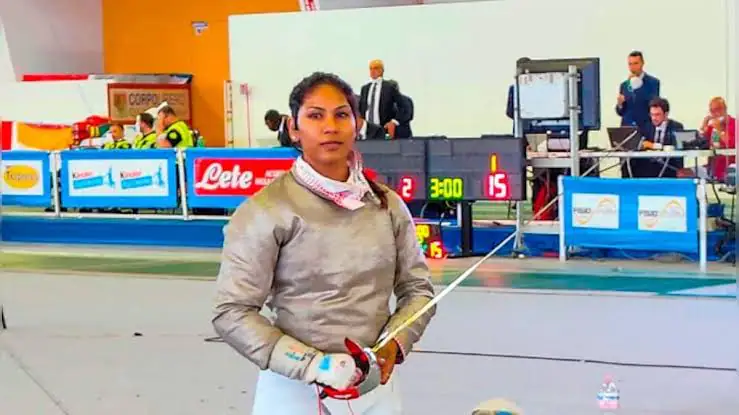
In the Women's Sabre individual event, Tokyo Olympian C.A. Bhavani Devi led the home challenge, finishing 23rd overall after a narrow 15-14 loss in the Round of 32 to South Korea’s Choi Sebin. Her teammates Shreya Gupta, Jefarlin Jani Rexlin Simla, and Shruti Joshi finished 26th, 32nd, and 38th, respectively. In the Women's Sabre Team division, Bhavani Devi anchored the squad, utilizing aggressive flèche attacks to narrow score deficits, but the team was locked out of the deep medal rounds by highly favored East Asian programs, demonstrating the significant gap in team relay point aggregation.
Épée Category: Tactical Synergy and Defensive Benchmarks
The Men's Épée individual event saw Joseph Bennet emerge as the top Indian competitor, placing 22nd overall. RS Sherjin Rajendran Shanthim finished 47th, Aloshious Koovakkal Joshy placed 54th, and Shaurya Ashwini finished 55th. In the Men's Épée Team event, the squad demonstrated disciplined passivity management and lower-body target defenses, maintaining tight point margins before bowing out of the highly tactical team relay grids against towering Central Asian and Japanese systems.
In the Women's Épée competition, Prachi Lohan delivered a strong individual run to place 22nd in Asia. Rising star Taniksha Khatri finished 29th, Mitva Jesangbhai Chaudhari took 35th, and Yashkeerat Kaur Hayer placed 43rd. The Women's Épée Team consisting of Lohan, Khatri, Chaudhari, and Hayer combined to secure a commendable ninth-place finish.
Weapon Discipline | Gender | Individual Placements (Rank) | Team Placement (Rank) | Key Achievement / Milestone |
|---|---|---|---|---|
Foil | Men | Sachin (25), Sanasam Hemash Singh (37), Tejas Manoj Patil (47), Aditya (57) | 8th | Direct qualification for Aichi-Nagoya Asian Games |
| Women | Kanupriya Chawla (20), Joys Stalinraj (43), Naorem Mina Devi (45), Sonia Waikhom (46) | 10th | Chawla records India's best individual finish |
Sabre | Men | Vishal Thapar (22), Karan Singh (25), Gisho Nidhi Padma (28), Lakshay Badser (33) | 10th | Three fencers finish inside top 32 |
| Women | Bhavani Devi (23), Shreya Gupta (26), Jefarlin J.S. (32), Shruti Joshi (38) | Quarterfinals | Close individual contest by Bhavani Devi (15-14) |
Épée | Men | Joseph Bennet (22), RS Sherjin (47), Aloshious Joshy (54), Shaurya Ashwini (55) | Relays | Bennet finishes inside top 25 |
| Women | Prachi Lohan (22), Taniksha Khatri (29), Mitva Chaudhari (35), Yashkeerat Hayer (43) | 9th | Strong technical synergy in team knockouts |
Continental Standings and the Competitive Landscape
The overall medal standings of the 2026 Senior Asian Fencing Championships demonstrate the continued dominance of East Asian powerhouses, with Japan and South Korea leading the continent. However, the emergence of Kazakhstan in the Épée disciplines signals a widening of the regional competitive footprint.
Rank | Country | Gold | Silver | Bronze | Total Medals |
|---|---|---|---|---|---|
1 | Japan | 6 | 5 | 4 | 15 |
2 | South Korea | 4 | 1 | 5 | 10 |
3 | Kazakhstan | 2 | 0 | 3 | 5 |
4 | China | 0 | 3 | 3 | 6 |
5 | Hong Kong China | 0 | 2 | 2 | 4 |
6 | Chinese Taipei | 0 | 1 | 0 | 1 |
7 | Uzbekistan | 0 | 0 | 1 | 1 |
The championship also witnessed dramatic competitive disruptions. Hong Kong's two-time Olympic individual foil gold medalist, Cheung Ka Long, was upset in the quarterfinals by South Korea’s Im Cheolwoo, finishing 6th overall, while the defending women’s individual épée champion, Song Se-ra of South Korea, was defeated in the semifinals by Kazakhstan's Irina Bakaldina, who went on to secure a historic first individual women’s épée title for her country.
Future Trajectory and Recommendations for Sustainable Growth
The successful execution of the 2026 championships has laid a vital baseline for the growth of Indian fencing. However, the transition from being competitive participants to consistent medal contenders remains the principal challenge for the national sports ecosystem. To bridge this "medal gap," several structural areas must be addressed systematically:
Decentralized High-Performance Centers: The success of the Vijayi Bharat Foundation (VBF) High-Performance Center in Ahmedabad - which trained 7 of the 24 selected national team athletes, including top performers like Karan Singh, Kanupriya Chawla, and Mitva Chaudhari—provides a clear blueprint. Expanding high-performance centers equipped with sports science, video analytics, and international fencing masters is critical to building athletic depth.
Psychological and Tactical Conditioning: FAI Secretary General Rajeev Mehta highlighted that Indian fencers frequently reach advanced stages of international competitions but fall short in tight, late-stage matches. Addressing the mental fortitude required for the final touches in a 15-point individual bout or a demanding 45-touch team relay must be prioritized, particularly during high-pressure standoffs.
Sustained International Exposure: While domestic structures like the junior and cadet national championships have existed for decades, Indian fencers require constant interaction with dominant European and Asian systems.
The strategic deployment of the Khelo India program is already bearing fruit, with 17 of the 24 squad members identified as Khelo India Athletes (KIAs). This direct link between state-sponsored grassroots programs and elite representation, coupled with the long-term commitments of the newly signed FIE-FAI MoU, provides the structural cohesion necessary as the national program prepares for the final, high-octane phases of the long road to the Los Angeles 2028 Olympic Games.
https://en.wikipedia.org/wiki/Fencing_Association_of_India
Comments (0)
to post comments, replies, and votes.
Loading comments…