Karan Singh and Gisho Nidhi Impress as Indian Fencers Show Promise at Asian Fencing Championships in New Delhi
The Asian Fencing Championships at Bharat Mandapam in New Delhi witnessed several encouraging performances from the Indian contingent, with Karan Singh Gurjar and Gisho Nidhi Kumaresan producing notable victories against quality international opponents before bowing out in the knockout stages of the men’s sabre competition.
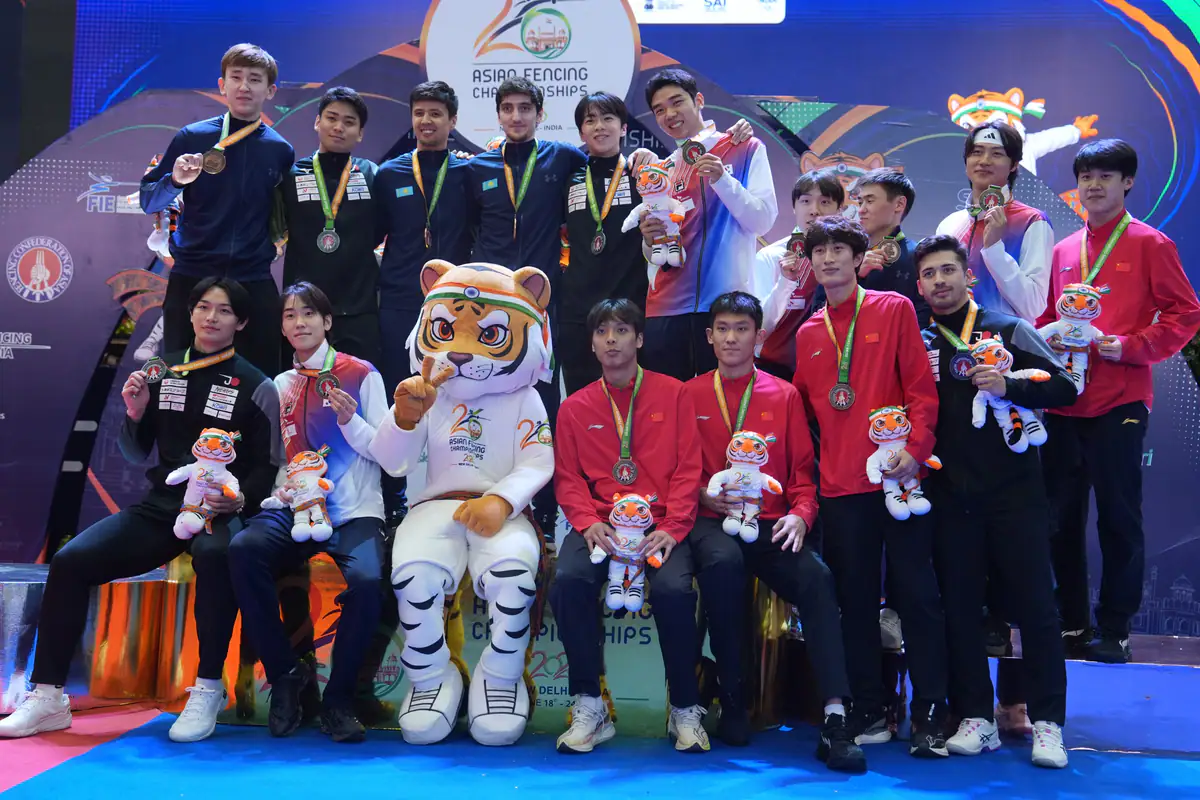
While none of the Indian fencers reached the medal rounds, the performances reflected the growing competitiveness of the country’s athletes against some of Asia’s strongest fencing nations. Competing on home soil, the Indian team showcased resilience and technical improvement, particularly in closely fought elimination bouts.
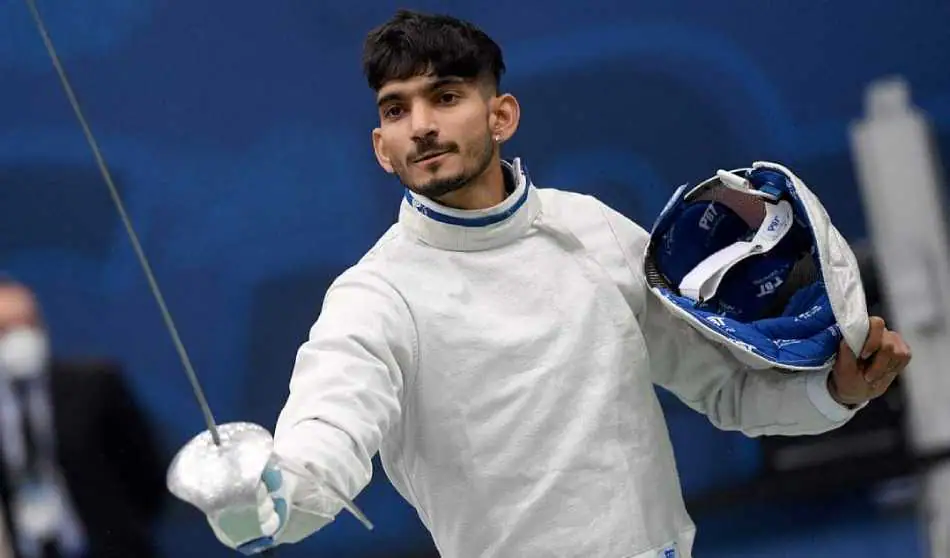
Among the standout performers was Karan Singh Gurjar, who made an impressive start to his campaign in the men’s sabre event.
Facing Sebastian Lim of Malaysia in the Table of 64, Karan produced an assured display to register a convincing 15-8 victory. From the opening exchanges, the Indian fencer controlled the pace of the bout, combining aggressive attacks with disciplined defence to comfortably secure his place in the next round.
The victory earned him a high-profile clash against one of the biggest names in world fencing South Korea’s Oh Sang-Uk, the reigning Olympic champion and one of the finest sabre fencers of his generation.
Against such elite opposition, Karan delivered a spirited performance. Although he ultimately lost 11-15, he remained competitive throughout the contest and demonstrated the ability to challenge a world-class opponent on multiple exchanges. His performance against the Olympic champion highlighted both his technical development and his potential to compete at a higher international level.
Karan eventually finished the competition with a commendable 25th-place ranking.
Another bright spot for India came through Gisho Nidhi Kumaresan, who produced one of the tournament’s most impressive victories in the Table of 64.
The Indian edged past Wei Zhenhao of China, the reigning Chinese National Games champion, in a thrilling encounter that went down to the final touch. Gisho held his nerve under immense pressure to claim a dramatic 15-14 victory, eliminating one of the stronger contenders in the draw.
The narrow win reflected exceptional composure and tactical awareness, with Gisho repeatedly responding to his opponent’s attacks before sealing the contest in the closing moments.
His reward was another difficult challenge against Luo Shaotong of China in the Table of 32. Despite another determined effort, Gisho was unable to build on his earlier success and exited the tournament after a 10-15 defeat.
Nevertheless, defeating a national champion from one of Asia’s strongest fencing nations stands out as a significant achievement and contributed to Gisho securing an overall ranking of 28th.
Among the Indian men competing in sabre, Vishal Thapar emerged as the highest-ranked finisher, ending the championships in 22nd place. Together with Karan Gurjar and Gisho Nidhi Kumaresan, the performances demonstrated encouraging depth within Indian men’s sabre and suggested that the gap between Indian fencers and Asia’s traditional powerhouses continues to narrow.
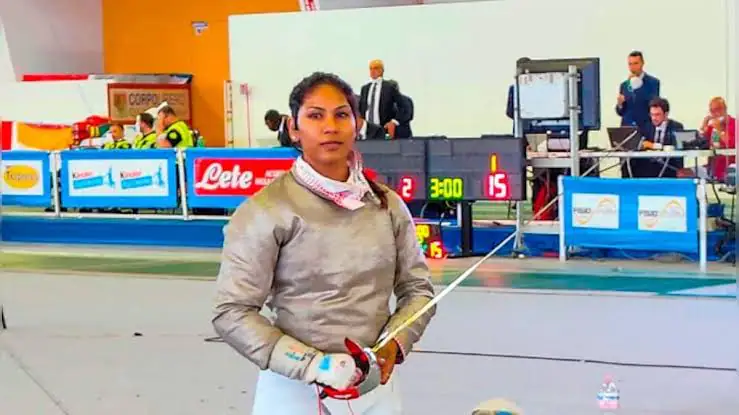
In the women’s foil competition, Kanupriya Chawla was India’s best performer, finishing in 20th place. Although she narrowly missed out on advancing deeper into the knockout rounds, her result represented the strongest showing among the Indian women competing in the discipline. She was followed by Asitha Stalinraj, who secured 43rd place, and Mina Devi, who finished 45th in the final standings.
While the women’s foil team could not challenge for medals, the experience of competing against Asia’s elite is expected to aid their development ahead of future international competitions.
Hosting the Asian Fencing Championships in New Delhi provided Indian athletes with a rare opportunity to compete against continental heavyweights without the challenges of overseas travel. The tournament featured some of the strongest fencing nations in the world, including South Korea and China, whose athletes regularly contend for Olympic and World Championship honours.
For India’s developing fencers, close contests against such opponents are invaluable. Karan’s performance against Olympic champion Oh Sang-Uk and Gisho’s victory over Chinese National Games champion Wei Zhenhao illustrated that Indian athletes are increasingly capable of matching elite competitors over extended bouts.
Although the championship did not produce medals for the host nation, it offered several reasons for optimism. Competitive performances against internationally accomplished opponents suggest that Indian fencing is making gradual but meaningful progress. The emergence of young athletes willing to challenge established stars, combined with increased exposure through major events hosted in India, is likely to accelerate the sport’s development in the coming years.
For Karan Gurjar, Gisho Nidhi Kumaresan and Kanupriya Chawla, the tournament served as another important stepping stone in their international careers. Their performances at Bharat Mandapam may not have ended with podium finishes, but they demonstrated the fighting spirit and technical ability needed to compete against Asia’s best.
As Indian fencing continues to evolve, displays like these provide encouragement that future editions of the Asian Championships could see the country move even closer to the medal rounds and establish itself as a stronger force on the continental stage.
Comments (0)
to post comments, replies, and votes.
Loading comments…