India Women’s Kabaddi at Asian Games 2026: Schedule, Opponents and Lessons from Hangzhou
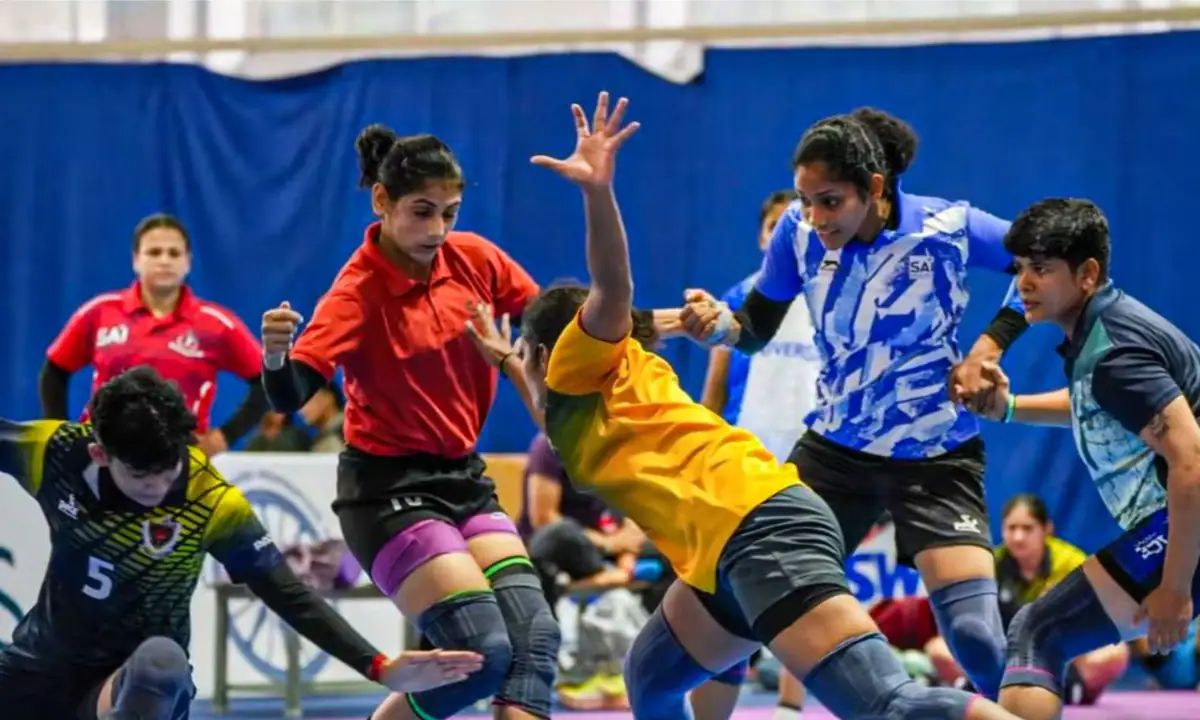
India’s women’s kabaddi team will begin its Asian Games 2026 campaign on September 21, with Bangladesh standing between the defending champions and a positive start in Nagoya. The preliminary-round schedule will then see India face Iran on September 23 before taking on Japan on September 24.
The women’s kabaddi competition at the 2026 Asian Games will be held from September 21 to 26, with India placed in Group A.
India enters the tournament with a strong record at the Asian Games. The Indian Kabaddi Federation’s selection policy notes that both the men’s and women’s teams won gold at the Hangzhou 2022 Asian Games, after India’s women had also won gold at Incheon 2014 and silver at Jakarta 2018.
However, Hangzhou also showed that India cannot afford to take its opponents lightly. The women’s team began that tournament with a 34-34 draw against Chinese Taipei before producing dominant performances in its next matches and eventually winning the gold medal.
India’s Women’s Kabaddi Schedule at Asian Games 2026
India will open its campaign against Bangladesh on September 21 in the evening. After a rest day, the team returns to action on September 23 in the morning against Iran. India's preliminary-round campaign will conclude on September 24 in the evening against Japan.
The schedule is therefore:
September 21: Bangladesh vs India — Evening
September 23: Iran vs India — Morning
September 24: Japan vs India — Evening
The one-day gaps between India's matches could be important as the team looks to manage recovery and prepare tactically for three opponents with different styles.
Hangzhou 2022: A difficult start against Chinese Taipei
India’s most recent Asian Games campaign provides an important reference point. At Hangzhou 2022, India opened its women's kabaddi campaign against Chinese Taipei. The match turned into an unexpected thriller, with both sides sharing the points after a 34-34 draw.
Chinese Taipei made India work throughout the contest and held a narrow advantage for significant periods. India eventually fought back, but Chinese Taipei produced an all-out of its own to regain the lead before the match ended level. The result was a reminder that India's reputation alone would not be enough at the Asian Games.
India responded strongly in its next match.
Facing South Korea, India produced a completely different performance. The Indian team dominated from the opening minutes and established a 32-9 lead at half-time. The second half continued in the same fashion, with India repeatedly breaking through the Korean defence. India eventually won 56-23, recording its first victory of the tournament in emphatic fashion. According to Pro Kabaddi's match report, India inflicted five all-outs during the contest. (Pro Kabaddi League)
The victory demonstrated India's ability to recover quickly from a difficult opening result and impose its game when the team found its rhythm.
India's third group match at Hangzhou was against Thailand, and again the defending champions produced a commanding performance. India won 54-22, with the team's offensive and defensive units controlling the match for most of the contest. The Indian attack established a sizeable advantage early, while the defence ensured Thailand had limited opportunities to mount a comeback. India eventually consolidated its position at the top of Group A.
The final Group A standings showed India and Chinese Taipei both finishing on five points, with India topping the group on points difference. India's biggest statement at Hangzhou came in the semifinal. The team faced Nepal and produced one of the most emphatic results of the tournament, winning 61-17.
That victory sent India into the gold-medal match, where Chinese Taipei awaited once again. The final was dramatically different from the semifinal. India eventually prevailed 26-25, edging Chinese Taipei by just one point to win the Asian Games gold medal. The result was particularly significant because it showed India's ability to handle pressure in a close contest after dominating much of the tournament.
India finished the women's competition with a 4-1 record, including the opening draw against Chinese Taipei, before securing the gold medal.
Bangladesh, Iran and Japan: Three different tests
The 2026 schedule presents India with three different challenges. Bangladesh will be the opening opponent. India's Hangzhou campaign did not include a women's match against Bangladesh; Bangladesh competed in Group B, where Iran defeated them 54-16.
The second match against Iran could be the most tactically demanding fixture of India's preliminary campaign. Iran has traditionally been one of the strongest women's kabaddi teams in Asia and will provide a significant test before India closes the group stage against Japan. The final match against Japan is another intriguing contest. Japan was not part of India's women's group at Hangzhou 2022, so there is no direct India-Japan women's result from that tournament to use as a benchmark.
That makes preparation particularly important. India will need to study Japan's current team rather than rely on historical Asian Games results.
Can India defend its title?
India's Hangzhou campaign showed two sides of the team: vulnerability at the start and exceptional control once it found its rhythm. The 34-34 draw against Chinese Taipei was followed by victories of 56-23, 54-22 and 61-17, before India edged Chinese Taipei 26-25 in the final.
That combination of dominance and resilience ultimately delivered gold. In Nagoya, India will once again enter with the expectation of challenging for the top position. The key will be starting better than it did in Hangzhou and avoiding unnecessary pressure before the knockout stages.
The campaign begins against Bangladesh on September 21, followed by Iran and Japan. If India can reproduce the defensive discipline and attacking efficiency that powered its 2022 title run, the defending champions will once again be among the strongest contenders for the Asian Games women's kabaddi gold.
Comments (0)
to post comments, replies, and votes.
Loading comments…