LA 2028 Olympic Weightlifting Qualification Explained: The 10-Event Race, Ranking System and India's Challenge
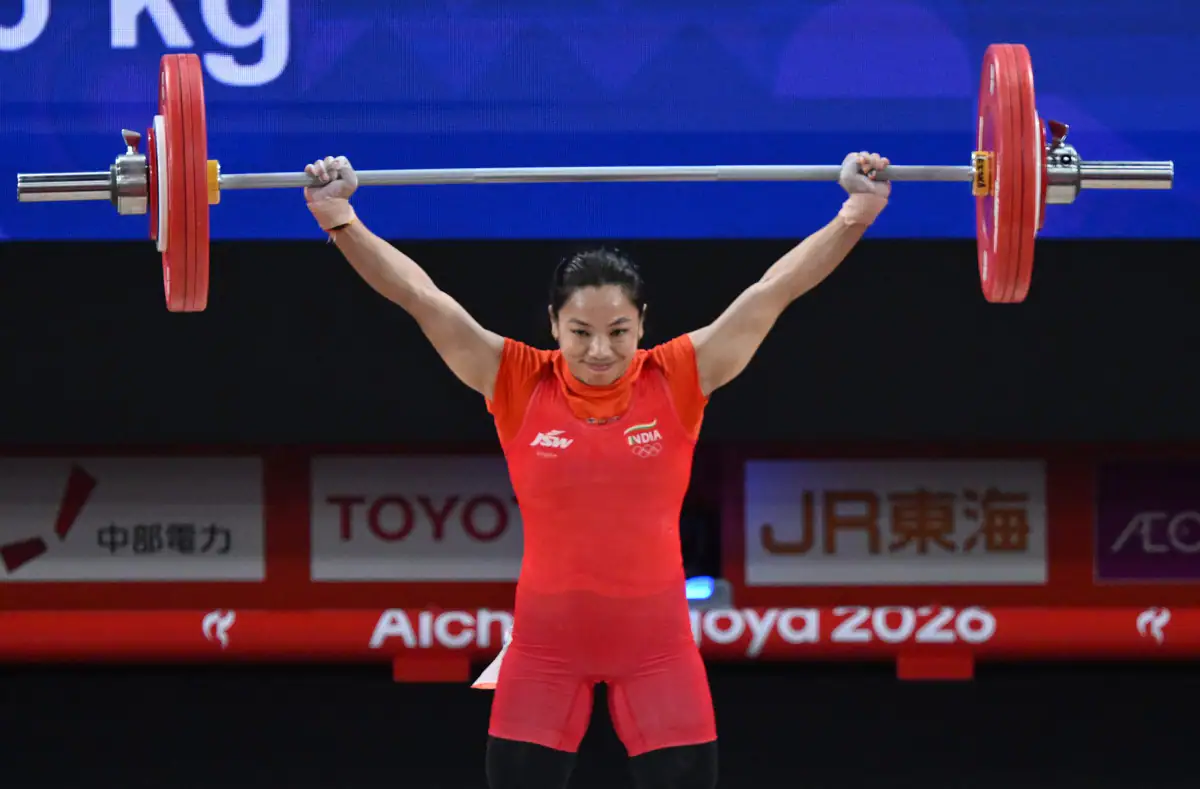
Understand the LA28 Olympic weightlifting qualification system, including the 10-event calendar, cumulative ranking points, quota rules and India's Gyaneshwari Yadav-Mirabai Chanu battle in the 53kg category.
The road to the Los Angeles 2028 Olympic Games has officially begun for weightlifters, but the qualification process will look very different from the systems used for Tokyo 2020 and Paris 2024.
The International Weightlifting Federation (IWF) has introduced a cumulative qualification model that places greater emphasis on consistency across multiple international competitions rather than a single outstanding performance.
For Indian weightlifting, the new system has already created an interesting contest in the women's 53kg category. Gyaneshwari Yadav's eighth-place finish at the 2026 World Championships in Ningbo has given her an early advantage, while Mirabai Chanu's withdrawal due to a back injury means the former Olympic medallist will have to begin her qualification campaign at a later event.
Understanding how the qualification system works, how points are accumulated and how national quotas are distributed will be crucial to following the journey to LA28.
How many weightlifters will qualify for LA28?
Weightlifting will have a total quota of 120 athletes at the Los Angeles Olympics:
60 men
60 women
The competition will feature 12 weight categories, with six each for men and women.
Men's categories: 65kg, 75kg, 85kg, 95kg, 110kg and +110kg.
Women's categories: 53kg, 61kg, 69kg, 77kg, 86kg and +86kg.
One of the most significant changes is the removal of the women's 49kg and 55kg categories, with the 53kg division becoming the lightest Olympic weight class.
This change has direct implications for Mirabai Chanu, who won silver at Tokyo 2020 in the 49kg category. She must now compete against athletes who naturally operate at a higher bodyweight and may have different strength profiles.
Each Olympic category will have a field of 10 lifters. Eight places will be determined through the Olympic Qualification Ranking (OQR), while the remaining two will accommodate continental representation, host nation allocation or Universality invitations, subject to the applicable eligibility rules.
There is also a limit on national representation: each National Olympic Committee (NOC) can qualify a maximum of three men and three women across the entire weightlifting programme, with no more than one athlete from a country in any individual category.
The most important feature of the LA28 system is that athletes will need to demonstrate consistency across several competitions. The qualification period runs from July 27, 2026, to May 7, 2028, and is divided into two phases.
Period 1: Six competitions
The first phase runs from July 2026 to September 2027. Every athlete must register valid totals in at least three different designated competitions during this period.
A valid total requires successful lifts in both disciplines:
Snatch
Clean and jerk
An athlete's three highest totals from the six competitions will count towards the OQR.
Period 2: Four competitions
The second phase runs from November 2027 to May 7, 2028. Athletes must record valid totals in at least two competitions during this period.
Their two highest totals will be retained.
Ultimately, the OQR will be calculated using five performances: the three best totals from Period 1 and the two best totals from Period 2.
The calculation is straightforward:
OQR score = Three highest Period 1 totals + Two highest Period 2 totals.
Every kilogram lifted contributes one ranking point. For example, an athlete recording 198kg, 200kg and 202kg in Period 1, followed by 203kg and 205kg in Period 2, would accumulate 1,008 OQR points.
This means that one exceptional performance is not enough. Athletes must repeatedly produce competitive totals across the qualification cycle.
The new system also makes participation compulsory. An athlete must register at least three valid totals during Period 1 and at least two during Period 2. Failure to meet either requirement results in elimination from the Olympic Qualification Ranking. This is particularly important because merely entering a competition does not count. Athletes must successfully complete lifts in both the snatch and clean and jerk to register a total.
An injury, a failure to record a valid lift in either discipline or missing too many competitions can therefore have serious consequences. The system rewards athletes who combine performance with consistency and penalises those who cannot complete the minimum number of qualifying events.
The 10-event qualification calendar
The qualification pathway consists of six competitions in Period 1 and four in Period 2.
The first phase includes:
Competition | Host | Schedule |
|---|---|---|
2026 World Championships | Ningbo, China | October 27–November 8, 2026 |
1st IWF Qualifier | Doha, Qatar | December 7–16, 2026 |
2nd IWF Qualifier | Tashkent, Uzbekistan | February–March 2027 |
3rd IWF Qualifier | Lima, Peru | June 2027 |
2027 Asian Championships | Jeonju, South Korea | July 2–11, 2027 |
2027 World Championships | Yerevan, Armenia | September 2027 |
The second phase will feature four designated competitions between November 2027 and May 7, 2028.
For Indian lifters, the immediate opportunity to improve their qualification position comes at the first IWF Qualifier in Doha in December 2026.
Gyaneshwari Yadav has given India an encouraging start in the women's 53kg category. At the World Championships in Ningbo, she lifted 88kg in the snatch and 110kg in the clean and jerk for a combined total of 198kg. That placed her eighth overall, despite competing in Group C.
Her performance earned India its first valid qualifying total in the category. Gyaneshwari now needs two more valid totals across the remaining five Period 1 competitions to satisfy the minimum requirement. Her three highest performances from the six events will eventually count towards her ranking.
The challenge will be improving her overall numbers. The leading competitors in Ningbo crossed 214 kg, with China's Zhang Haiqin winning gold at 221kg. Gyaneshwari's 198kg is a useful starting point, but she will need to close that gap to compete for a top-eight Olympic ranking position.
Mirabai Chanu was scheduled to compete in Ningbo but withdrew because of an acute back strain during warm-ups. Her withdrawal meant she registered no valid total at the opening competition.
Unlike Gyaneshwari, who now needs two more valid performances in Period 1, Mirabai must complete at least three valid totals across the five remaining competitions to remain eligible. This makes the December qualifier in Doha particularly important, although her recovery must take priority.
The Indian selection picture is also significant because only one Indian woman can qualify in the 53kg category. Gyaneshwari and Mirabai are therefore competing for the same potential Olympic quota. Mirabai brings an extraordinary international record, including her Tokyo Olympic silver and 2017 World Championship title. Gyaneshwari, however, has made an early statement in the new qualification cycle.
The final decision will depend on the qualification standings, eligibility and the applicable national selection process.
Why LA28 qualification will reward consistency
The new qualification system changes how athletes, coaches and national federations must approach the Olympic cycle. Instead of targeting one major competition, lifters will need to plan their international schedules carefully, manage injuries and maintain competitive totals across two years.
For India, the women's 53kg category will be one of the most closely watched qualification battles. Gyaneshwari has established an early benchmark, while Mirabai will look to return to competition and build her own ranking score.
The first chapter has been written in Ningbo, but the race is far from decided. With Doha next on the calendar, the battle for LA28 qualification is now moving into its most important phase: turning individual performances into a consistent body of work.
Comments (0)
to post comments, replies, and votes.
Loading comments…