Mirabai Chanu Has a Huge Asian Games Opportunity in Women’s 49kg Weightlifting
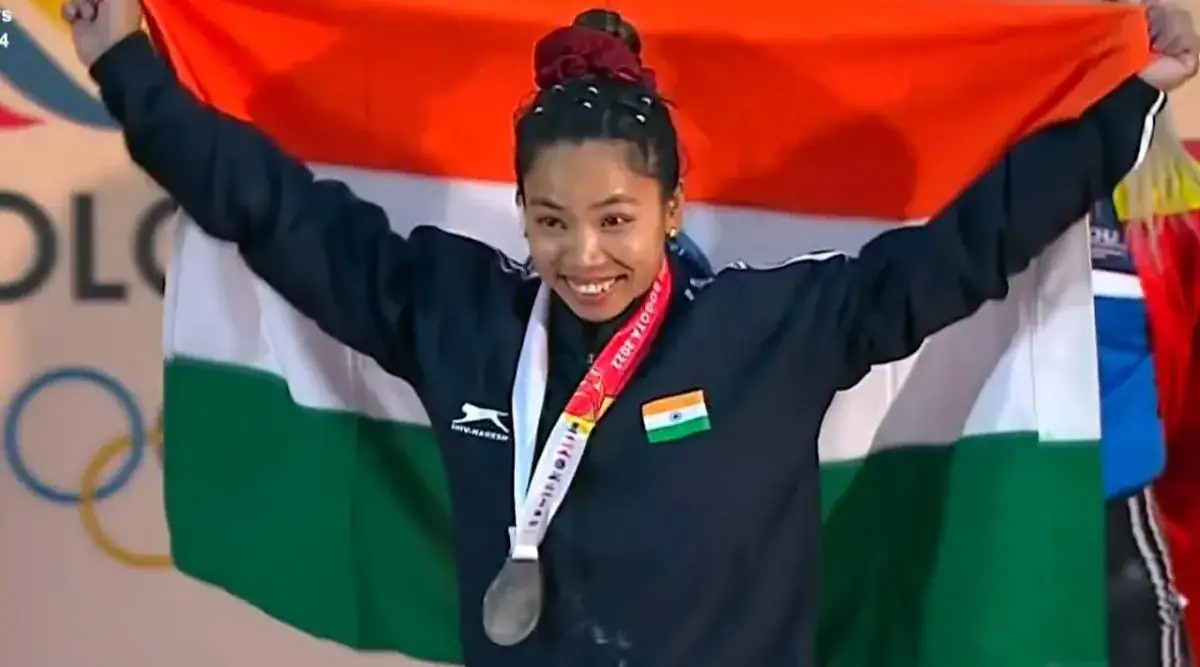
The women’s 49kg weightlifting competition at the 2026 Asian Games could give India one of its clearest medal opportunities of the entire Games.
Just eight lifters are entered in the category, and the entry list has created a striking competitive picture. North Korea’s Ri Song Gum stands well clear of the field, while India’s Mirabai Chanu appears to have a significant advantage in the battle for the remaining medals.
The biggest twist is the absence of China.
With no Chinese lifter entered in the 49 kg category, one of the biggest historical obstacles in Asian weightlifting has disappeared. For Mirabai, that could open the door to a long-awaited Asian Games medal.
On paper, there is a clear favorite for gold. North Korea’s Ri Song Gum has a personal-best total of 221kg, built around a 97kg snatch and a 125kg clean and jerk. That puts her 16kg ahead of Mirabai’s 205kg personal best and more than 20kg clear of Chinese Taipei’s Fang Wan-ling. The gap is enormous.
Ri’s 221 kg total places her in a completely different performance tier from the rest of the field. Unless something goes seriously wrong on the competition platform, the North Korean lifter is expected to be the overwhelming favorite for gold. That changes the nature of the competition behind her. Rather than trying to chase the title, Mirabai can concentrate on securing a medal.
India’s Best Chance in 28 Years?
That medal would carry enormous significance.
India’s last Asian Games weightlifting medal came in 1998, when Karnam Malleswari won silver in the women’s 63kg category in Bangkok. Since then, Indian lifters have repeatedly faced the extraordinary depth of Asian weightlifting without returning to the podium. Mirabai herself came agonizingly close in Hangzhou, where she competed in the 49kg category but was unable to finish the clean and jerk after suffering an injury during her 117kg attempt.
Now, four years later, the circumstances are dramatically different. The Chinese delegation has not entered a lifter in this category, while the performance gap between Mirabai and the chasing group gives the Indian star a substantial buffer. A medal would therefore end one of India's longest droughts in Asian Games sport.
The entry list shows Ri at 221 kg, Mirabai at 205 kg, and Fang Wan-ling around the 193-198 kg range. South Korea’s Shin Jaegyeong and Indonesia’s Luluk Diana Tri Wijayana are both listed at 184 kg, while Thailand’s Suthasini Kaeosingkhon sits further back. That separation matters.
Mirabai does not need to reproduce her 205 kg personal best to remain firmly in medal contention. The available performance data indicate that an aggregate around 196-198 kg should put her in an extremely strong position for silver, provided she completes her attempts.
In other words, this competition may not require Mirabai to chase a record. It may require her to be smart. The most intriguing contest could therefore be between Mirabai and Fang Wan-ling for second place. Fang has international totals in the high-190 kg range, but her clean and jerk ceiling generally remains below Mirabai's capabilities. That gives India a potentially decisive advantage in the second half of the competition. The chasing group is even further behind.
Shin Jaegyeong and Luluk Wijayana have personal-best totals of 184 kg, while Suthasini Kaeosingkhon has a listed best around 173 kg, with an entry total of 180 kg. That means Mirabai does not need to lift at maximum intensity simply to stay ahead of the bronze-medal contenders. The strategic objective can instead be built around successful attempts and controlled progression.
For Mirabai, the smartest competition may be one where she avoids unnecessary risk. Her 205 kg total at the 2026 National Championships demonstrated that the strength is still there. However, the same competition was followed by shoulder and wrist issues, making load management particularly important ahead of the Asian Games. She subsequently won Commonwealth Games gold with a controlled 190 kg total, stopping once the victory was secured.
That experience could prove valuable in Nagoya. Instead of chasing an enormous total, India's coaching team can focus on getting Mirabai safely through the snatch and then putting enough weight on the bar in the clean and jerk to create separation from Fang.
The objective is not necessarily to match her personal best.
It is to win a medal.
For a champion who has already won Olympic, World Championship, Asian Championship, and Commonwealth Games medals, an Asian Games medal remains one of the most notable missing pieces from Mirabai Chanu's résumé. The 2026 competition could finally provide the opportunity. Ri Song Gum may be operating on another level, but that does not diminish India's prospects. In fact, the presence of such a dominant gold favorite could make the silver-medal race more predictable.
China's absence has further changed the equation, while the sizeable gap between Mirabai and the bronze contenders gives India considerable room for tactical management. The key will be discipline.
Mirabai does not need to prove that she can lift 205 kg again. She needs to make the right attempts, protect her body, and put a competitive total on the board. If she does that, a silver medal could be within reach, and India could finally end a 28-year Asian Games weightlifting drought. For Mirabai, this may be less about lifting the biggest weight of her career and more about lifting exactly what the moment demands.
Comments (0)
to post comments, replies, and votes.
Loading comments…