Sjoerd Marijne Questions FIH Rules After India’s Draw Against China at Hockey World Cup
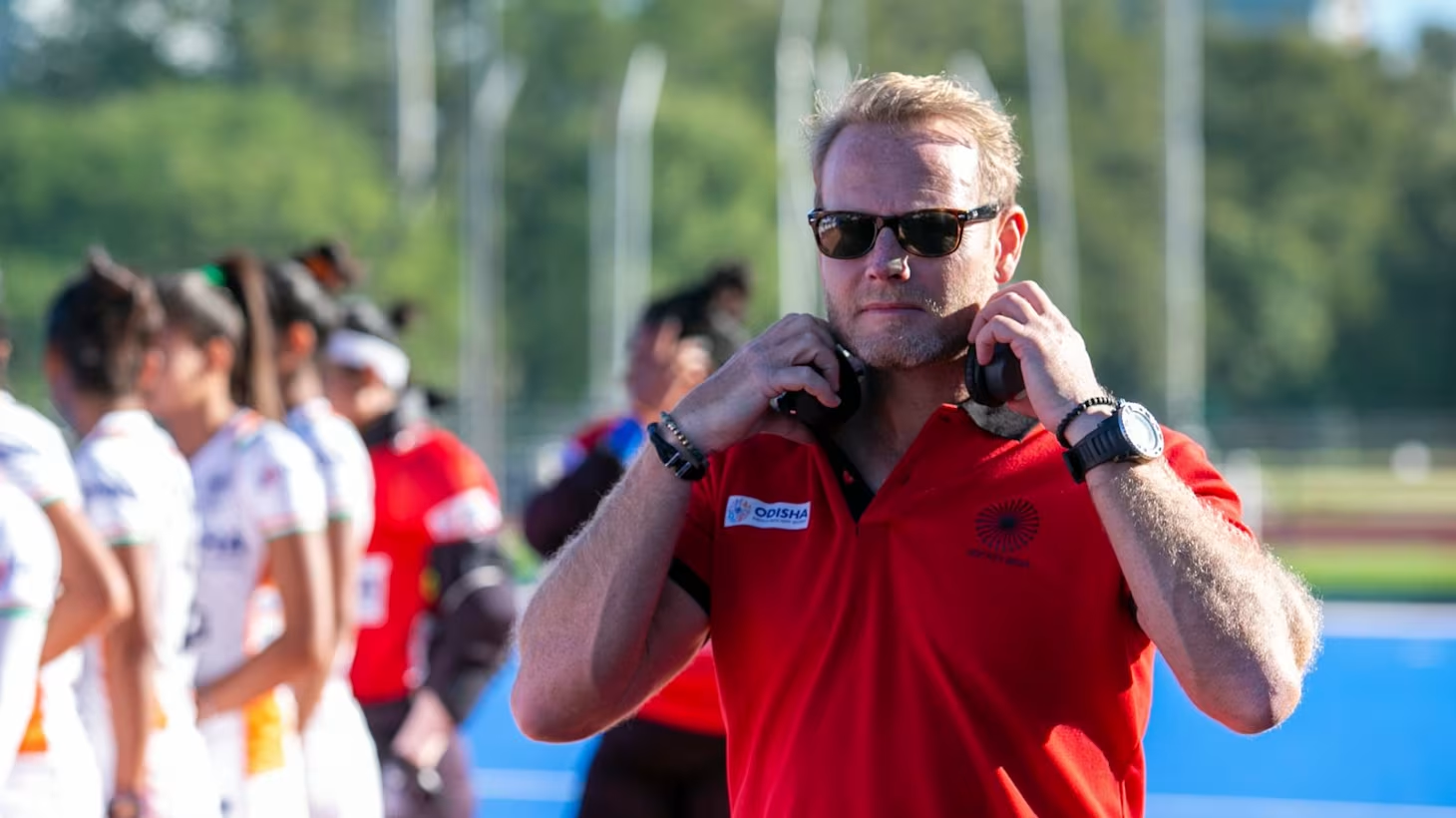
India women’s hockey head coach Sjoerd Marijne has publicly questioned the International Hockey Federation’s interpretation of penalty stroke rules after India were held to a 2-2 draw by China in their opening match of the Hockey World Cup on Sunday.
As the final whistle went off between China vs India’s fixture yesterday, there was a lengthy exchange between the two coaches on the pitch, Sjoerd Marijne and China’s Alyson Annan. From the outside, it looked like an intense, perhaps even cordial, conversation between two coaches, but there seemed to be more to it than met the eye. A day after India’s opening game at the World Cup, Marijne’s social media post offered some insight into what that conversation may have been about, with the Indian coach publicly raising concerns over the penalty stroke awarded to China - and, more specifically, the legality of its execution.
The Dutch coach’s concerns center on one of the most technically difficult areas of modern hockey officiating: where exactly the line lies between a legal push or flick and an illegal drag during a penalty stroke. For Marijne, the issue is not simply about one decision against India. It is about clarity.
Following the match, Marijne shared video footage of the penalty stroke awarded to China and sought clarification from the FIH Rules Committee. He believed the Chinese player appeared to drag the ball during the execution, an action that is prohibited during a penalty stroke.
The response from the rules committee, however, left him seeking further answers.
“Good to know, this is apparently NOT dragging,” Marijne wrote on X after receiving clarification from the FIH. “The reaction of the rules committee from the FIH after asking clarification is that this clip of the penalty stroke is not dragging. I have just asked it for clarification what to tell my players.”
The controversy has exposed a broader issue surrounding penalty stroke interpretation at the highest level.
What makes a penalty stroke legal?
Under the FIH Rules of Hockey, a penalty stroke is one of the most significant set plays in the sport. It is awarded in specific circumstances, including when a defensive infringement inside the circle prevents a probable goal or denies an attacking opportunity.
The stroke is taken from 6.40 metres in front of the goal. The attacker must begin behind and within playing distance of the ball and, after the whistle, can propel it towards the goal using a push, flick, or scoop
However, the rules prohibit a number of actions, including hitting the ball, feinting, playing the ball more than once, and dragging it.
The problem arises when those definitions are applied to the biomechanics of an elite player. A modern penalty stroke is not necessarily a simple, stationary push. Players generate power through coordinated movement involving the legs, hips, torso, wrists and stick. The stick can remain in contact with or travel alongside the ball for a short distance as the player transfers weight forward.
That creates a difficult question for officials: when does a continuous push or flick become a drag?
The rules do not provide a precise measurement for the distance the stick can travel with the ball or the exact duration of stick-ball contact. As a result, the distinction is often left to the interpretation of the umpire and the video umpire.
https://www.indiasportshub.com/articles/india-vs-england-32-year-wait-adds-extra-edge-to-hockey-world-cup-clash
The uploaded analysis of penalty stroke mechanics notes that this absence of objective kinematic criteria creates significant room for interpretation, particularly when slow-motion video is used to examine actions that occur within fractions of a second.
The China penalty stroke at the centre of the debate
The disputed incident came in the final minute of the first quarter.
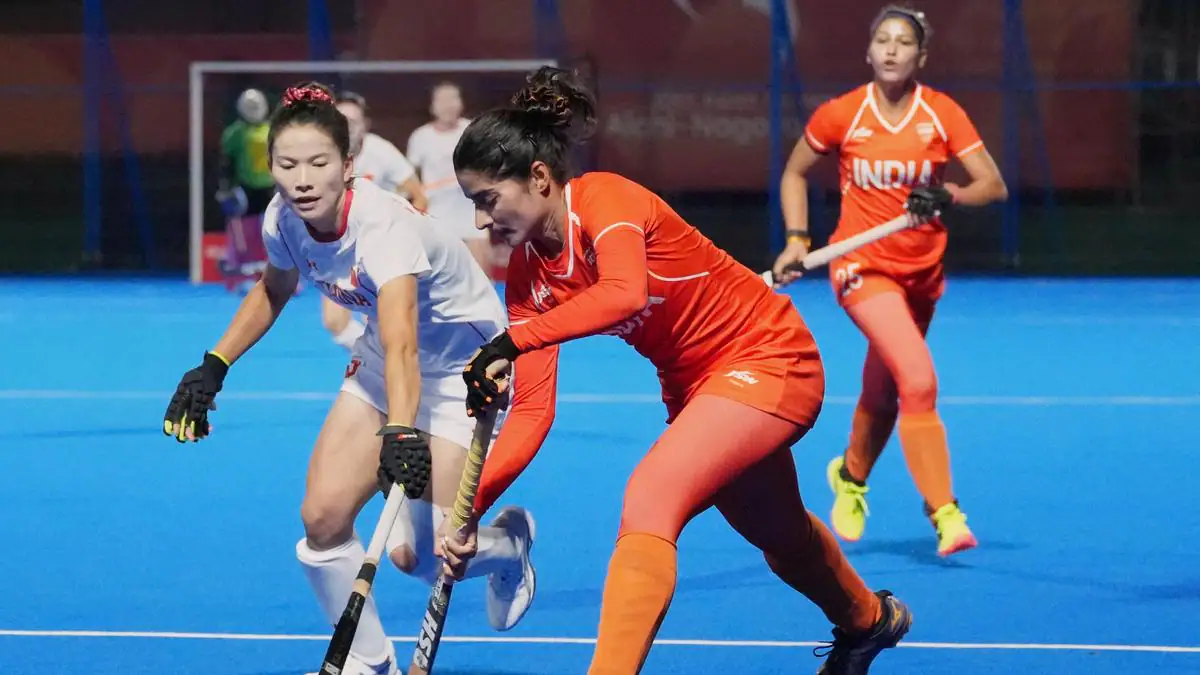
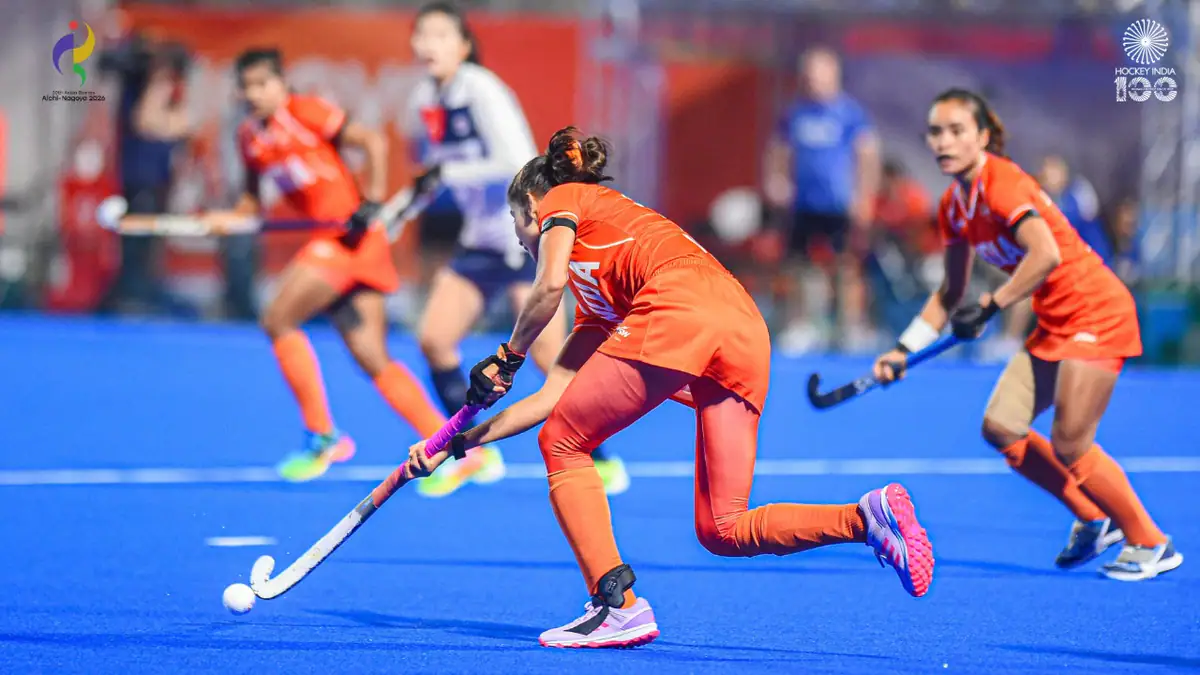
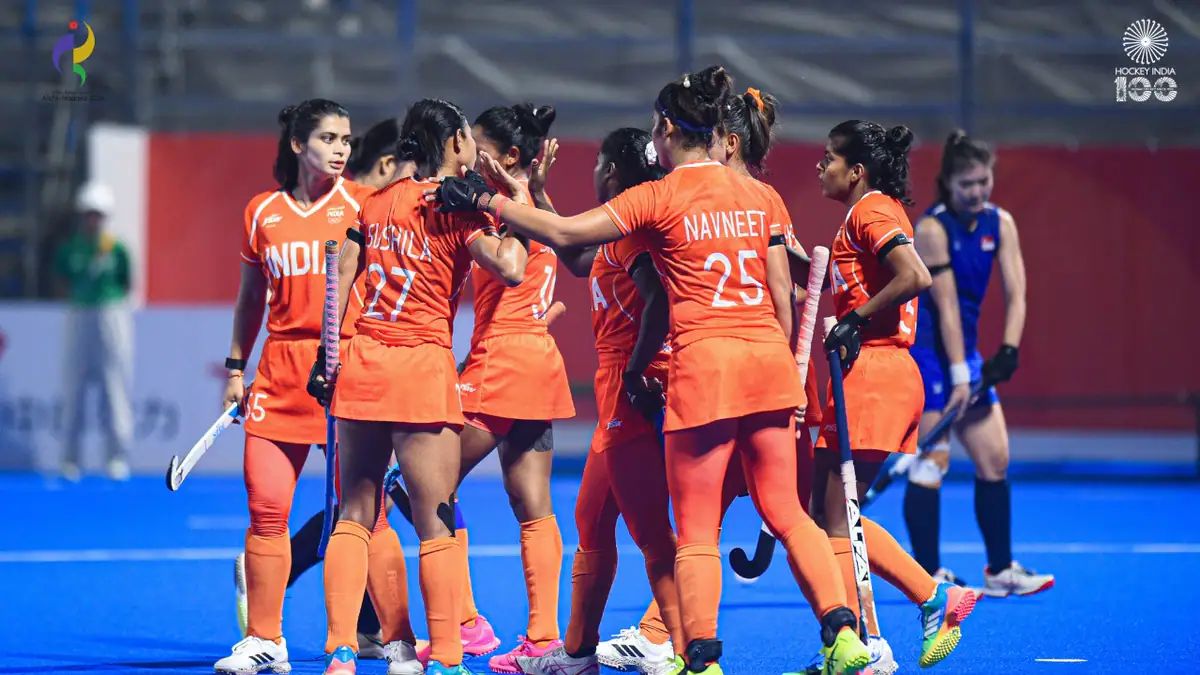
India had taken the lead through Navneet Kaur, but China was awarded a penalty stroke after Indian defender Shilpi Dabas was penalized for obstructing Chinese forward Zhong Jiaqi inside the circle.
India used their video referral, but the decision to award the stroke was upheld. China's Zhang Ying then converted to make it 1-1. The goal itself was not disputed after the review. Instead, Marijne's subsequent concern focused on the mechanics of Zhang's execution.
The Indian coach believed the ball appeared to be gathered and dragged along the turf before being propelled towards goal. His understanding was that such an action should not be permitted under the penalty stroke rules.
The FIH Rules Committee, after reviewing the footage, reached a different conclusion.
It determined that the action did not constitute dragging. That distinction is important because the governing body's interpretation effectively establishes that a certain degree of continuous stick-ball movement can still be considered a legal push or flick.
The issue for coaches and players is therefore not merely knowing that dragging is prohibited. They need to know what the FIH considers to be the threshold between dragging and an extended legal action.
Why Marijne’s question matters
Marijne's frustration reflects a practical problem faced by every international team.
Coaches prepare players for specific situations. Penalty strokes are rehearsed repeatedly, with players working on their stance, timing, stick movement, body position and finishing technique. If the interpretation of a technical rule is unclear, however, training becomes more complicated.
The analysis of penalty stroke adjudication highlights the difference between the static language of the rules and the dynamic movement required by elite athletes. Players can begin legally positioned behind the ball and then use forward movement and weight transfer during execution. That creates another grey area that has attracted attention in international hockey: the position of the attacker's feet.
Marijne's comments also referred to his memory of high-level penalty strokes where players appeared to have their foot ahead of the ball while executing the shot, yet the goals were allowed to stand. The concern is therefore about consistency.
If a movement is considered legal in one situation but illegal in another, teams need to understand what differentiates the two actions. Without that clarity, players and coaches are effectively forced to interpret precedent rather than simply follow an objective rule.
India's draw against China contained several contentious moments beyond the penalty stroke.
India regained the lead through Deepika Sehrawat's penalty-corner drag-flick in the second quarter before China equalized through Ma Ning in the third quarter. Later, India was denied a penalty corner following a circle penetration by Navneet Kaur. By that stage, India had exhausted their video referral, adding another layer of frustration to the closing stages of the contest.
The result ultimately left both teams with a point, but the discussion around officiating may prove more significant than the scoreline. The broader issue is not whether officials should have greater or lesser discretion. It is whether teams can clearly understand the criteria being used.
The FIH's updated rules for 2026 have attempted to clarify aspects of penalty stroke positioning, particularly by establishing the moment of the whistle as the key reference point for the attacker's initial position. The analysis provided also notes that subsequent forward movement can be part of a continuous stroke, provided the player does not introduce an illegal feint or rearward gathering motion.
Yet the debate over dragging demonstrates that questions remain.
Modern hockey is increasingly fast, technical, and biomechanically sophisticated. The rules need to keep pace with the way elite players execute skills. For coaches such as Marijne, knowing what is legal is not enough. They need consistent, reproducible guidance that can be translated directly into training.
Until that line between a push, flick, and drag becomes clearer, penalty strokes will remain one of hockey's most contentious areas of officiating and every major tournament will bring another opportunity for debate.
Comments (0)
to post comments, replies, and votes.
Loading comments…