Anahat Singh Breaks India's Asian Games Women's Squash Barrier
For more than a decade, Indian women's squash had been knocking on the door of an Asian Games singles final. Dipika Pallikal and Joshna Chinappa had broken through the first barrier, winning individual medals and establishing India as a serious force on the continental circuit.
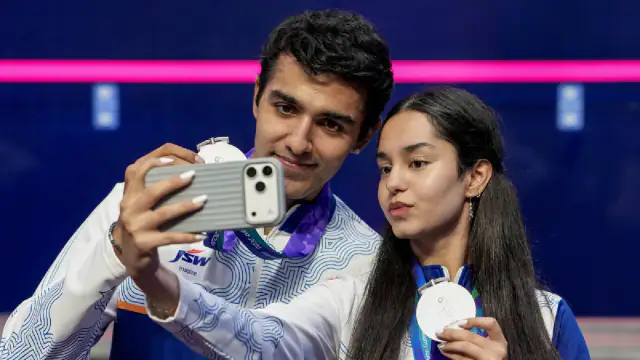
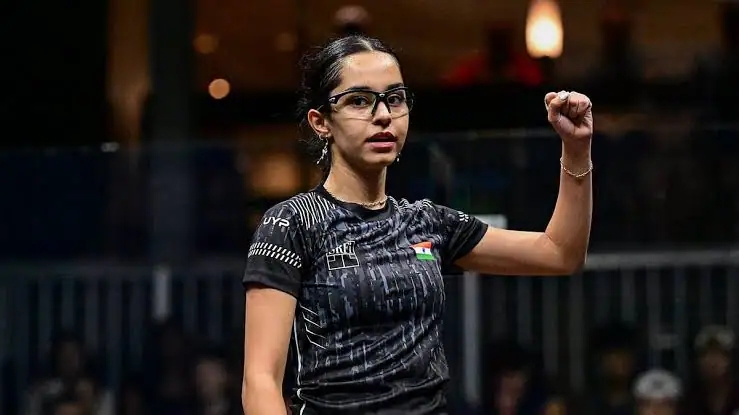
At Aichi-Nagoya 2026, Anahat Singh broke the next one. At just 18, Singh became the first Indian woman to reach an Asian Games women's singles final, converting what had long been a podium ambition into a championship-match appearance. She eventually took silver after losing to Malaysia's Sivasangari Subramaniam in the final, but the medal represented the highest individual finish by an Indian woman in Asian Games squash.
The significance of the achievement becomes clearer when Singh's run is placed alongside the history created by Pallikal and Chinappa.
Dipika Pallikal was the first Indian woman to win an Asian Games singles medal, taking bronze at the 2014 Asian Games in Incheon. Four years later, she repeated the achievement at Jakarta-Palembang 2018. Joshna Chinappa joined her on the singles podium in 2018, also winning bronze.
Those results established a pattern: India could reach the latter stages of the women's singles competition, but the final remained out of reach. Anahat has now changed that.
Her silver in Nagoya is not simply another addition to India's squash medal tally. It represents the country's first appearance in an Asian Games women's singles final.
The progression is striking:
2014: Dipika Pallikal — women's singles bronze
2018: Dipika Pallikal — women's singles bronze
2018: Joshna Chinappa — women's singles bronze
2026: Anahat Singh — women's singles silver
The broader history also includes Indian success in team and mixed doubles events. Pallikal and Chinappa helped India win women's team medals, while Pallikal won mixed doubles gold at Hangzhou and Anahat herself won mixed doubles bronze there. But the singles final remained the missing piece.
Until Anahat.
Singh arrived in Nagoya as the tournament's third seed and produced an increasingly difficult run through the knockout stages. Her Round of 16 match against Singapore's Au Yeong Wai Iynn was controlled from the beginning. Singh won 3-0, with game scores of 11-4, 11-5 and 11-7. The quarterfinal was even more emphatic.
Facing compatriot Tanvi Khanna, Singh completed another straight-games victory, winning 11-2, 11-5, 11-3 in just 15 minutes. Her flat drives and front-court variation gave Khanna little opportunity to establish extended rallies. The semifinal was where history was made. And it required Singh to find another level.
Japan's Satomi Watanabe, the world No. 6 and second seed, took control of the semifinal early. Watanabe won the opening game 11-9 and then edged a tight second game 13-11. Singh was suddenly 0-2 down and facing elimination. The third game became the turning point. Watanabe reached 10-8, leaving Singh two points away from defeat. The Indian saved both match points and eventually took the game 12-10.
The momentum shifted. Singh began taking the ball earlier, flattening her drives and increasing the pressure through the middle of the court. She won the fourth game 11-6 before completing the comeback with an 11-3 victory in the decider.
The final score: 3-2 to Anahat.
It was the highest-ranked victory of her career and, more importantly, it guaranteed India its first women's singles finalist at the Asian Games.
The gold-medal match brought Singh up against Malaysia's Sivasangari Subramaniam, the defending champion and world No. 5. The Malaysian had not dropped a game on her way to the final and immediately established control. Subramaniam won the first two games 11-4, 11-4, putting Singh under considerable pressure. The Indian responded in the third, increasing her attacking intent and using more aggressive drops to disrupt the Malaysian's rhythm. She saved a championship point but could not complete the recovery, with Subramaniam eventually taking the game 11-7.
The 3-0 defeat ended Singh's gold-medal challenge, but it did not diminish the scale of what she had achieved during the tournament. She had reached the final. And that alone rewrote the history of Indian women's singles squash at the Asian Games.
Singh's breakthrough also represents a generational shift. Pallikal and Chinappa established India's presence through a game built around length, physical endurance and sustained pressure along the walls. Singh's style reflects the faster modern game: earlier interceptions, attacking drives, sharp reflexes and greater willingness to take the ball before it reaches the back wall.
Her development has also been unusually rapid. Singh won the Indian Senior National Championship at 15 and captured the 2026 World Junior Squash Championship, becoming India's first junior world champion in the women's event. Earlier in 2026, she also won her maiden PSA Bronze title and broke into the world's top 20.
That trajectory now includes an Asian Games silver medal.
From bronze history to a silver milestone
The story of Indian women's squash at the Asian Games can therefore be viewed through three generations. Pallikal broke the individual medal barrier in 2014. Chinappa joined her on the podium in 2018. Together, they built the foundation for India's sustained presence in Asian Games squash. Now Anahat Singh has taken the next step.
At 18 years old, she has become the first Indian woman to contest an Asian Games squash singles final and has returned home from Nagoya with silver. The medal does not erase the work of the generation before her; it shows how far that foundation has carried Indian squash. From Pallikal's first singles bronze, through Chinappa's second bronze in 2018, to Anahat's historic silver in 2026, the progression is clear.
The next chapter of Indian women's squash has already begun — and it has a new benchmark to build from.
Comments (0)
to post comments, replies, and votes.
Loading comments…