Asian Games 2026: Manisha Bhanwala Faces Olympic Champion Akari Fujinami in Tough 57kg Draw
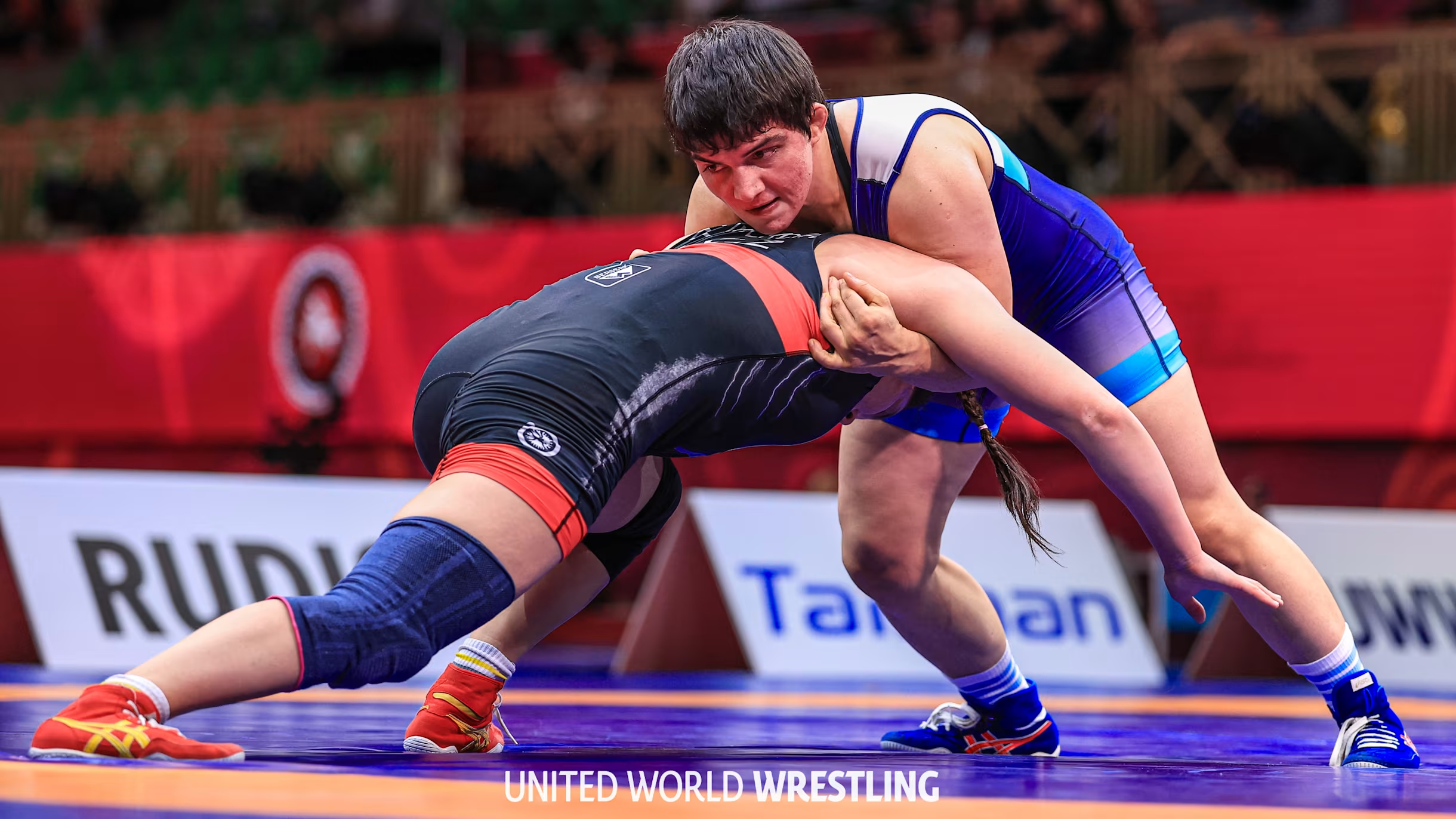
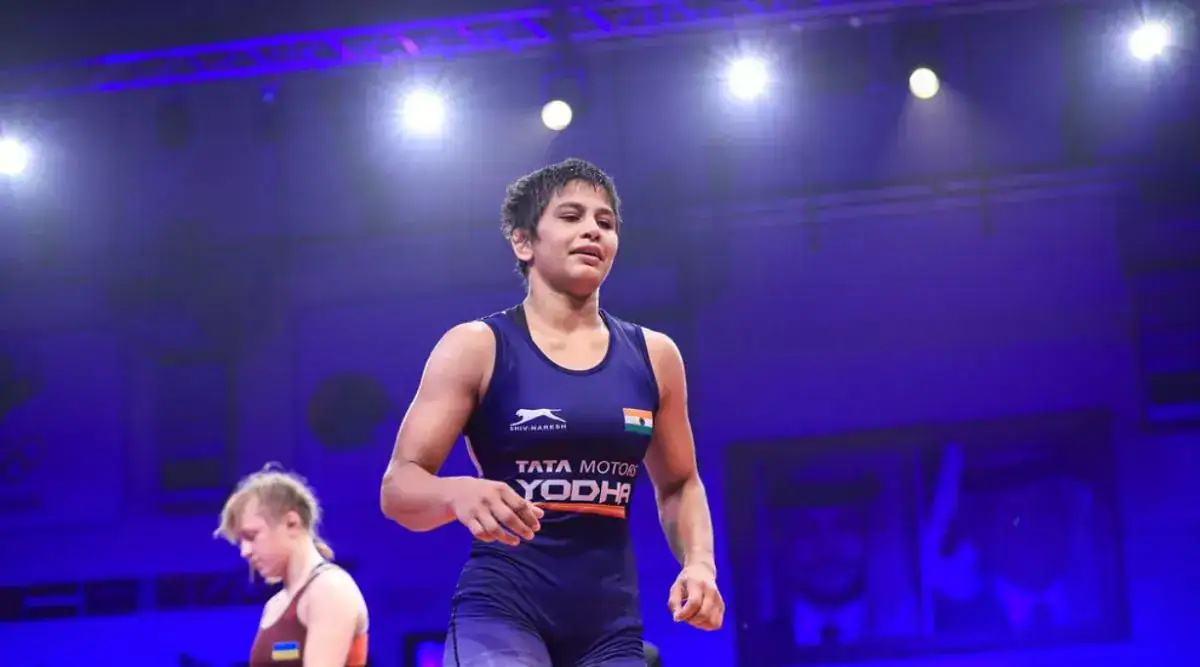
Manisha Bhanwala faces one of the most difficult routes to an Asian Games medal when the women’s freestyle 57kg competition gets underway at the Nagoya City Inae Sports Center.
The Indian wrestler has been handed a demanding draw that places her in the same quarter of the bracket as Japan’s Akari Fujinami, the reigning Olympic champion and a two-time world champion. With China’s world No. 1 Hong Kexin also positioned in the same half, the upper branch of the 57kg competition has become the most congested section of the tournament.
For Manisha, the immediate challenge is to navigate the opening round before potentially facing Fujinami in the quarterfinals.
Manisha, seeded fourth, begins against South Korea’s Kwon Youngjin in Match 266. Kwon arrives with a bronze medal from the 2026 Asian Championships and possesses a capable par terre game, along with the ability to keep close bouts within striking distance. Manisha's biggest advantage is likely to come from her physical strength.
The Indian has traditionally competed at higher weights, including 62kg, before moving down to 57kg. That transition has already produced significant results in 2026, with Manisha winning gold at the Zagreb Open and the 2026 Ranking Series. Her game is built around forward pressure, strong hand fighting and underhook control. Against Kwon, establishing control in the centre of the mat will be important. Manisha will want to prevent the Korean from finding opportunities for low ankle attacks and instead force exchanges where her strength can influence the position.
A victory would set up one of the biggest bouts of the tournament.
Akari Fujinami awaits in the quarterfinals
The potential quarterfinal against Akari Fujinami is the defining challenge in Manisha's bracket. Fujinami enters the Asian Games as an unseeded wrestler after moving up from the 53kg category. That change in weight class has created a major structural imbalance in the draw, because the Japanese star has been placed in the same quadrant as Hong Kexin, Manisha and Mongolia's Khulan Batkhuyag.
Fujinami's credentials are extraordinary. She won Olympic gold at Paris 2024 and is a two-time world champion. The Japanese wrestler has also maintained an unbeaten streak of 153 consecutive senior and age-group bouts, according to the tournament analysis.
Her biggest technical strengths are low-level attacks, rapid transitions and counter-offensive wrestling. She is particularly dangerous when an opponent commits too much weight forward during upper-body exchanges.
That creates a tactical problem for Manisha. The Indian's preferred style involves heavy hand fighting, forward pressure and underhooks. Against most opponents, those attributes can help her dictate the pace. Against Fujinami, however, an upright stance or an aggressive step forward could create the opening for the Japanese wrestler to attack the legs. Manisha will therefore need to balance physical pressure with positional discipline.
Despite the quality of Fujinami, the matchup is not without opportunities for the Indian. Manisha's move down from 62kg has enhanced her relative physical strength at 57kg. If she can establish strong underhooks without allowing Fujinami to change levels underneath them, she can force the Japanese wrestler into close-contact exchanges.
The key will be head position and stance height. Manisha cannot allow Fujinami to dictate the distance. At the same time, she must avoid leaning too far forward while attempting to close the gap. A successful strategy would involve controlled hand fighting, maintaining a strong base and using the underhook only when she has established sufficient positional control.
The longer Manisha can keep Fujinami from creating clean shooting angles, the more the bout could move toward the type of physical wrestling that suits the Indian.
Even if Manisha manages to overcome Fujinami, the draw does not become easier. China's Hong Kexin, the top seed and world No. 1, occupies the other side of the upper quarter and is projected to reach the semifinal. Hong is the reigning 2026 Asian champion and a 2024 Olympic bronze medallist. Her wrestling is based around relentless forward pressure, rapid ankle picks and high-frequency attacks.
The Chinese wrestler has been one of the most productive competitors on the international circuit, with the tournament analysis recording an elite 8.19 points per minute in United World Wrestling competition. A potential Manisha-Hong semifinal would therefore present another completely different challenge. Whereas Fujinami is particularly dangerous in counter-offensive situations, Hong attempts to overwhelm opponents through continuous pressure and scoring volume.
For India, simply reaching the semifinal would represent a major achievement given the density of the upper branch.
The United World Wrestling repechage system provides an important secondary pathway. If Fujinami reaches the final, wrestlers she defeats along the way are pulled into the repechage. That could potentially give Manisha another opportunity if she loses to the Japanese champion in the quarterfinal. According to the projected bracket, Manisha could face Mongolia's Khulan Batkhuyag in a repechage bout.
That would itself be a high-level contest. Batkhuyag is a world silver medallist and recently won silver at the 2026 Asian Championships at 57kg. The winner would then face the losing semifinalist from the upper branch for the bronze medal. This means that even a quarterfinal defeat would not necessarily end Manisha's medal hopes if Fujinami continues her run.
The women's 57kg competition is a clear example of how an unseeded elite athlete can dramatically alter a championship bracket. Fujinami's move from 53kg meant she did not receive protected seeding at her new weight, placing her alongside three other major contenders. For Manisha, that means there is little room for error from the opening whistle.
Her first objective is to defeat Kwon Youngjin. The next challenge could be the biggest of the entire tournament: an Olympic champion who has rarely been beaten. Manisha's strength, physical pressure and recent success at 57kg give her tools to make the contest competitive. But her tactical discipline will be crucial against Fujinami's speed and counter-attacking ability. The Indian wrestler's route to gold is undoubtedly demanding.
But with the possibility of a quarterfinal against Fujinami, followed by a potential semifinal against Hong Kexin, Manisha will know exactly what awaits her. In one of the deepest women's wrestling brackets at the Asian Games, every exchange could determine whether India moves closer to the podium or into the repechage race.
Comments (0)
to post comments, replies, and votes.
Loading comments…