Asian Games 2026: Srihari Nataraj and Rishabh Das Face Tough 50m Backstroke Challenge
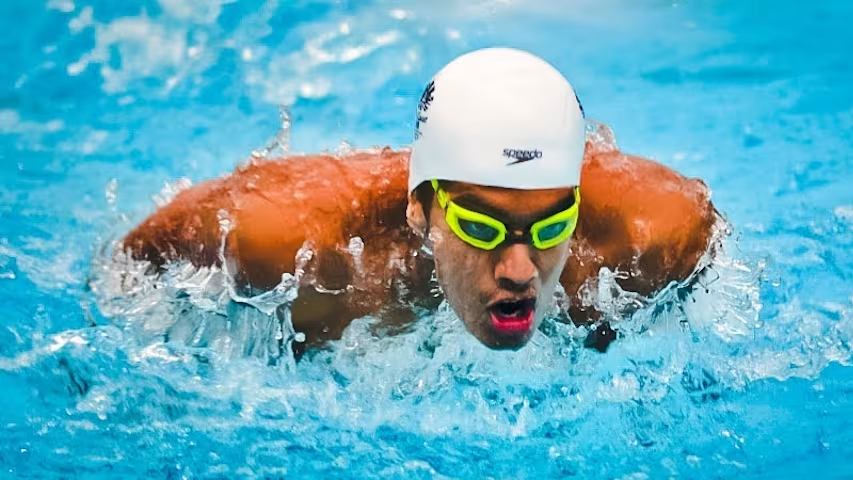
The men’s 50m backstroke at the Asian Games 2026 promises to be one of the most fiercely contested swimming events of the competition, with 30 swimmers set to battle across three heats for just eight places in the final.
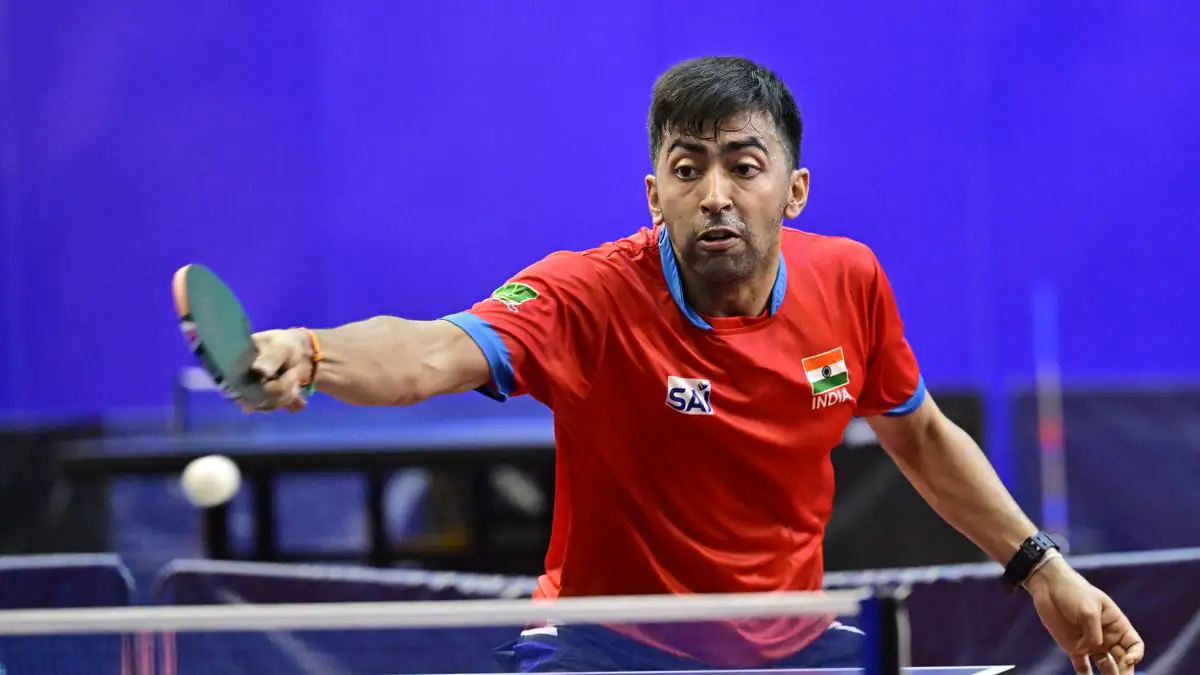
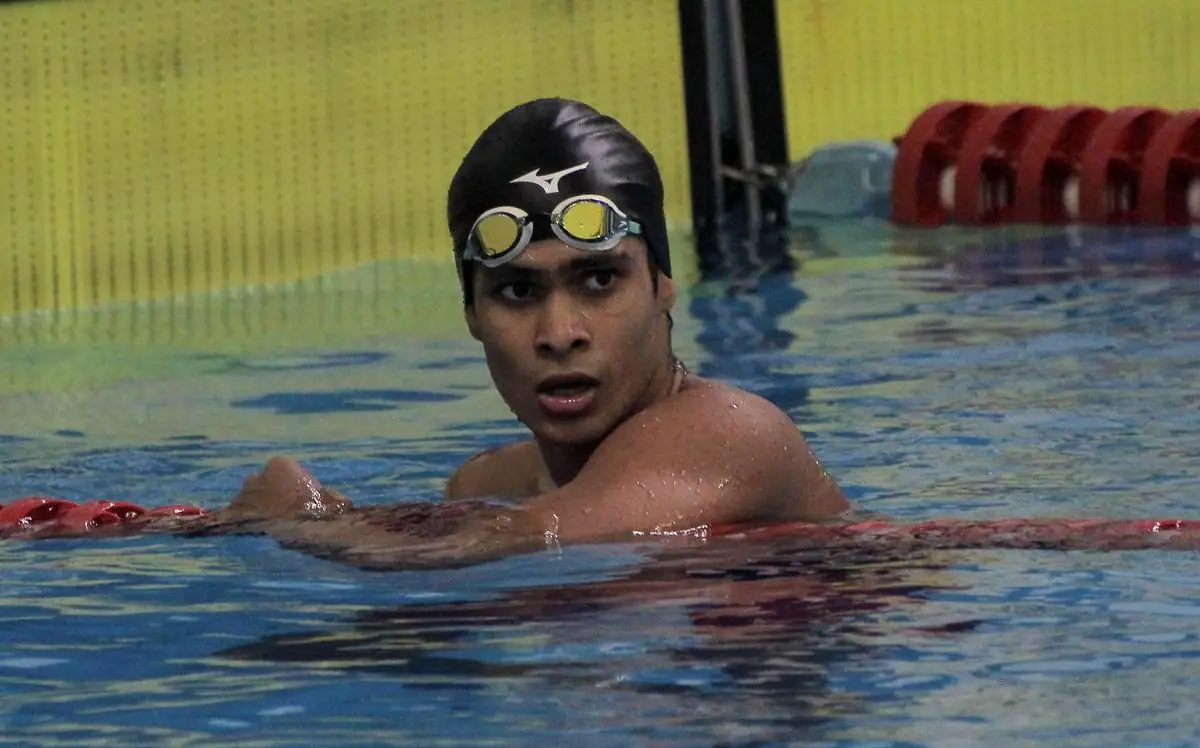
For India, the spotlight will be firmly on Srihari Nataraj and Rishabh Das, who will take to the pool in Heat 2. While Nataraj arrives with considerable international experience and a strong record in the event, Das enters the race after an encouraging performance in the men’s 100m backstroke earlier in the Games.
The preliminary heats are scheduled for the morning of September 21, with the final later in the day. The event demands almost no margin for error: in a 50-metre race, a delayed start, an inefficient underwater phase or a poor finish can make the difference between qualifying and elimination.
China’s Xu Jiayu enters the competition with the fastest entry time and one of the strongest credentials in the field. Xu owns the Asian record of 23.92 seconds, set in Hangzhou in June 2026. The mark makes him the only swimmer in the field to have broken the 24-second barrier. The Games record currently stands at 24.28, set by Japan’s Junya Koga in 2014.
Xu has already made an impression at these Games, winning the men’s 100m backstroke in a Games Record time of 51.98. His form makes him one of the central figures in the 50m event as well. China also has Wang Zicheng, whose entry time of 24.47 makes him another major contender. Wang finished runner-up to Xu at the 2026 Chinese National Championships and has developed into one of the country’s leading sprint backstroke swimmers.
The possibility of two Chinese swimmers finishing at the front adds another dimension to the race.
India’s Srihari Nataraj faces a tight qualification battle
Srihari Nataraj is seeded seventh as per entry list with a time of 25.32 seconds. The Indian swimmer has considerable experience at major international competitions. A two-time Olympian, Nataraj finished fifth in the 50m backstroke at the 2022 Commonwealth Games, clocking 25.23.
His lifetime best stands at 25.18, while his 2026 season best is 25.21, recorded at the Ahmedabad Nationals.
That places Nataraj right on the qualification bubble. The challenge is made more complicated by South Korea’s Yoon Jihwan, who has an entry time of 25.40 but owns a significantly faster personal best of 24.48. If Yoon reproduces anything close to that performance, the qualification line could move considerably faster.
For Nataraj, therefore, simply matching his seed time may not be enough. A performance close to his season best or personal best could be required to secure one of the eight final places.
Rishabh Das looks to build on 100m performance
Nineteen-year-old Rishabh Das is India's second entrant. Das enters with a 25.69 seed time and sits 14th on the entry list. On paper, that places him outside the immediate qualification positions. However, his performance in the 100m backstroke has provided an important indication of his current form.
Das finished sixth in the 100m backstroke at these Games with a lifetime best of 54.77, demonstrating that he can compete effectively against established Asian swimmers. The 50m sprint presents a different challenge. Das will need to improve his first half of the race, particularly his start and underwater phase, if he is to move into contention for the final.
His recent development nevertheless makes the race an important opportunity for the young Indian swimmer.
The density of the field is perhaps the biggest storyline surrounding the preliminary round. Swimmers from fifth to 14th are within just 0.41 seconds on the entry list. The gap between the fifth seed and 13th seed is only 0.28 seconds.
That means there is very little room for tactical conservatism. The projected qualification range is around 25.24 to 25.35 seconds, although the actual cutoff will depend entirely on the morning performances.
For swimmers such as Nataraj, every phase of the race matters. The backstroke start must generate maximum acceleration, the underwater dolphin kick needs to carry the swimmer efficiently towards the 15-metre mark and the transition to surface swimming has to be seamless. The final five metres then become a test of stroke timing and the ability to judge the finish without visual contact with the wall.
Beyond Xu and Wang, Japan’s Reo Miura, Indonesia’s I Gede Siman Sudartawa, South Korea’s Yoon Jihwan and Lee Juho, Bahrain’s Stepan Goncharov and Chinese Taipei’s Chuang Mu-lun add significant depth to the field.
Miura owns a 24.96 personal best, while Sudartawa has a national record of 24.76. Yoon’s 24.48 personal best makes him particularly dangerous despite his slower entry time. For India, the immediate objective is clear: qualify for the final.
Nataraj has the experience and recent form to put himself in contention, while Das will be looking to convert the confidence from his 100m campaign into a strong sprint performance.
With only eight places available, the morning heats could be every bit as dramatic as the final itself. For Nataraj, the race is a test of experience under pressure; for Das, it is another opportunity to announce himself on the continental stage.
Comments (0)
to post comments, replies, and votes.
Loading comments…