From Springbok to India’s women’s coach: Paul Delport and a full-circle rugby journey
As the women’s rugby sevens got underway at the Mizuho Park Rugby Field in Nagoya, the scoreline did not quite tell the full story of India’s opening day.
As the women’s rugby sevens got underway at the Mizuho Park Rugby Field in Nagoya, the scoreline did not quite tell the full story of India’s opening day. India went down 33-7 to Hong Kong China in the morning before losing 43-5 to defending champions China in the afternoon.
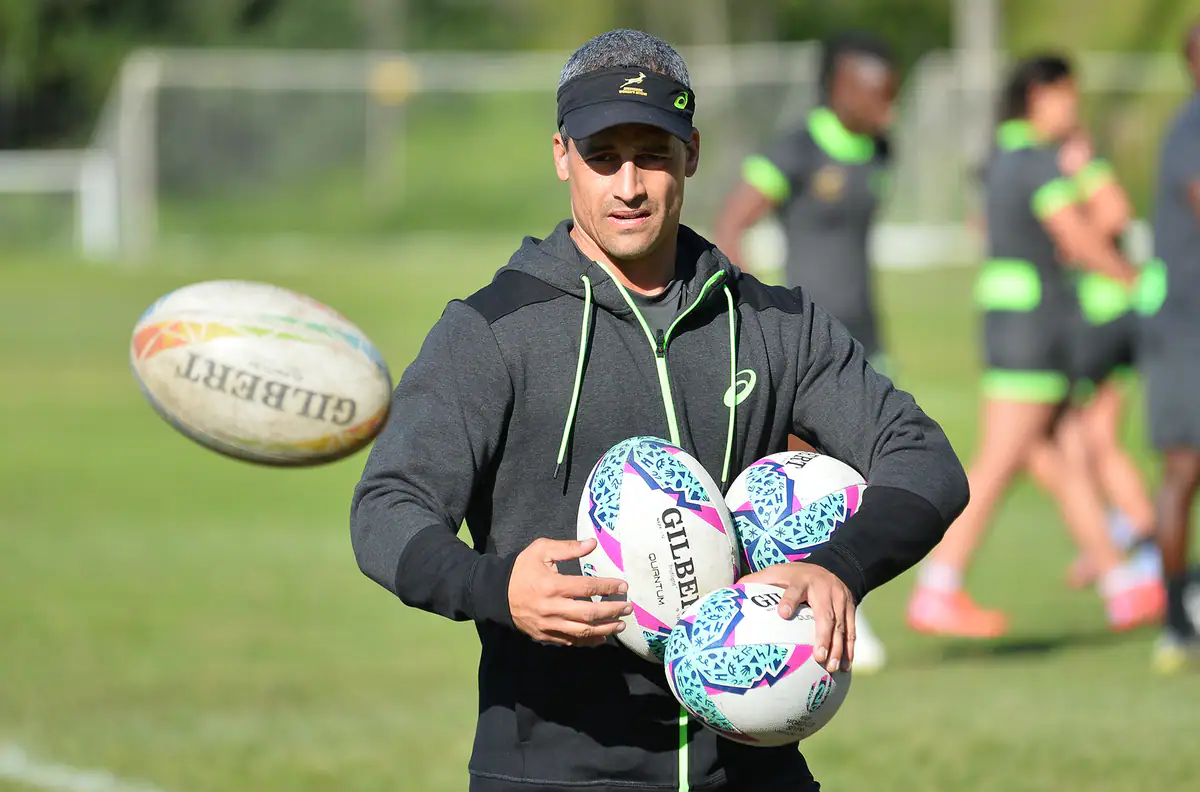
But for those watching, there was another story playing out on the sidelines - a South African coach completely invested in every tackle, chase and possession, urging his players to keep fighting regardless of what the scoreboard said.
That is Paul Delport.
His stint with the Indian women’s team began in 2025. His tryst with Indian rugby, however, goes back much further.
Sixteen years ago, Paul Delport arrived in India as a Springbok Sevens player.
In Delhi, he was part of the South African team that competed at the 2010 Commonwealth Games, where rugby sevens was making its Commonwealth Games debut in India. South Africa beat the hosts 59-0 in the pool stages and eventually went on to win the bronze medal.
Sixteen years later, Delport is back in India. Only this time, he is not wearing the Springbok jersey.
He is preparing the Indian women’s rugby sevens team for the Aichi-Nagoya 2026 Asian Games.
“It’s quite surreal,” Delport says, reflecting on the journey.
He admits that memories of that 2010 tournament have faded with time. He doesn’t remember the scoreline against India or many of the finer details of the match. What he does remember, however, is the experience of being in India.
The hospitality. The atmosphere. And perhaps most importantly, the sight of a sizeable crowd turning up to watch rugby in a country where the sport was still very much developing.
For a player accustomed to rugby-playing nations and crowds familiar with the sport, the experience stayed with him.
And now, almost 16 years later, life has brought him back but with an entirely different responsibility.
A decision that happened almost overnight. Delport’s move to India wasn’t something he had planned for years. He had just finished his stint with the South African women’s team and was in Thailand when the opportunity to coach India came his way.
In fact, he says the whole thing happened so quickly that he barely remembers how it came together.
What he does remember is the person who encouraged him to take the leap. His wife.
“I just trusted her decision,” Delport recalls.
Looking back, he credits that initial push for setting him on a journey that has now taken him into his second season with the Indian women’s team.
And while the South African and Indian environments are vastly different, Delport says one thing immediately stood out to him: the players’ willingness to learn.
The Indian women, he says, have been positive, supportive and open to new ideas. They pick things up quickly - something that, from a coach’s perspective, can make the process of building a team significantly easier. That process is now beginning to show results.
From climbing tiers to challenging Asia’s best. Indian women’s rugby has spent the past few years trying to establish itself more firmly on the Asian circuit.
For Delport, the progress is not about suddenly becoming champions. It is about moving forward one step at a time. The team has progressed from playing in the lower tiers of Asian rugby to competing at a higher level, while also gaining more regular exposure through the Asia Rugby Emirates Sevens Series.
In 2026, India finished sixth in the opening round of the series in Suzhou, matching its result from the previous year. It might not sound like a dramatic leap. But for Delport, that is precisely the point.
Growth in Indian women’s rugby, he believes, has to be measured through consistency - climbing the rankings, playing stronger opposition and gradually closing the gap.
The Indian team is now heading to its second consecutive Asian Games.
After making its debut at Guangzhou in 2010, the women missed the 2014 and 2018 editions before returning to Hangzhou, where they finished seventh.
This time, there is continuity.
Six players from the Hangzhou squad are part of the 2026 team, giving Delport a group with some previous Asian Games experience to build on.
And for a sport that has traditionally been viewed through a predominantly male lens, Delport is particularly pleased that it is the women who are carrying India’s rugby challenge at these Games.
“The future is female,” he says. There is responsibility that comes with that. But there is also belief. No shortcuts, just one match at a time
India have been drawn alongside defending champions China, Hong Kong China and Malaysia in Pool B at the Asian Games.
It is a challenging group, and Delport isn’t interested in making grand promises before the team has even stepped onto the field. For him, the objective is simple.
Take it one match at a time. Stick to the processes. And, most importantly, execute what has been practised.
The Asian Games, he says, are an opportunity for the players to gain exposure, experience what it is like to compete against some of the best teams in Asia and learn from that experience.
It is a philosophy that perhaps says as much about Delport’s approach to building Indian women’s rugby as it does about his expectations for this particular tournament.
From Delhi 2010 to Nagoya 2026
There is something fitting about Delport’s rugby journey coming back to India.
In 2010, he was on the other side of a 59-0 scoreline, playing for a South African team that was already operating within an established rugby culture. Today, he is working with a group of Indian women trying to build that culture around themselves.
The Indian women’s rugby programme is still climbing.
But it is climbing.
And Delport, who once experienced Indian rugby from the perspective of an international opponent, now has a very different view of what it can become.
The Asian Games will provide another test of that progress. For the players, it is an opportunity to compete on one of Asia’s biggest sporting stages.
For Delport, it is another chapter in a journey that began in Delhi 16 years ago when he arrived in India as a player, without any idea that one day he would return as the coach trying to take Indian women’s rugby forward.
What’s next?
India’s pool-stage campaign continues on October 2, when the team takes on Malaysia in its final Pool E match at Mizuho Park Rugby Field in Nagoya. The match is scheduled for 8:50 AM IST. The result will determine India’s route into the classification and knockout stages on October 3.
Catch India in action on October 2 and follow the women’s rugby sevens campaign at Aichi-Nagoya 2026.
Comments (0)
to post comments, replies, and votes.
Loading comments…