India Rugby Sevens Drawn with China, Hong Kong and Malaysia at Asian Games 2026 After Winless Hangzhou Campaign

India’s women’s rugby sevens team has been handed a challenging draw for the Asian Games 2026, where they will face China, Hong Kong and Malaysia in Group B.
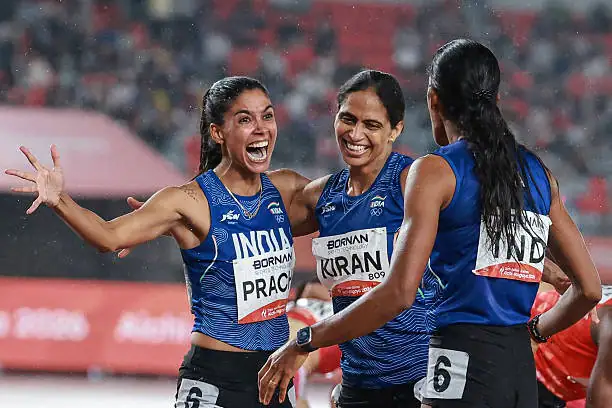
The draw offers India another opportunity to measure its progress at the continental level after a difficult campaign at the previous Asian Games in Hangzhou, where the team finished seventh and failed to register a victory.
The competition in Aichi-Nagoya will begin with India taking on Hong Kong and Malaysia before facing China in the final group-stage fixture. With the top two teams from the group progressing directly to the semifinals and the remaining teams moving into the fifth-to-eighth place classification bracket, India will need a significantly improved performance to challenge for the knockout stages.
The group presents a mix of familiar opposition and a major continental powerhouse.
India have been placed alongside China, Hong Kong and Malaysia in Group B of the women’s rugby sevens competition. China and Hong Kong enter the tournament with strong recent records in Asian rugby, while Malaysia will be another important fixture for India in a group where every result could determine progression.
India’s opening matches are scheduled against Hong Kong and Malaysia, followed by the final group encounter against China. The format means there is little room for a slow start. With only four teams in the group, every match carries significant importance. The top two teams will qualify for the semifinals, while the third and fourth-placed teams will move into the classification matches for fifth to eighth positions.
For India, the immediate objective will be to break into the top two and give themselves a realistic chance of competing for a medal. That will require the team to produce results against opponents who have historically been difficult to overcome.
A difficult Asian Games 2023 campaign
India’s last Asian Games campaign underlined the scale of the challenge. At Hangzhou 2023, India finished seventh in the final standings after losing all four of their matches. The team was placed in a group with Japan, Hong Kong and Singapore. Their campaign began with a heavy 38-0 defeat to Hong Kong. Japan then defeated India 45-0, while Singapore also recorded a 15-0 win over the Indian side.
India finished bottom of their pool with zero points and a points difference of minus 98. The classification round brought another difficult result, with India once again going down 57-0 to Japan. The final standings placed India seventh among the seven competing teams.
China won the gold medal after finishing unbeaten, while Japan took silver and Hong Kong secured bronze. Thailand, Kazakhstan and Singapore completed the standings above India. The results highlighted the gap India needed to close against the leading rugby sevens nations in Asia.
Three years later, the Asian Games 2026 will provide a fresh opportunity. India will again face Hong Kong, an opponent that defeated them 38-0 in the group stage at Hangzhou. That fixture could become one of the most important indicators of the team’s development since the last Asian Games.
Malaysia is a new group-stage opponent for India at this edition and could prove equally crucial in the race for a top-two finish.
China, meanwhile, will be the toughest test in the group. The Chinese team was dominant at the previous Asian Games, winning all four matches and conceding just 20 points during the competition. Their gold medal was another demonstration of the standard India will need to reach if they are to become genuine contenders in Asian rugby sevens.
For India, however, the 2026 campaign cannot simply be judged by comparison with the eventual champions. The more immediate target will be to become competitive against teams around them in the continental rankings, improve their attacking output and avoid the large scorelines that defined the Hangzhou campaign.
One of the most striking statistics from India’s previous Asian Games campaign was their inability to score a single point. Across four matches, India were shut out by Hong Kong, Japan and Singapore. The lack of points reflected not only the quality of the opposition but also India’s struggle to convert possession and territory into attacking opportunities.
That will be one of the major areas under scrutiny in Aichi-Nagoya. Rugby sevens is an unforgiving format. With only seven players on the field and matches played at high intensity, defensive errors can quickly turn into tries. At the same time, teams need pace, fitness and decision-making to exploit the open spaces created by the smaller format.
India will therefore need to improve at both ends of the field. A stronger defensive structure could help prevent opposition teams from running away with matches, while better ball retention and finishing could give India opportunities to put points on the board.
The Asian Games 2026 draw has given India a clear challenge. China will start as the favourites in Group B, but the matches against Hong Kong and Malaysia could play a decisive role in determining whether India can progress beyond the group stage.
The top two teams will reach the semifinals. For India, achieving that would represent a major improvement on their seventh-place finish at the previous Asian Games. Even a more competitive performance against the region’s stronger teams would demonstrate progress.
India’s rugby sevens programme remains in a developmental phase compared with Asia’s established powers. But continental competitions such as the Asian Games provide the kind of high-pressure exposure needed to accelerate that growth. The difference between Hangzhou and Aichi-Nagoya will be closely watched.
At the previous Asian Games, India finished without a win and without scoring a point.
This time, the team has another chance.
The objective will be simple: compete harder, score more, challenge for victories and show that Indian women’s rugby sevens has moved forward since Hangzhou.
Comments (0)
to post comments, replies, and votes.
Loading comments…