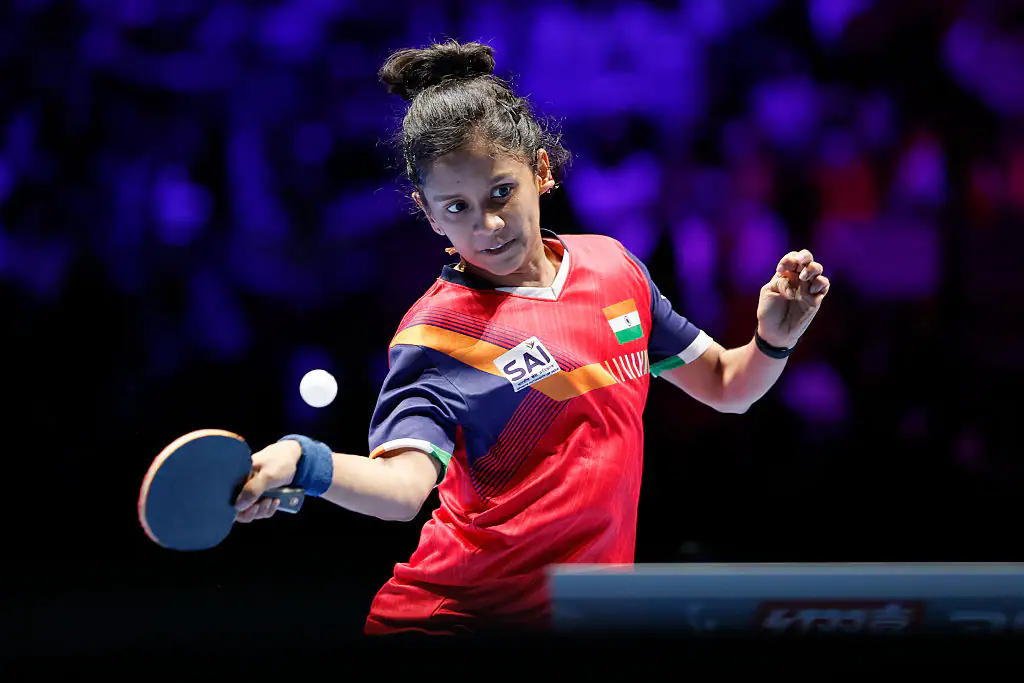
India’s Table Tennis Progress Needs Perspective After 0-3 Loss to Iran at Asian Games 2026
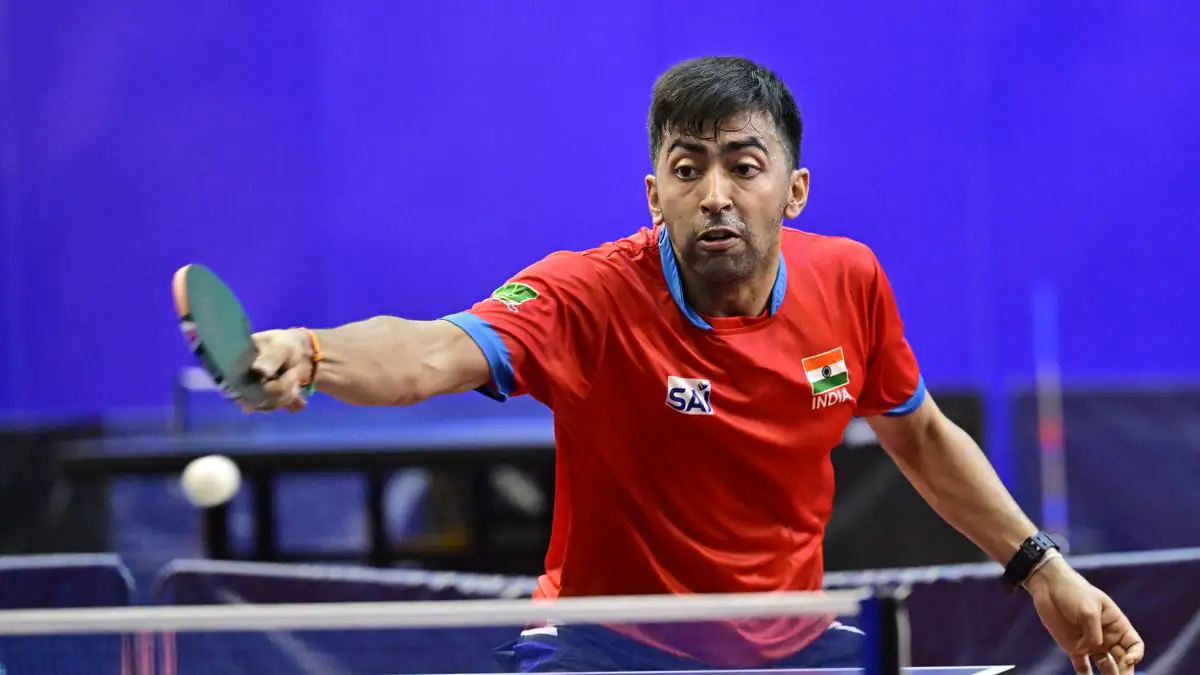
India’s 0-3 loss to Iran in men’s team table tennis at the Asian Games 2026 raises questions about singles performance, tactical adaptability and how rankings translate into results.
There is a difference between criticising a sporting performance and attacking the people behind it. India’s 0-3 defeat to Iran in the men’s team table tennis competition at the Asian Games 2026 deserves scrutiny, but it also deserves context.
The result was emphatic. India entered the contest with three players ranked inside the world’s top 100, while Iran’s players were listed at considerably lower positions. Yet the rankings did not translate into the expected scoreboard advantage. India lost all three singles rubbers, with Manush Shah and Manav Thakkar going down in straight games before Harmeet Desai also lost a five-game battle.
That is precisely why the defeat should lead to questions about performance, preparation and adaptability. It should not, however, become an excuse for personal hatred towards players or fans who raise legitimate sporting concerns.
The scoreboard tells a difficult story
The first two matches were particularly one-sided. Manush Shah faced Noshad Alamian and lost 3-11, 8-11, 10-12. The third game was competitive, but India never recovered from the slow start. Manav Thakkar then suffered an even heavier defeat against Benyamin Faraji, losing 2-11, 6-11, 6-11. Across three games, Thakkar managed only 14 points.
With Iran leading 2-0, the responsibility shifted to Harmeet Desai. His match against Nima Alamian was significantly closer. Desai lost the opening game 10-12, responded by taking the second 15-13, dropped the third 3-11 and forced a deciding game by winning the fourth 12-10.
But the fifth game slipped away dramatically. Desai managed just two points as Nima Alamian won 11-2, completing Iran’s 3-0 victory. There is no need to dress up those numbers. For a team featuring players ranked 43, 48 and 95, losing three consecutive singles matches is a performance that warrants serious examination.
The most obvious reaction is to point towards the rankings. India’s players in this tie were listed at World No. 43, 48 and 95, while Iran’s players were ranked 193, 346 and 562. On paper, that is a substantial numerical difference. But world rankings measure accumulated results and ranking points over a defined period; they are not a prediction of what will happen in an individual match.
The Iranian players also have competitive credentials that make the ranking numbers less straightforward than they initially appear. Iran’s 3-0 victory over Japan at the 2022 Asian Games is an evidence that the team has previously produced results beyond its ranking positions.
That context matters.
It does not mean India’s defeat should be brushed aside. It means the correct criticism should focus on what happened at the table rather than simply describing the opponents through their ranking numbers.
The real concern is singles adaptability
One of the more interesting aspects of the defeat is the contrast between India’s progress in doubles and its performance in this singles-based team tie. Indian table tennis has produced significant results in doubles, with Manush Shah and Manav Thakkar having reached No. 2 in the men’s doubles rankings according to the supplied analysis.
But team championships can expose a different requirement.
In singles, there is nowhere to hide a tactical mismatch. A player has to identify the opponent’s strengths, understand the spin and placement patterns, alter serve and receive strategies and find solutions when the original game plan stops working.
That was the central issue against Iran. Noshad Alamian’s unusual playing style created problems for Shah. Faraji’s aggressive third-ball game prevented Thakkar from establishing his preferred rhythm. Desai, meanwhile, managed to find solutions for long periods but could not sustain them in the deciding game.
These are precisely the areas where criticism can be constructive.
There is an increasing tendency in sports discussions to confuse criticism with negativity. They are not the same. A player losing a match does not make them a failure. At the same time, being a highly ranked international athlete does not place a player beyond criticism.
When a top-ranked Indian player loses 2-11, 6-11, 6-11, asking what went wrong is completely legitimate. Was the opponent underestimated? Was the scouting inadequate? Were the serves being read correctly? Was the receive strategy adjusted? Was there a Plan B?
Those are sporting questions. They are very different from personal attacks. The supplied analysis similarly argues that accountability and online vitriol need to be separated, particularly when analysing consecutive straight-game defeats and the inability to generate tactical adjustments.
India’s table tennis progress should not be measured by one defeat alone. Equally, one cannot use the broader progress narrative to avoid discussing a poor team performance. Both things can be true.
India can have world-class doubles results, highly ranked players and a growing international presence while still having weaknesses against certain styles and opponents. The defeat to Iran therefore presents an opportunity for a more mature conversation around Indian table tennis.
The question should not be whether fans are "allowed" to criticise. They are.
The more useful question is what exactly should be criticised. The answer lies in tactical preparation, serve-receive quality, adaptation during matches, handling scoreboard pressure and converting individual rankings into team results.
Criticise the performance when it falls short. Analyse the tactics when they fail. Question the preparation when the same problems repeatedly appear.
But keep the criticism about the sport. Players can have a bad day. Opponents can produce exceptional performances. Rankings can be misleading. And a single defeat does not erase years of progress.
What the India-Iran tie does provide is a clear reminder that international table tennis is not won on rankings alone.
It is won point by point, adjustment by adjustment, and sometimes against opponents whose ranking does not reflect the difficulty they bring to the table.
Comments (0)
to post comments, replies, and votes.
Loading comments…