Jugraj Singh’s Stick Fails FIH Check: What It Means for India at Hockey World Cup 2026
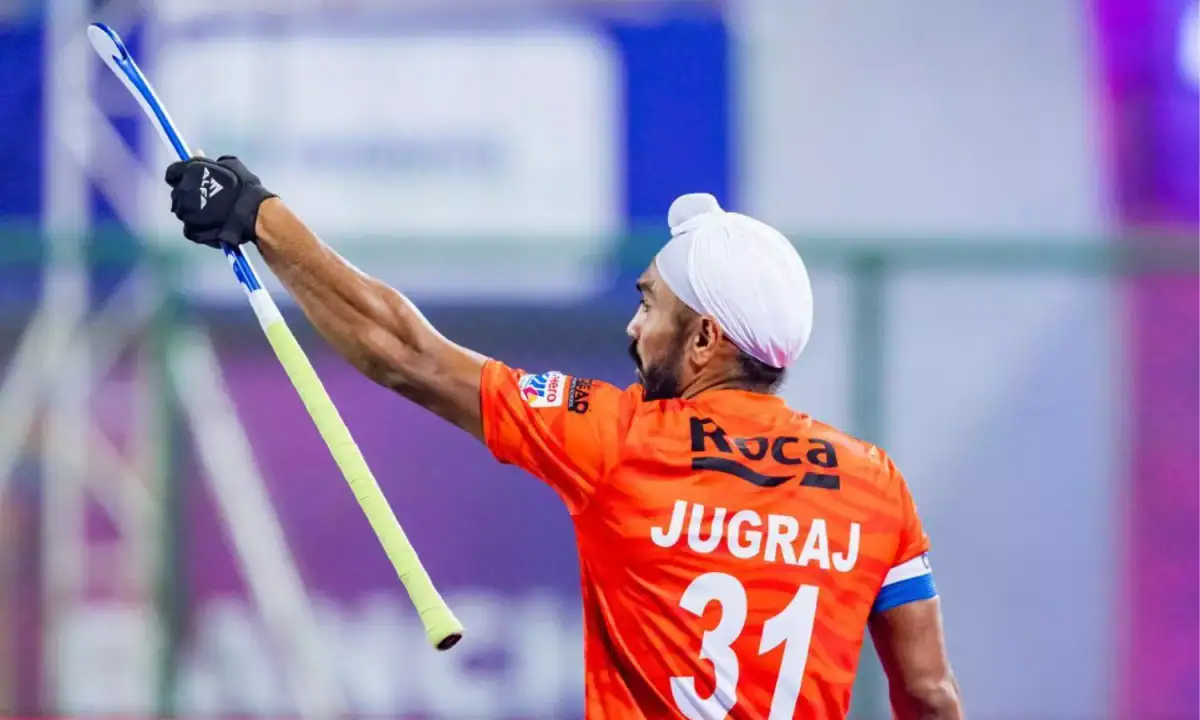
Jugraj Singh’s primary sticks failed FIH equipment checks before India’s Hockey World Cup opener. Here is how stick technology, drag flicking and compliance intersect.
The margins in elite sport are often measured in milliseconds, millimetres and grams. For India's Jugraj Singh, those margins became a significant issue ahead of the country's opening match of the FIH Men’s Hockey World Cup 2026 at Wagener Stadium.
Jugraj, one of India's leading penalty-corner specialists, was unable to get his primary match sticks cleared by the FIH Technical Committee during pre-tournament equipment verification. While several of his senior teammates, including captain Harmanpreet Singh, former captain Manpreet Singh, Mandeep Singh and Dilpreet Singh, secured clearance without difficulty, Jugraj's sticks reportedly went through multiple evaluations without receiving approval.
The incident provides an unusual insight into the highly technical side of modern hockey, where equipment has evolved dramatically alongside the demands of the sport.
At major FIH competitions, every player's stick must comply with prescribed dimensional, weight and surface specifications. The purpose is straightforward: maintain competitive fairness while ensuring that technological developments do not create an unacceptable advantage or increase safety risks.
When a stick fails inspection, the player cannot use it in competition unless the equipment is modified or replaced with a compliant alternative. The Indian team therefore had to account for Jugraj's equipment situation while preparing for the opening match against Wales. The squad continued its scheduled training programme, but the issue had potential tactical implications because Jugraj is an important component of India's penalty-corner structure.
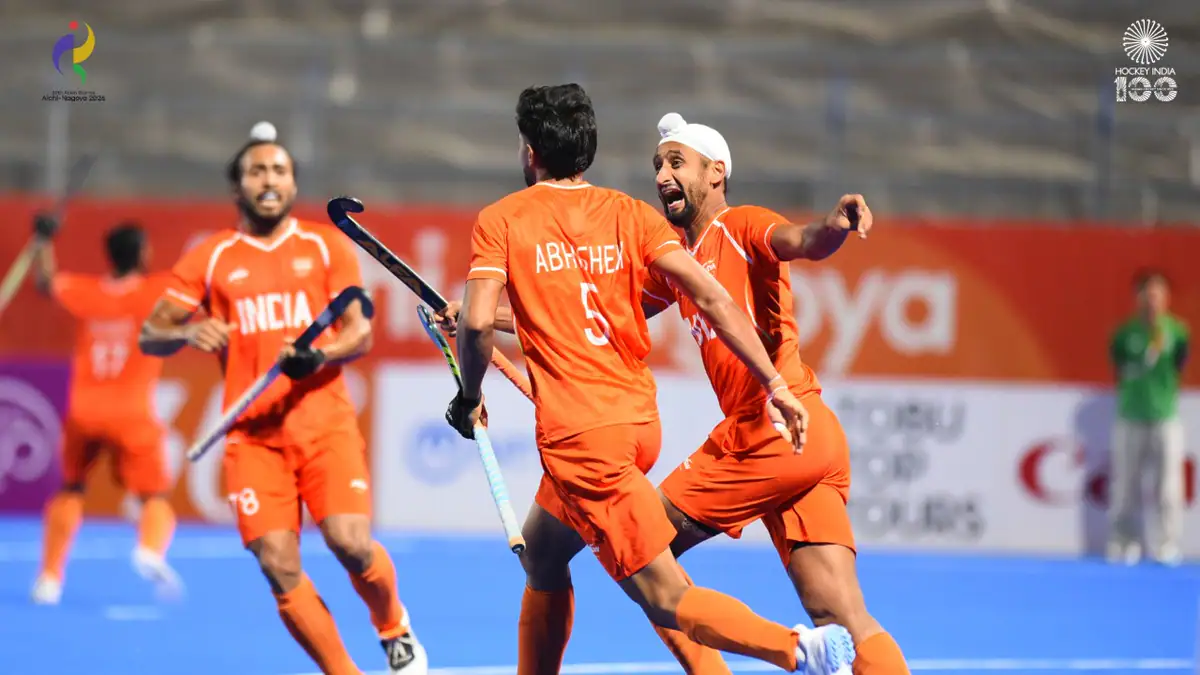
India ultimately demonstrated that it had sufficient depth in the department. Sanjay opened the scoring against Wales from a penalty corner, while Harmanpreet converted twice as India secured a 3-1 victory.
From wooden sticks to engineered composites
The modern hockey stick bears little resemblance to the heavy wooden sticks used by previous generations. Historically, sticks were predominantly manufactured from hardwood such as mulberry or ash. Penalty-corner specialists often used considerably heavier equipment, with sticks weighing approximately 21 to 27 ounces.
The introduction of synthetic pitches in the late 1970s accelerated the development of composite equipment. Modern sticks can combine carbon fibre, aramid or Kevlar, fibreglass and epoxy resins, creating equipment with a significantly higher stiffness-to-weight ratio.
That has transformed the way elite players generate power.
Modern sticks are designed to transfer energy efficiently while allowing players to manipulate the ball at high speed. For specialists who rely on penalty corners, the geometry of the stick can have an important influence on technique and consistency.
Jugraj's importance to India is closely connected to the evolution of the drag flick. Unlike a conventional hit, a drag flick involves a continuous acceleration sequence in which the player drags the ball before transferring momentum through the legs, hips, torso, shoulders and arms.
The stick then becomes an important part of the final stage of the movement. Jugraj is recognised as one of the fastest drag flickers in international hockey, meaning even small differences in stick characteristics can matter to his execution.
A specialist may become accustomed to a particular combination of stiffness, balance, bow position and surface geometry. Switching to another stick can therefore require adjustments to timing and release mechanics.
This is why equipment verification can be particularly significant for penalty-corner specialists.
What does the FIH actually check?
The FIH framework imposes several key limits on hockey sticks.
Among the principal specifications are a maximum bow depth of 25 millimetres, a maximum playing-face concavity of 4 millimetres and a maximum total weight of 737 grams. The stick must also pass through a ring gauge with an internal diameter of 51 millimetres.
These checks are designed to prevent excessive dimensions, unusual surface profiles or other modifications that could provide an unfair advantage. The scrutiny can be particularly important because manufacturers and players increasingly optimise equipment close to the permitted limits. A small manufacturing variation, changes in resin distribution, stick deformation or even additional grip material can potentially push equipment beyond a prescribed tolerance.
https://www.indiasportshub.com/articles/india-open-hockey-world-cup-campaign-with-3-1-win-over-wales
In a sport where specialists are looking for every possible advantage, the difference between compliant and non-compliant equipment can therefore be extremely small.
The Jugraj situation also highlighted an important strength of India's current squad: set-piece redundancy. Harmanpreet remains India's primary drag-flick option and has established himself as one of the world's most reliable penalty-corner specialists. But India also have other options.
Jugraj provides a high-velocity alternative, while Sanjay can contribute as another drag-flicking option. Amit Rohidas brings a direct striking option and defensive value during penalty corners. That depth means India do not have to depend entirely on one player to execute their penalty-corner strategy.
The 3-1 win over Wales provided immediate evidence of that flexibility.
Jugraj's equipment issue may appear to be a small operational matter, but at the highest level of international hockey, such details can influence preparation, tactical planning and player confidence. For India, the incident reinforces the importance of ensuring that all specialist equipment is checked and cleared well before match day.
It also demonstrates how closely modern hockey is linked to sports engineering.
As composite technology becomes increasingly sophisticated, players can customise equipment to complement highly specialised techniques. At the same time, governing bodies must ensure that innovation remains within clearly defined competitive and safety boundaries.
For Jugraj, the immediate priority will be to adapt and ensure that compliant equipment is available as India's World Cup campaign progresses. For India, the broader lesson is equally important: having multiple penalty-corner options can protect a team from unexpected disruptions.
Harmanpreet's two goals and Sanjay's opener against Wales showed that India possesses that depth.
At a World Cup where the smallest margins can decide the biggest matches, sometimes the difference between success and setback begins not with a goal, but with whether a stick passes inspection.
Comments (0)
to post comments, replies, and votes.
Loading comments…