Gulveer Singh Completes Three-Medal Asian Games Campaign with 5000m Bronze
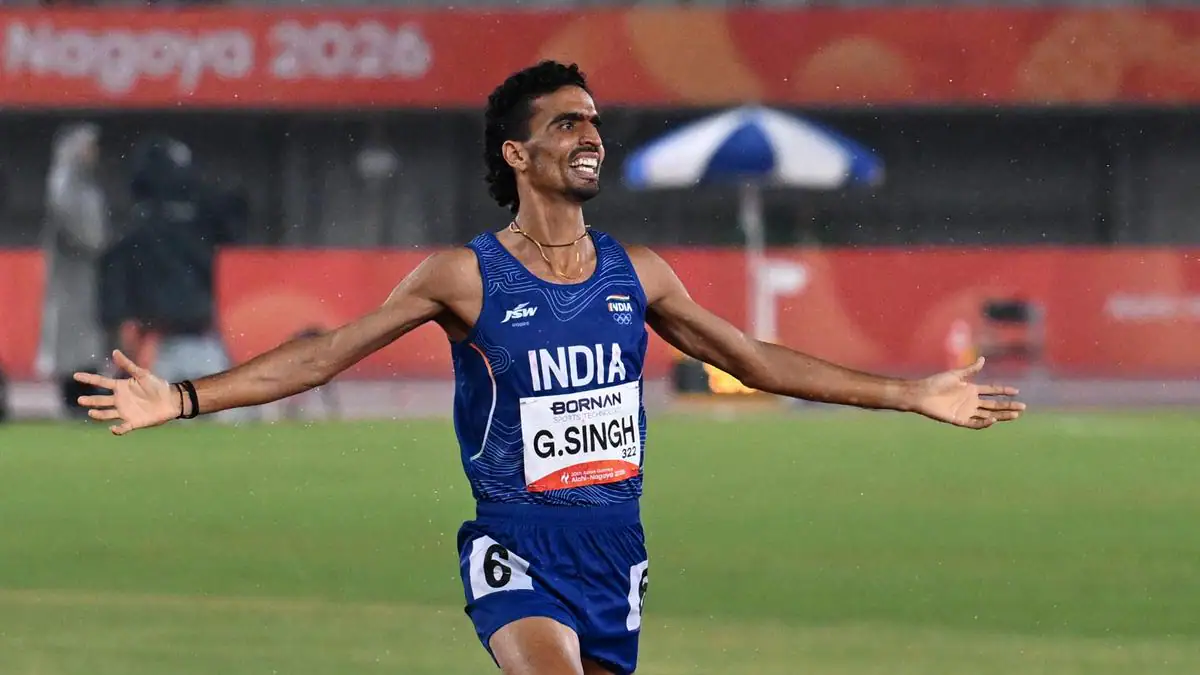
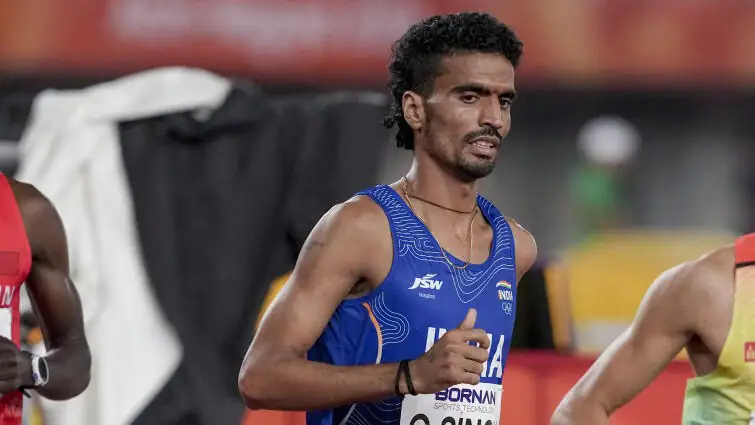
Gulveer Singh has completed an extraordinary three-medal Asian Games campaign, adding a bronze medal in the men’s 5000m to the two silver medals he had already won in Nagoya.
Gulveer clocked 13:32.75 to finish third in a closely contested final, behind Bahrain’s defending champion Birhanu Balew, who won gold in 13:30.79, and Japan’s Tomonori Yamaguchi, who took silver in 13:31.43. The result gives Gulveer three medals at a single Asian Games — two silver and one bronze, after his second-place finishes in the 10,000m and 1500m.
It was a remarkable conclusion to a demanding four-day stretch for the Indian distance runner.
Gulveer stays with the leaders
Gulveer began the race in familiar fashion, settling into the inner lane and positioning himself within the main group. That positioning had worked for him throughout these Games. Rather than taking responsibility for setting the pace, Gulveer stayed close to the leaders and conserved energy for the decisive stages. Kyrgyzstan’s Nursultan Keneshbekov initially moved into the lead and opened a significant gap from the main group. Behind him, however, Balew remained comfortably positioned, with Gulveer immediately behind the defending champion.
The Indian appeared content to use Balew's position to manage his own effort. With six laps remaining, Gulveer was still firmly attached to the leading group. The race then began to narrow.
As the final stages approached, a leading group of four separated itself from the rest of the field. Gulveer remained right in the mix alongside Balew and the Japanese challenge. With two laps remaining, the quartet had established a clear advantage over the chasing runners. With one lap left, the medal battle was effectively reduced to those four athletes. The question was no longer whether Gulveer would be competitive for a medal, but whether he could produce the final acceleration necessary to move into gold or silver.
Then the race changed.
With three laps to go, Balew began looking for an opportunity to increase the pace. He moved into the lead, but Japan’s Yamaguchi responded with a sudden acceleration. Balew immediately followed. The increase in pace transformed the final stages into a sprint. Gulveer remained in contention, tracking the leaders as the final lap began. Balew eventually retook the lead and launched his final attack. Yamaguchi stayed with him.
Gulveer entered the final 200 metres in third. He needed another gear to challenge for the top two positions. That acceleration did not come.
Balew held on for gold in 13:30.79, while Yamaguchi crossed second in 13:31.43. Gulveer followed in 13:32.75 to secure bronze. The margins were small, but the final order was decisive.
Three medals from three events
The bronze completed one of the most demanding campaigns of Gulveer's career. His Asian Games began with the 10,000m final, where he won silver in 28:29.38 behind Balew. He then made the extraordinary decision and physical transition to compete in the 1500m, a dramatically different event from the 10,000m. Gulveer produced a personal best of 3:36.72 to win another silver.
Less than 24 hours later, he returned to the track for the 5000m final. The bronze therefore came after three finals across four days, spanning events requiring very different physiological and tactical demands.
The 10,000m tested his endurance.
The 1500m demanded speed and finishing ability.
The 5000m required him to combine both while carrying the accumulated fatigue of the previous races.
Gulveer was India's only competitor in the 5000m final after Avinash Sable did not start. Sable had been entered for the event but withdrew from the race. He had competed in the 3000m steeplechase earlier in the Games, and the information provided notes that he is still returning to full fitness following major ACL surgery. That left Gulveer carrying India's challenge alone in the final.
He responded by staying in medal contention throughout and eventually securing India's third medal of the Games in the event.
Balew once again proved to be the benchmark in the Asian distance-running field. The Bahraini, who had already beaten Gulveer in the 10,000m, secured another victory in the 5000m. His winning time of 13:30.79 was only 1.96 seconds ahead of Gulveer, demonstrating how tightly packed the leading three runners were over the closing stages. Yamaguchi's silver was equally significant, with the Japanese runner finishing just 0.64 seconds behind Balew and 1.32 seconds ahead of Gulveer.
Nagiya Mori, who had also competed in the 1500m final, finished fourth in 13:35.55.
Gulveer's final medal tally tells the story: two silver medals and one bronze. More importantly, the three medals came in three separate events. He was India's 10,000m silver medallist.
He was the 1500m silver medallist. And now he is the 5000m bronze medallist. The final 200 metres of the 5000m did not produce another late surge from Gulveer, but the broader achievement remains extraordinary. He stayed with the leaders deep into the race despite the physical demands of the previous events.
When the final sprint arrived, he could not move beyond third. But third was enough to complete the treble.
Gulveer Singh leaves Nagoya with three Asian Games medals — two silver and one bronze — after competing across the 10,000m, 1500m and 5000m.
Comments (0)
to post comments, replies, and votes.
Loading comments…